Sequential Raises $3.5M to Map How Skincare Ingredients Change Your Skin's Microbiome
Your skin hosts thousands of microbial species. This community, known as the skin microbiome, regulates barrier function, inflammation response, and moisture balance. Yet until recently, the skincare industry had no systematic way to measure how its ingredients actually affect this ecosystem. Sequential is building that measurement layer.
The funding round
On March 17, 2026, Sequential announced the close of a $3.5M equity round co-led by Sparkfood and Corundum Systems Biology (CSB). Additional participants included Dermazone Holdings, SOSV, Scrum Ventures, a former general partner at Index Ventures, and Innovate UK. Combined with previous dilutive and non-dilutive funding, the company’s total capital raised now stands at $7.5M.
Sequential operates labs in Cambridge, New York, and Singapore, staffed by a PhD-level team spanning systems biology, clinical research, and computational modeling. For a microbiome-focused startup, this geographic spread reflects both the global ambition of the platform and the need to capture diverse skin microbiome data across populations.
What the platform actually does
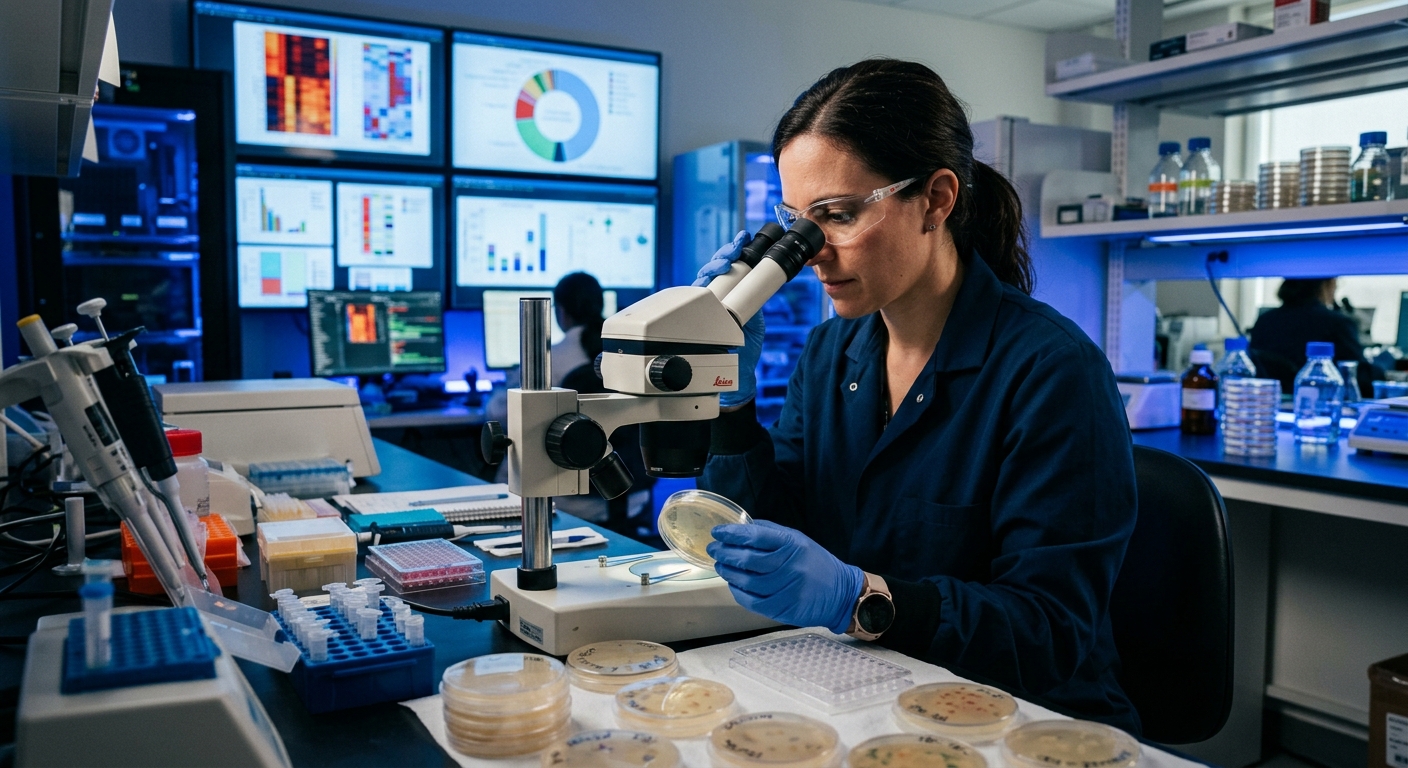
Sequential has accumulated over 50,000 human skin microbiome samples and in vivo formulation tests. That dataset underpins an AI-powered discovery platform designed to answer a question the industry has largely left unanswered: how does a given ingredient quantifiably change the microbial composition and host biomarkers of human skin?
Host biomarkers here refers to measurable indicators of skin state, things like inflammatory markers, barrier proteins, and lipid composition. Tracking these alongside microbial changes gives a more complete picture of what an ingredient is actually doing.
The analysis method is multi-omics testing. This means simultaneously measuring across the genome (DNA), transcriptome (gene expression), proteome (proteins), and metabolome (metabolic outputs). Where single-layer testing might show a change in one protein, multi-omics captures the full chain of events from microbial activity to skin cell response. The practical result is a more reliable basis for ingredient efficacy claims and a more defensible path to personalized formulation.
A parallel development in Europe
Sequential is not the only company moving in this direction. Byome Derma, a French startup, raised €3.6M in September 2025 to develop what it describes as the world’s first instant point-of-sale skin microbiome measurement system, designed to let consumers test their skin microbiome at retail and receive product recommendations in real time.
The two companies are solving different parts of the same problem. Sequential focuses on the upstream science, quantifying ingredient effects at the research and development level. Byome Derma is building the consumer-facing measurement tool. Both being funded simultaneously suggests the market is developing infrastructure at multiple layers at once.
The demand driving this
In 2026, 52% of consumers report interest in AI-personalized vitamins and supplements. Skincare personalization is following the same trajectory. Consumers who once selected products based on broad skin type categories are increasingly asking for formulations calibrated to their specific skin biology.
Sequential’s platform creates the data infrastructure that makes that level of specificity possible. Once a critical mass of ingredients have been characterized for their microbiome and biomarker effects, AI models trained on that data can begin predicting which ingredient combinations will work best for which skin profiles.
The $3.5M raise is a signal that ingredient science is entering a new phase. The question is no longer just whether an ingredient works in a controlled study, but how it interacts with the living ecosystem on every individual’s skin.