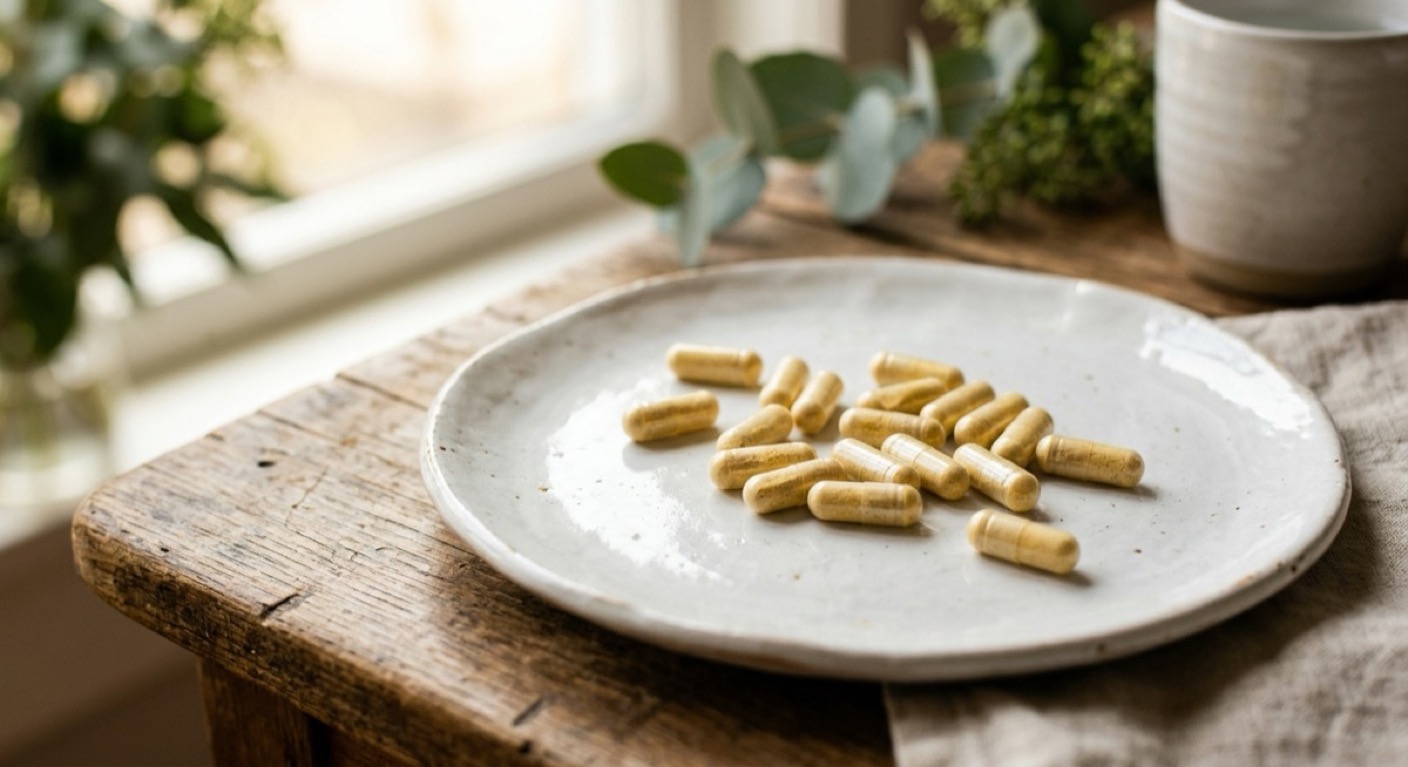
Oral Probiotics Cut Acne Severity in Half, RCT Finds
The idea that what lives in your gut might show up on your skin is no longer just a theory. A 12-week randomized, double-blind, placebo-controlled clinical trial conducted across Spanish dermatological clinics found that a specific probiotic combination improved acne severity in 50% of participants, compared to 29.41% in the placebo group. The difference was statistically significant (p=0.03).
What Was Tested and at What Dose
The probiotic used in the trial combined two distinct ingredients: Lacticaseibacillus rhamnosus (strain CECT 30031) and Arthrospira platensis, the scientific name for spirulina. While spirulina is widely known as a nutrient-dense superfood, here it served as an active support matrix for the probiotic strain. Participants took one dose per day containing 1 billion CFU (colony-forming units, the standard measure of live bacteria count).
The 74 participants (40 probiotic, 34 placebo) were aged 12 to 30, recruited through dermatology clinics in Spain. Acne severity was measured using two validated scales: AGSS (Acne Global Severity Scale) and GAGS (Global Acne Grading System).
The Numbers in Detail
On the AGSS scale, 50% of the probiotic group (20 out of 40) showed meaningful improvement, compared to 29.41% (10 out of 34) in the placebo group. The GAGS data was equally consistent: 42.50% of the probiotic group achieved at least 30% score reduction, versus 20.58% on placebo (p=0.02).
When looking at actual lesion counts, the picture sharpens further. Non-inflammatory lesions(comedones, blackheads, whiteheads) decreased by an average of 18.60 in the probiotic group versus 10.54 in placebo (p=0.03). Inflammatory lesions (papules, pustules) showed a reduction of 16.41 versus 13.87, but the difference did not reach statistical significance (p=0.40).
This distinction matters. The probiotic’s clearest benefit was on clogged pores and excess keratin, not on the red, inflamed breakouts driven more directly by bacteria and immune response.
Understanding the Gut-Skin Axis
The researchers framed their findings through the concept of the gut-skin axis, a bidirectional communication pathway between the intestinal microbiome and skin homeostasis (the skin’s ability to maintain balance). This is an active area of research in dermatology.
The working hypothesis is that when beneficial gut bacteria are depleted, the gut lining becomes more permeable, immune signals become dysregulated, and systemic inflammation can manifest on the skin. Conversely, a balanced gut microbiome may help modulate immune activity, regulate sebaceous gland function, and influence keratin turnover indirectly. This trial provides RCT-level evidence in support of that pathway.
Safety and Study Limitations
Adverse events were comparable between both groups. Mild digestive symptoms were reported in 3 participants taking probiotics and 4 taking placebo, all resolved without intervention. The safety profile is reassuring.
That said, the trial has meaningful limitations. The sample size of 74 is modest. The participant pool was drawn from a specific age range (12 to 30) and a clinical setting in Spain, which may limit how broadly the findings apply. Most importantly, the results are tied to this specific strain combination; other probiotic products should not be assumed to produce equivalent outcomes.
How to Think About Probiotics for Acne
The evidence so far supports a targeted, supplementary role. If non-inflammatory lesions, blackheads, and texture irregularities are the primary concern, the gut-skin axis is a relevant lever. When choosing a probiotic for skin, look for products with named strains, a minimum of 1 billion CFU per serving, and ideally some clinical backing for the specific strain used.
Acne does not have a single cause. Hormones, sebum, keratin, immune activity, and the gut microbiome all play roles. Oral probiotics address one variable in that system, and this trial suggests it is a variable worth taking seriously.