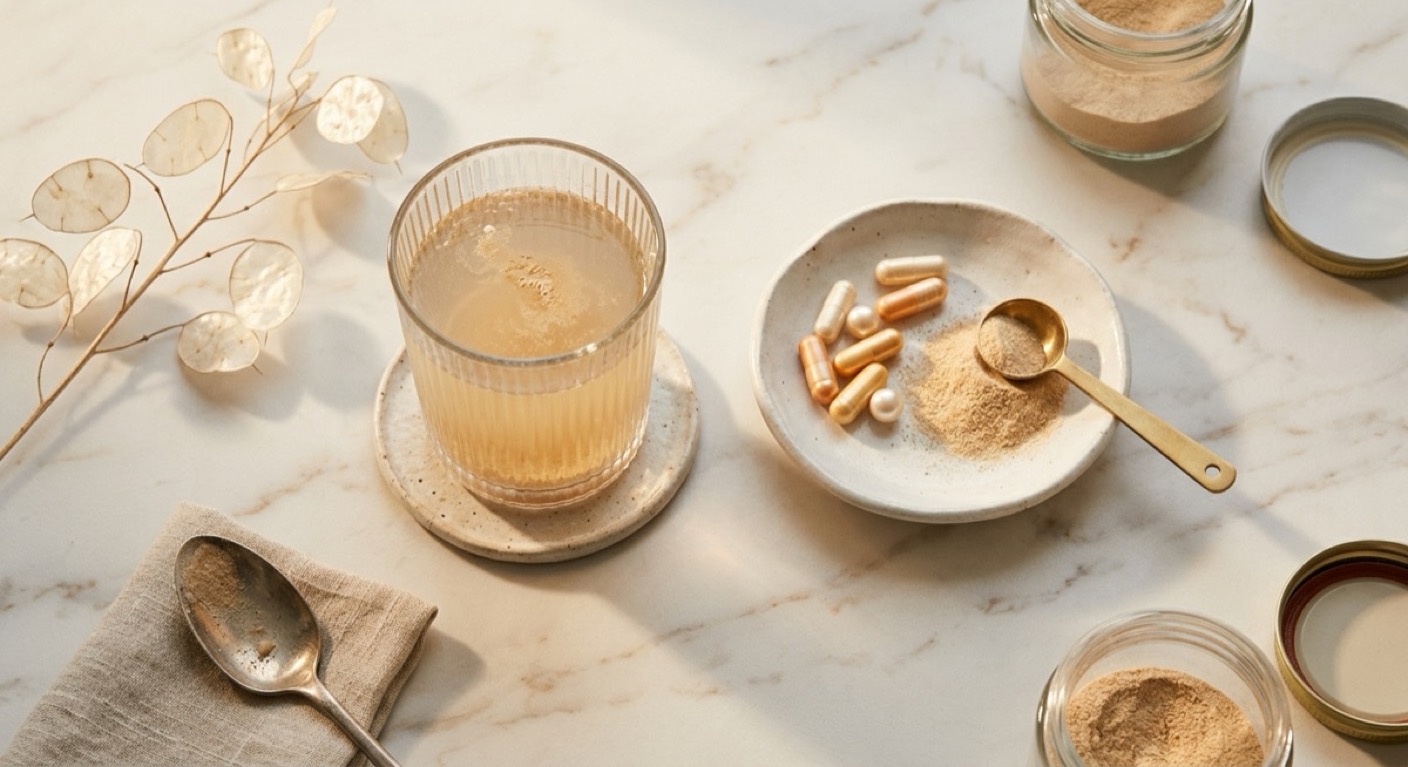
Ingestible Beauty Market Hits $8.1 Billion, Projected to Double by 2036
Beauty has always had an inside story. The global nutricosmetics market, encompassing supplements, powders, and functional beverages designed to work on skin and appearance from within, reached $8.1 billion in 2026. By 2036, analysts project that figure will surpass $18 billion, growing at a compound annual rate of 8.3 percent.
That pace is not driven by novelty. It reflects a structural shift in how a growing segment of consumers, primarily women aged 20 to 45, think about skin health: not as something applied to the surface but as an outcome of what the body is given internally.
Collagen remains the anchor
Collagen supplements account for the largest share of the nutricosmetics market. The clinical logic is well-established: dietary collagen peptides are absorbed into the bloodstream, where they stimulate fibroblast activity and increase the skin’s own collagen synthesis. Studies consistently show improvements in skin elasticity and hydration at doses of 2.5 to 10 grams per day, typically after eight to twelve weeks of consistent use.
This distinguishes collagen from many other beauty supplement categories. The mechanism is direct, the dosing is measurable, and the timeline is predictable. For consumers who have tried topical approaches with limited results, the ingestible route offers a different entry point to the same biological target.
Hyaluronic acid capsules and powders hold adjacent space in the market, valued for their role in skin water retention. Biotin and zinc address hair and nail strength. Astaxanthin, a carotenoid with antioxidant properties 6,000 times more potent than vitamin C by some benchmarks, is growing in the photoprotection segment. Omega-3 and omega-6 fatty acids round out the core lineup, targeting barrier function and inflammatory skin conditions.
Format is becoming part of the proposition
Capsules still dominate, holding 59.68 percent of the market. But the format conversation is shifting. Powders blended into smoothies, collagen-infused beverages, and gummy formats are gaining share, particularly among younger consumers who prefer integrating supplements into existing routines rather than adding a separate pill step.
Functional beauty beverages are the fastest-growing subcategory. Drinks positioned around collagen, adaptogens, and skin hydration have entered mainstream retail in a way that capsules rarely achieve. The format removes friction and, critically, allows for taste and texture as part of the brand experience.
North America leads, Asia-Pacific accelerates
North America holds 48.47 percent of the global nutricosmetics market, reflecting both high supplement adoption rates and a well-developed direct-to-consumer infrastructure. Globally, approximately 80 percent of women report taking some form of daily supplement.
Asia-Pacific is growing at the steepest rate, with a projected CAGR of 9.45 percent through 2036. Beauty-from-within concepts have deep cultural roots in markets like Japan and South Korea, where collagen consumption through food and supplements has been mainstream for decades. That familiarity is translating into faster uptake of next-generation formulations as they enter the market.
Gut-skin axis products and AI personalization are the next inflection points
Two emerging forces are shaping where the category goes next. The first is the gut-skin axis. Research connecting microbiome composition to skin outcomes, including acne, sensitivity, and the pacing of visible aging, has moved far enough along that consumer brands are beginning to build products around it. Postbiotics and targeted probiotic strains positioned specifically for skin outcomes represent the earliest commercial expression of this science.
The second is AI-assisted personalization. Platforms that assess individual factors, including lifestyle, diet, and specific skin concerns, and generate tailored supplement protocols are moving from novelty to infrastructure. Subscription models built around this logic are growing faster than the category average, pointing to a future where ingestible beauty is not purchased off a shelf but designed around a profile.
Together, these two trends, gut-skin science and personalized formulation, define the next phase of a category that has already demonstrated it can scale. The question for brands now is not whether consumers will take ingestible beauty seriously. At $8.1 billion, that question is settled. The question is which mechanisms and formats earn the most consistent, long-term place in daily routines.
What are nutricosmetics? Products that support skin and appearance from the inside out. Collagen supplements, hyaluronic acid capsules, and biotin gummies are typical examples, also known as “ingestible beauty” or “beauty-from-within.”
Which ingredients are most popular? Collagen supplements hold the largest market share, followed by hyaluronic acid (hydration), biotin and zinc (hair and nails), astaxanthin (antioxidant), and omega fatty acids (skin barrier).
Are there formats besides capsules? Powders, drinks, and gummies are growing rapidly among younger consumers. Functional beauty beverages and smoothie powders are especially popular, though capsules (59.68%) still hold the largest share.