Drinking Matcha and Collagen Together Changes How Your Skin Handles UV
Even diligent sunscreen users cannot fully block UV exposure. Application angle, reapplication timing, and coverage thickness all affect real-world protection. This is where dermatology research has been turning its attention to an inside-out approach: oral antioxidant strategies. EGCG from matcha sits at the center of that conversation.
Why Matcha Has 137x More EGCG Than Regular Green Tea
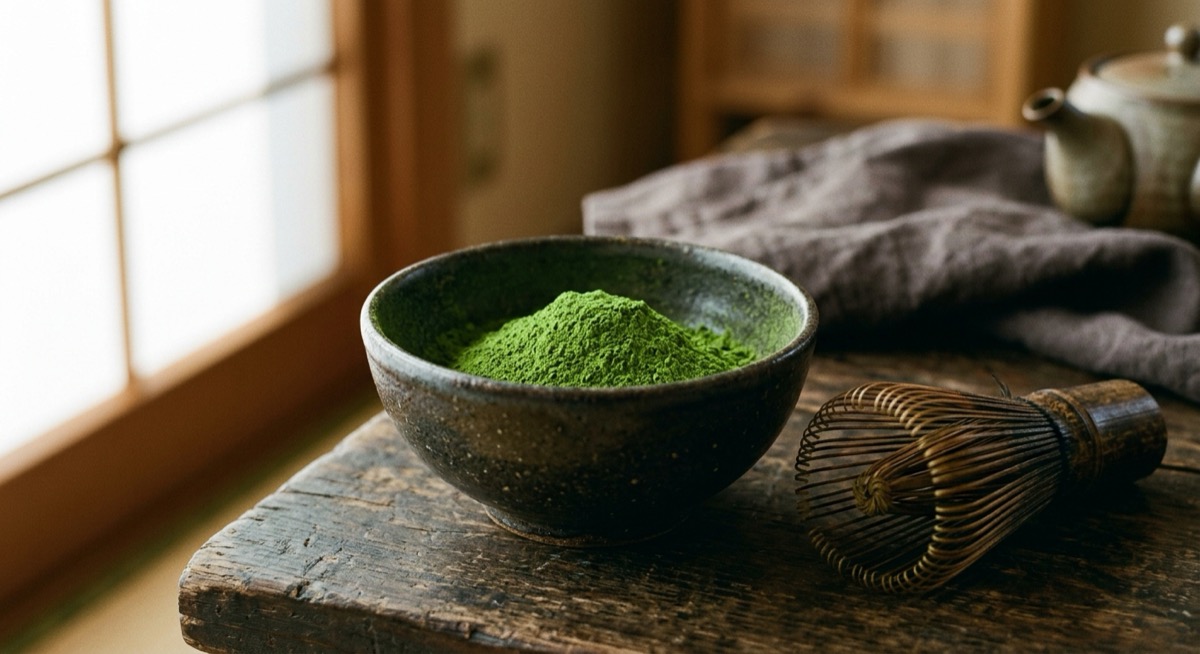
EGCG (epigallocatechin gallate) is the most potent antioxidant compound within the catechin family — the group of polyphenols responsible for green tea’s bitter character. Matcha is made by grinding the entire tea leaf into powder, so unlike steeped green tea where the leaves are discarded, every component gets consumed. Research shows matcha delivers up to 137 times more EGCG per serving compared to conventionally brewed green tea.
EGCG inhibits collagenase, which is the enzyme that breaks down existing collagen in the skin. When UV light hits the skin, it activates this enzyme. EGCG suppresses that activation, functioning as a collagen preservation mechanism rather than a collagen synthesis booster. Because these are two distinct pathways, combining EGCG with collagen supplementation creates a genuine synergy.
Why “Drinkable Sunscreen” Is Not an Overstatement
When EGCG is consumed orally, it reaches skin cells through the bloodstream. When UV radiation causes oxidative damage to skin cell DNA, EGCG helps reduce the scale of that cellular response. Sunscreen blocks UV at the surface through physical or chemical means; EGCG works at the cellular level after UV has already penetrated. These two strategies operate on different levels, which is precisely why combining them is meaningful.
One to two cups of matcha per day delivers approximately 50~100mg of EGCG. The doses studied for measurable skin protection in clinical research tend to be 300mg or above, but considering that dietary intake accumulates over time, a consistent daily cup or two is a reasonable and sustainable contribution.
What Changes When You Add Oral Collagen
Collagen supplements, typically in the form of low-molecular-weight peptides, are absorbed through the digestive tract and travel to the skin’s dermis (the deeper structural layer), where they stimulate new collagen production. Matcha’s EGCG works at the other end of the equation by suppressing collagen degradation. The two mechanisms together affect both the rate at which collagen is built (supplement contribution) and the rate at which it breaks down (EGCG intervention).
The studied combination is 1~2 cups of matcha daily alongside 5g of collagen peptides. Noticeable skin changes typically emerge after 2~3 months of consistent use. Some research also indicates that skin elasticity maintenance lasts longer when EGCG is included alongside collagen supplementation compared to collagen alone.
What to Look for When Choosing Matcha
Quality varies significantly across matcha products. Ceremonial-grade matcha is the most reliable benchmark for EGCG content. Culinary-grade matcha is workable but may carry lower catechin concentrations. Bright, vivid green color is generally a good indicator of higher chlorophyll and EGCG content.
For collagen supplements, lower molecular weight (typically 1,000~3,000 Daltons, labeled as hydrolyzed or low-molecular-weight peptides) means better absorption. Monthly supplement costs typically run $10~25 USD.
Does hot water destroy EGCG in matcha?
Water at or below 80~85°C preserves EGCG well. Boiling water near 100°C can denature some of the compounds. The practical fix is to let freshly boiled water cool briefly before whisking. Iced matcha prepared in cold water is actually the most favorable preparation for EGCG preservation.
When is the best time to take collagen supplements?
Research suggests absorption is slightly higher when taken fasted, such as first thing in the morning or before bed. That said, taking it with food is fine if you have a sensitive stomach. Consuming it simultaneously with matcha does not create any interference.
Can oral EGCG replace sunscreen for UV protection?
No. Oral EGCG reduces the cellular damage response after UV has already reached the skin — it does not physically block UV rays. Think of it as a protective complement to sunscreen rather than a substitute. Combined use produces better outcomes than either approach alone.