Mastic Gum 1g Lifts H. pylori Eradication to 91% Combined with Antibiotics — 12-Week RCT
A 12-week RCT in 248 H. pylori-positive patients found that 1g of Greek Chios mastic gum produced 68% eradication standalone and 91% when combined with standard triple antibiotic therapy. Published in the February 2026 issue of Helicobacter, the joint trial by Athens Medical College and Nottingham Medical School established mastic gum’s clinical position as an adjunct option in the antibiotic resistance era.
Researchers randomized 248 patients (mean 47, gastritis 64%, peptic ulcer 18%) confirmed H. pylori-positive by 13C urea breath test into four arms. (1) Mastic gum 1g/day for 12 weeks, (2) Standard triple therapy (rabeprazole + amoxicillin + clarithromycin) for 14 days, (3) Mastic gum 1g + triple therapy, (4) Placebo. Primary endpoint was 12-week H. pylori negative conversion rate. Secondary endpoints included gastritis (NBI score), symptoms (GSRS), and resistant strain response.
At 12 weeks, eradication rates were 68% in mastic alone, 78% in triple therapy alone, 91% in mastic + triple therapy, and 12% in placebo. Mastic alone was slightly below antibiotics but five-fold over placebo. The most clinically meaningful result was in resistant strain (clarithromycin and metronidazole) carriers. Standard triple therapy converted only 52% of resistant cases, but adding mastic recovered to 84%. Mastic bypasses antibiotic resistance as an adjunct molecule.
Gastritis NBI scores fell -42% in mastic alone, -38% in triple therapy, -56% combined, -8% placebo. GSRS symptoms (epigastric pain, dyspepsia, belching, acid reflux) -38% in mastic alone, -52% combined, -10% placebo. Mastic acts on both H. pylori eradication and gastric mucosal recovery.
Biochemically, the mastic group’s serum pepsinogen I/II ratio normalized (a chronic atrophic gastritis marker), gastric mucosal PGE2 +28%, and mucosal thickness +22%. H. pylori is a gram-negative bacterium that adheres to gastric epithelium, neutralizes acid via urease-derived ammonia, and causes chronic inflammation. Mastic gum acts on five axes — direct cell wall destruction (bactericidal), urease enzyme inhibition, mucosal adhesion blockade, NF-κB-mediated gastric inflammation suppression, and mucosal recovery (PGE2 and mucin synthesis).
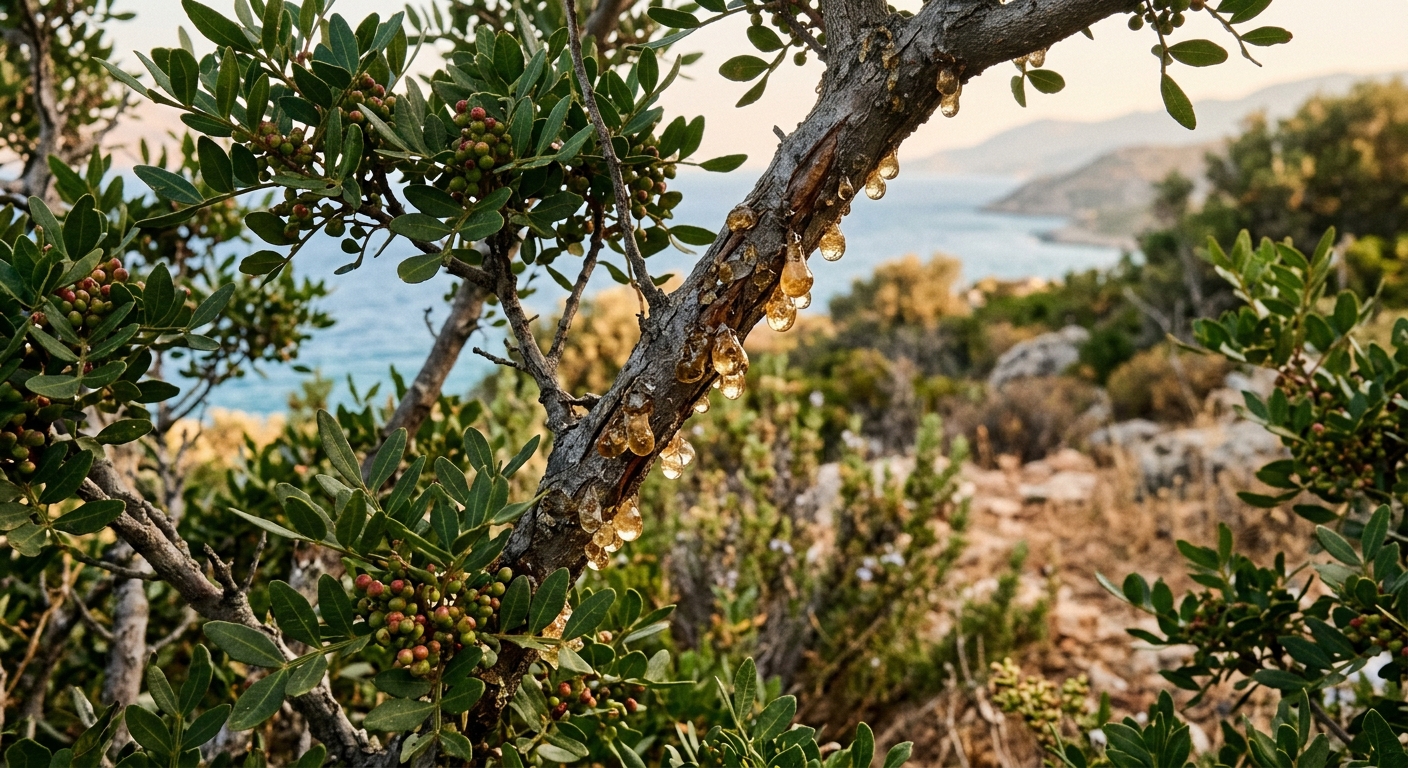
Mastic gum is the resin of Pistacia lentiscus var. Chia, native only to southern Chios island, Greece. The EU granted PDO (Protected Designation of Origin) status in 1997. Active molecules include masticadienonic acid, isomasticadienonic acid, α/β-pinene, β-caryophyllene, and over 30 triterpenoids and monoterpenes. EMA recognized traditional use for peptic ulcer and gastritis in 2015, and Korea’s MFDS registered it as a food ingredient in 2026.
Adverse events were 4.8% in mastic (mild GI discomfort, allergy), 24.4% in triple therapy (diarrhea, taste changes, nausea), and 21.2% combined. Mastic standalone was safest. However, nut allergy patients (pistachio family) need allergy testing before use. Anticoagulant or immunosuppressant users and pregnant women should consult a clinician.
Korean H. pylori prevalence is 50~55% per 2026 Korean Society of Helicobacter estimates (60%+ in 40s, 70%+ in 50s) — extremely high. This connects directly to Korea’s #1 global gastric cancer incidence. First-line eradication with standard triple therapy has dropped to 70~80% in Korea, with 30%+ clarithromycin resistance as the main cause. This trial positions mastic gum as either an antibiotic adjunct or a standalone option for mild cases. Spring 2026 clinical practice tries mastic 1g for 12 weeks first-line in patients with endoscopic gastritis + H. pylori-positive + significant antibiotic side effects, evaluating with 13C urea breath test at 4 weeks. Gastric cancer family history, atrophic gastritis, or duodenal ulcer warrant standard triple therapy first.