Manchester's 'Super Peptides' Trick Skin Into Repairing Itself
Skin has its own repair language. When it senses damage, it sends signals that ramp up collagen and fibrillin production, rebuilding structure from within. Researchers at the University of Manchester have found a way to speak that language artificially — triggering the repair response without causing any actual damage.
The Mechanism: Mimicking a Damage Signal
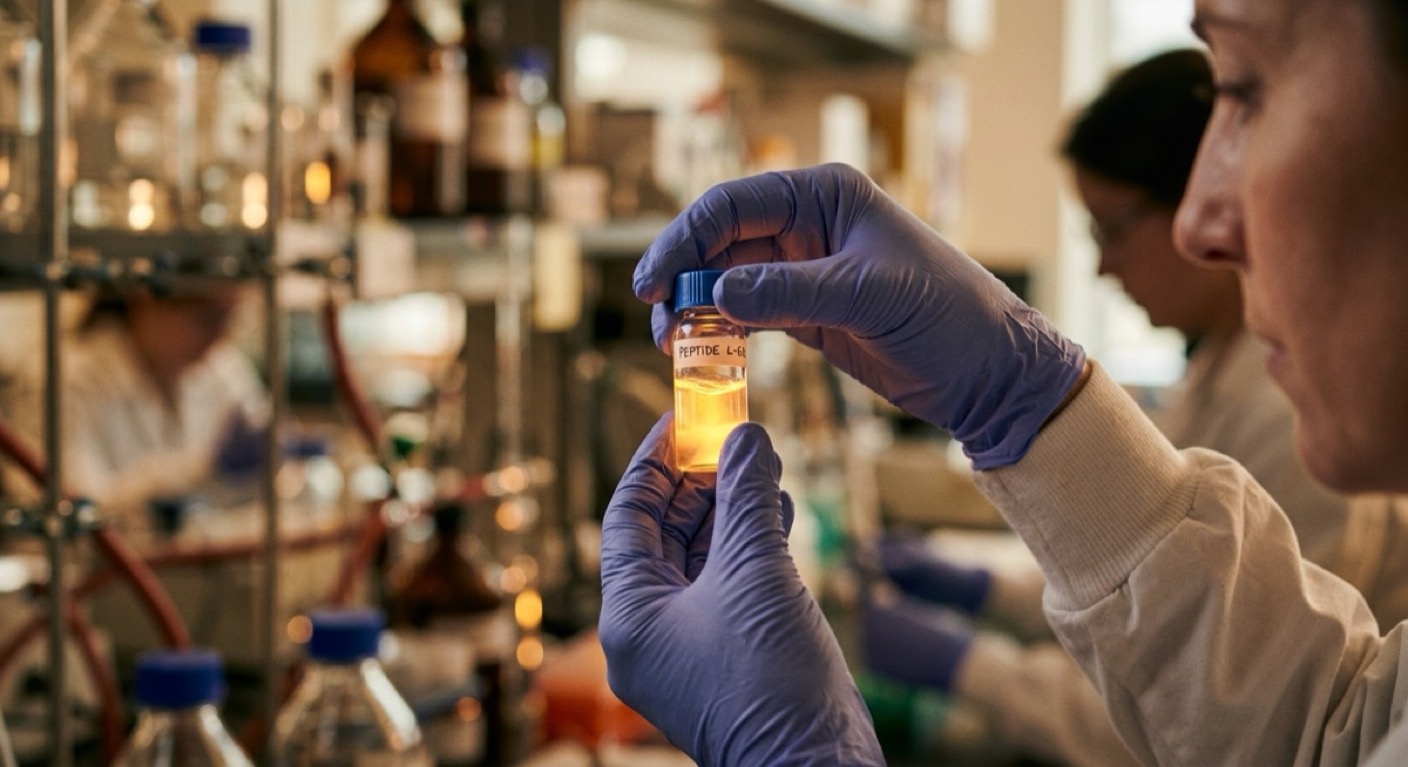
The technology centers on two synthetic tetra-peptides (short protein chains made of four amino acids): pal-GPKG and pal-LSVD. Together they form what the researchers call a “matrix-derived super peptide blend,” currently patent-pending.
When applied, these peptides send a signal that skin interprets as damage. In response, the skin initiates its natural renewal process, increasing production of collagen and fibrillin. Collagen provides structural elasticity; fibrillin supports the collagen fiber network and maintains tissue flexibility. Both decline significantly with age, contributing to thinning and sagging skin.
The result: enhanced expression of over 50 key skin proteins, spanning the extracellular matrix (the structural framework between skin cells). Where most anti-aging actives target one or two proteins, this approach activates the broader skin repair network.
Machine Learning Identified the Winning Sequences
Finding these two sequences required screening thousands of peptide combinations. The team used machine learning algorithms to rank candidates by their predicted ability to trigger a cellular response in skin tissue. pal-GPKG and pal-LSVD emerged from that computational process as the most promising pair.
The formulation was also engineered for delivery. Penetration depth was predicted to be 50% greater than existing peptide formulations. Effective actives that can’t reach the dermal layer (where collagen and fibrillin are produced) have limited real-world impact. This was designed in from the start.
Why Sensitive Skin Users Should Pay Attention
Retinoic acid remains the gold standard for skin renewal, with extensive clinical backing. The problem: it causes irritation, peeling, and photosensitivity, putting it out of reach for many users with sensitive skin or those who are pregnant.
The Manchester super peptides are designed to activate the same renewal pathway with a gentler profile. The researchers specifically identified sensitive skin compatibility as a feature of the formulation, offering a potential pathway for users who want the benefits of retinol-class renewal without the trade-offs.
The Research and Commercial Path
The work was led by Professor Mike Sherratt (Biochemistry) at the University of Manchester and Dr. Matiss Ozols, now at the Wellcome Sanger Institute. The University of Liverpool’s Materials Innovation Factory contributed to the research.
Five peer-reviewed papers support the technology, with additional papers submitted to high-impact journals. The research has been presented at the American Academy of Dermatology (AAD) Annual Conference in Louisiana, with upcoming presentations at the British Society for Investigative Dermatology (BSID) in Glasgow and the International Society for Investigative Dermatology (ISID) in Tokyo.
Commercialization is proceeding through a partnership with No7, the UK-based skincare brand. A product launch timeline has not been disclosed.
A Different Model for Active Development
What distinguishes this research is not just the peptides themselves, but the development pipeline behind them. Using machine learning to screen thousands of candidates, then engineering for penetration depth alongside biological activity, reflects a more systematic approach to active ingredient development.
Skin’s self-repair capacity slows with age. Rather than supplementing that capacity from outside, this technology works by re-activating the signaling that drives repair from within. That distinction may define the next generation of anti-aging skincare.
Frequently Asked Questions
How is this different from retinol?
Retinoic acid (the active form of retinol) is highly effective at triggering skin renewal but can cause significant irritation, making it unsuitable for sensitive skin. The super peptides activate the same renewal signaling pathway without the irritation.
What sets this apart from existing peptide skincare?
Most peptide actives target collagen alone. This blend increases expression of over 50 skin proteins simultaneously, including fibrillin, and is engineered for 50% deeper penetration than current formulations.
When will products be available?
The technology is being commercialized through a partnership with No7 skincare. No specific launch date has been announced. Five peer-reviewed papers have been published, with additional research submitted to high-impact journals.