Postbiotic L. sakei KABP-065 Improves Skin Elasticity in Women 30~50: Gut-Skin Axis Lands a Clinical Win
A new kind of clinical evidence is accumulating on the gut-skin axis. A randomized controlled trial released by Kaneka (Japan) and AB-Biotics (Spain) gave 50 healthy women aged 30~50 with dry facial skin a heat-inactivated postbiotic — Latilactobacillus sakei KABP-065 (marketed as proBio65) — for five weeks. Versus placebo, the postbiotic group showed statistically significant improvements in skin elasticity, recovery rate, and firmness. Women in their 40s additionally gained moisture retention benefits at both five and eight weeks.
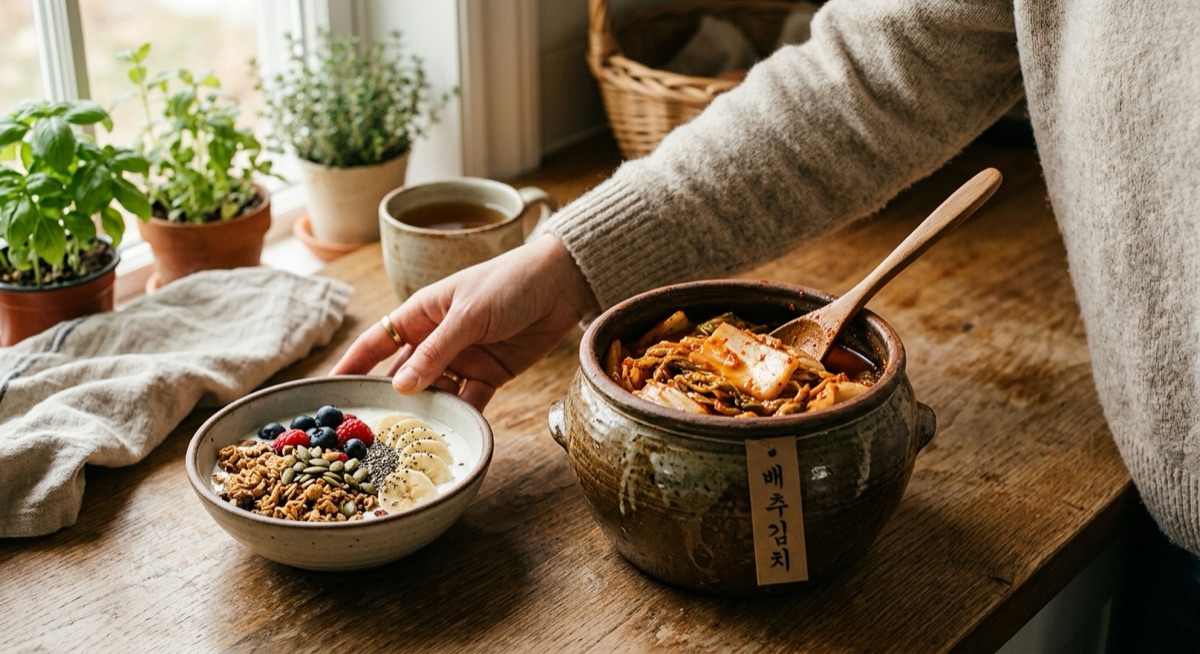
KABP-065 differs from typical probiotics in two ways. First, it’s heat-inactivated (a postbiotic). Dead bacterial bodies, not live cells, deliver the immune signal. Second, the strain was isolated from Korean kimchi. Surface proteins and polysaccharides that evolved to survive kimchi fermentation interact strongly with intestinal mucosal pattern recognition receptors (TLR2, NOD2).
The mechanism runs through the gut-immune-skin axis. KABP-065 cell wall components stimulate intestinal dendritic cells → induce regulatory T cell (Treg) differentiation → dampen systemic chronic inflammation signaling. In skin, downregulated NF-κB and AP-1 signaling reduces MMP-1 and MMP-9 activity, slowing collagen and elastin breakdown. The heat-inactivated form delivers more consistent intestinal colonization than live cells (no acid kill in stomach), and offers shelf-stability and distribution advantages.
Earlier data pointed the same direction. KABP-065 (proBio65 form) had RCTs showing meaningful improvement in itch and SCORAD scores in atopic dermatitis. This new trial extends to a general population of “healthy women aged 30–50.” All 50 participants reported subjective dry facial skin without diagnosable dermatologic conditions. Skin elasticity gains at week 5 were statistically significant versus placebo (p<0.05).
The added moisture-retention effect in women in their 40s carries clinical weight. From the late 40s, epidermal lipid synthesis (ceramides, cholesterol) and natural moisturizing factor (NMF) production decline, raising transepidermal water loss (TEWL). Topical cosmetics provide surface replacement, but supplementation through the gut-immune-skin axis works upstream by normalizing epidermal differentiation itself. This positions postbiotics like KABP-065 as a credible pre-50 skin aging prevention category.
Alongside polycosanols, marine collagen, and vitamin C, microbiome-based supplements are emerging as a distinct skin aging category. The trend of strains isolated from Korean fermented foods (kimchi, doenjang, cheonggukjang) earning global clinical validation is becoming a strong differentiator for K-beauty inside-out supplementation.
Dosing isn’t published in trial materials, but commercial KABP-065 supplements typically recommend 1–3 billion CFU equivalents daily (heat-inactivated cell mass basis), taken with food. Effects appear from week 4–5; stable improvement is reported with 8–12 weeks of use. Concurrent antibiotic use can affect absorption, so starting after antibiotics finish is safer. Immunosuppressed patients and those with autoimmune disease should consult a physician.
In skin supplements, postbiotics are climbing the ranks behind collagen peptides and vitamin C. They overcome the stability limits of live probiotics while preserving immune-modulating effects. Alongside KABP-065, strains like Lactobacillus plantarum HY7714 and Bifidobacterium breve are accumulating clinical data — and Korean food-derived strains are establishing a clear position in the global market.