La Mer's MPF Serum Improved Barrier Strength 30% in 8 Weeks, Peer-Reviewed Data
Luxury skincare has long been criticized for selling story, not science. La Mer and The Estée Lauder Companies pushed back on that frame by publishing clinical data on their signature ingredient in the Journal of Clinical and Aesthetic Dermatology. The brand choosing a peer-reviewed journal over marketing copy signals a language shift inside premium skincare.
Three numbers
The trial enrolled women aged 31 to 65. MPF Serum (containing Macrocystis pyrifera ferment) was applied twice daily for 8 weeks. Three endpoints were measured.
- Moisturization: average 16% increase
- Intact skin barrier integrity: 11% improvement
- 8x tape-stripped skin barrier strength: 30% improvement
The trial also compared post-procedure recovery after non-ablative laser treatments and 70% glycolic acid peels against standard moisturizer. MPF Serum outperformed on recovery speed.
The Macrocystis pyrifera raw material
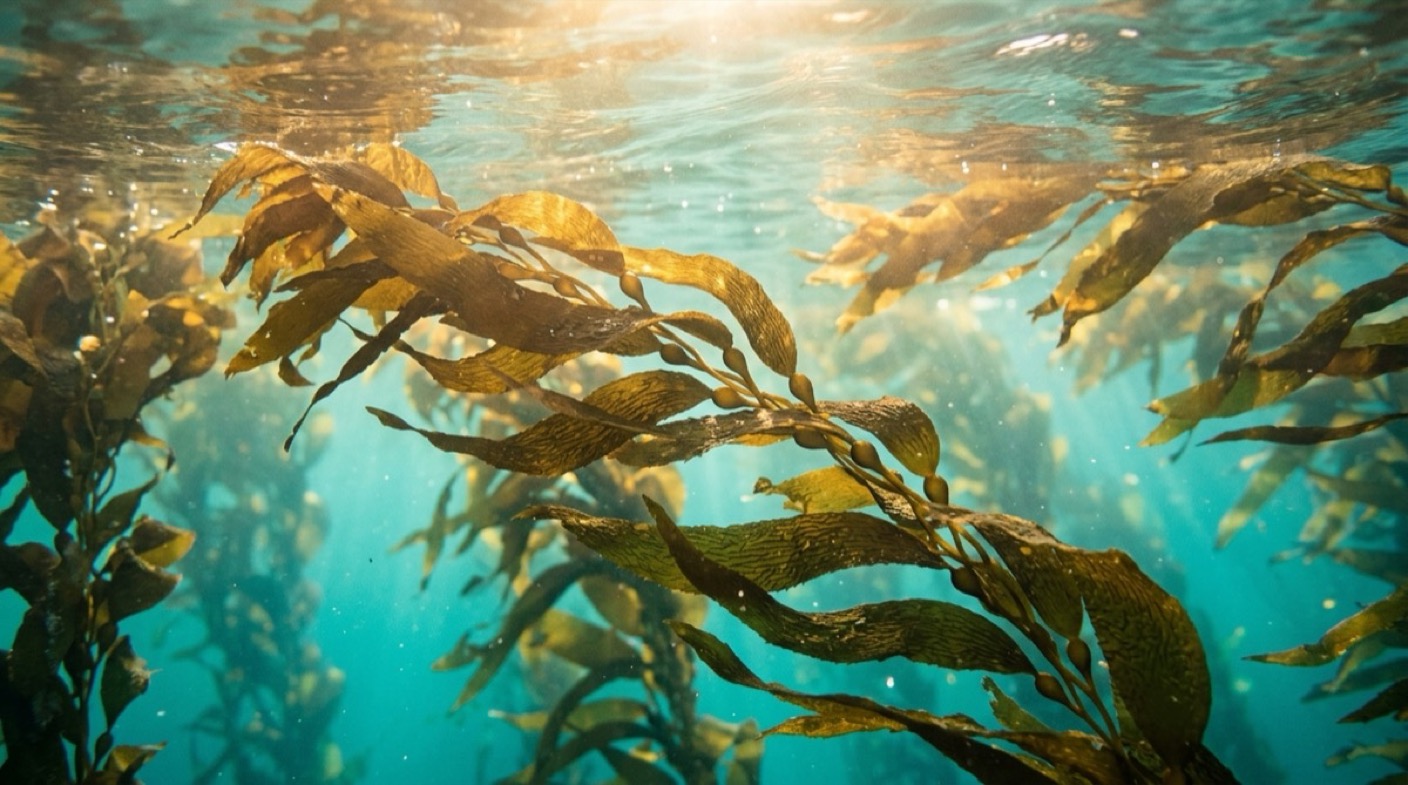
Macrocystis pyrifera is giant kelp. It grows fast and maintains barrier integrity against salinity and wave stress, which is why its extracellular matrix is rich in polysaccharides, peptides, and mineral complexes. The fermented extract has preclinical data supporting ceramide and lipid synthesis pathways of the skin barrier.
The problem has been that “the ingredient La Mer sells in a cream” obscured the science. The JCAD publication replaces that framing with data.
Post-procedure recovery is the pivot
The most practical finding is post-procedure. Laser and peels are common treatments, yet the role of what you apply during the recovery window is underexplored. Standard moisturizer is too passive, and high-performance actives can irritate.
MPF Serum claims the “barrier-specialized recovery” slot. The 30% improvement in barrier strength on 8x tape-stripped skin (repeated epidermal disruption) suggests extrapolation to procedure-induced barrier damage is plausible.
A data turn inside premium skincare
The industry signal is that top-tier brands are publishing in independent peer-reviewed journals, not just in-house white papers. Consumers are asking for evidence more often in 2026, and the market is adjusting. La Mer is not the only brand doing this, it is the most visible one this quarter.
Reading the limits
Caveats stand. The trial was about a specific formulation, and different products built on the same raw material may diverge in outcomes because ferment processes, stabilization, and companion ingredients all matter. Whether 8-week trial numbers hold up under real-world conditions is a separate question.
Direction is clear nonetheless. “Barrier strength” as a quantified metric has become a new communication axis for premium skincare, and post-procedure recovery has moved into product design as a primary target, not a bonus use case.