Kampo Herbal Cream Reduced Fine Eye Wrinkles in 28-Day Split-Face Trial
The skin around the eyes is where aging tends to announce itself first. The tissue is thinner, the muscles move constantly, and moisture retention drops faster than almost anywhere else on the face. A new Japanese clinical study tested whether a single multi-ingredient cream, applied for 28 days, could make a measurable difference in that zone.
One Face, Two Outcomes
Researchers from Kochi Gakuen University, Mz Science Co., Shinyamato Kanpoh Pharmaceutical, and Kindai University recruited 14 healthy women aged 31 to 59 and ran a split-face trial: the cream was applied twice daily to one side of the face only, while the other side received no treatment.
Because both sides belong to the same person, variables like genetics, lifestyle, sleep, and sun exposure are automatically controlled. It is a design that allows small studies to generate statistically credible results.
The treated side showed a statistically significant reduction in shallow wrinkles at the eye corners over 28 days. Expert evaluation of standardized photographs confirmed the improvement on the treated side versus the untreated side. Participants in the older age range within the group showed the most pronounced results.
More Than Just Wrinkles
The research team measured several skin parameters beyond wrinkle depth. The treated side showed statistically significant improvements across all of the following:
- Skin softness
- Makeup adhesion
- Smoothness
- Tightness after face washing (reduced)
- Moisture
- Overall satisfaction
The reduction in post-wash tightness is a detail worth noting. It suggests the cream was supporting the skin barrier itself, not simply depositing a surface film. That kind of improvement tends to compound over time.
What Is Inside the Cream
The product used in the trial is Gold Hakuyo all-in-one cream, registered as a quasi-drug in Japan, a regulatory category that sits above standard cosmetics and requires documented efficacy for key actives.
Two primary actives drive the formula:
Tranexamic acid was originally developed as a hemostatic drug. Its entry into skincare came through the discovery that it inhibits tyrosinase, the enzyme central to melanin production. It is now a recognized brightening ingredient in both Japanese quasi-drug approvals and Korea’s functional cosmetics framework. Beyond brightening, evidence suggests it also normalizes skin cell turnover and moderates inflammatory signaling, which connects to texture and wrinkle reduction.
Dipotassium glycyrrhizate is derived from the root of licorice (Glycyrrhiza species), the same plant used in traditional Kampo formulations for its soothing properties. In cosmetic formulation, it is valued for anti-inflammatory action and its ability to calm sensitized skin, creating a more stable environment where other actives can work effectively.
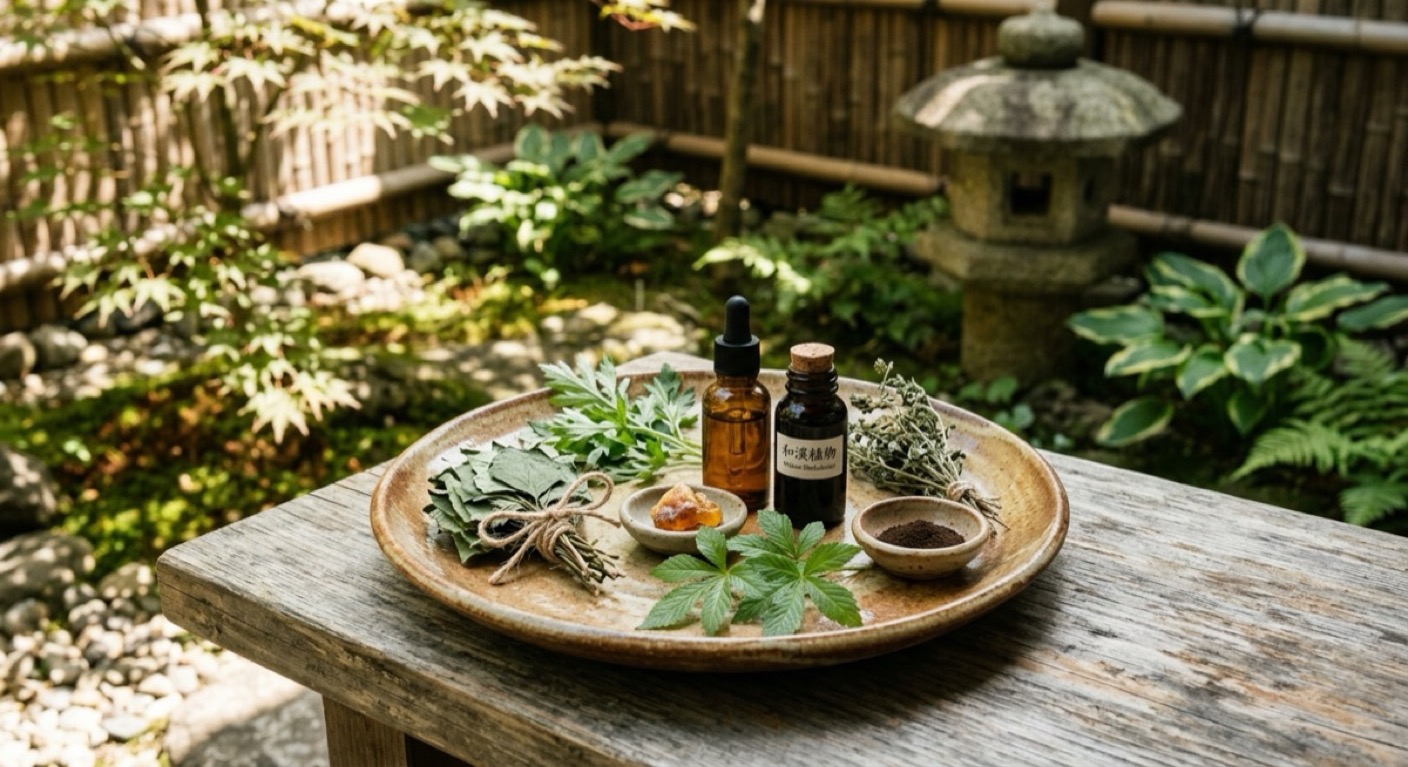
Alongside these two, the cream contains a complex blend of Japanese and Chinese plant extracts drawn from Kampo (漢方) medicine, Japan’s adaptation of classical Chinese herbal medicine that has been practiced for over a thousand years. The study represents a direct clinical test of whether these traditional botanical combinations can produce measurable results in a modern controlled setting.
Why Older Skin Responded More
One of the most informative findings was the age-related gradient in response: older participants within the group saw more pronounced wrinkle improvement than younger ones.
This is not counterintuitive once you consider the underlying biology. Skin in the mid-30s retains a degree of self-renewal capacity, so external interventions may produce only modest incremental gains. By the late 40s and 50s, collagen synthesis has slowed significantly, barrier function has declined, and skin cell turnover is stretched over a longer cycle. In that state, a well-formulated blend of actives finds more room to intervene.
The same pattern has appeared in trials for retinoids, peptides, and other actives. Where the baseline is lower, the ceiling for improvement is higher.
Kampo Ingredients Meeting Clinical Standards
Traditional botanical systems carry long histories of use but relatively sparse modern clinical documentation. This study addressed that gap directly, using a split-face design to isolate the cream’s effect, combining objective wrinkle measurement with expert photo analysis and subjective questionnaire data.
The 14-person sample is small by conventional standards. But the split-face methodology compensates by removing inter-individual variation, the most common source of noise in small cosmetic trials.
The findings were published in Cosmetics, an MDPI journal focused on cosmetic science and dermatology research.
Three ideas emerge from this work: tranexamic acid’s reach may extend further than brightening into structural skin quality; Kampo botanical blends may show real synergy with modern cosmetic actives; and the skin of women in their 40s and 50s may respond more distinctly to targeted formulations than younger baseline-high skin. Each of those is worth watching as this research area develops.