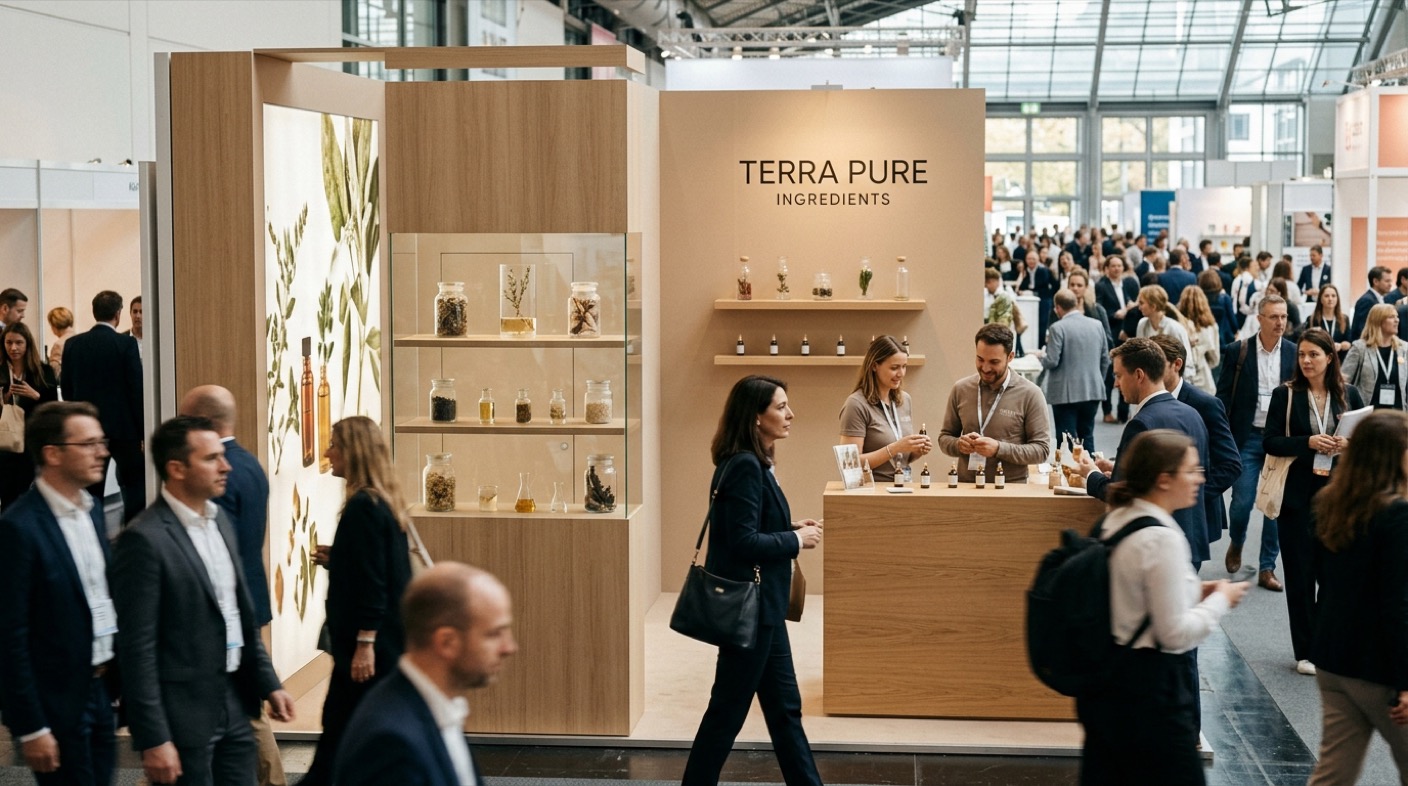
in-cosmetics Global 2026 Paris: 14,000 Attendees, 250 New Ingredients, and a New Inner Beauty Zone
in-cosmetics Global 2026 ran April 14-16, 2026 at Paris Expo Porte de Versailles. As the single largest event in the global cosmetic ingredient market, it gathered over 14,000 attendees, more than 1,000 exhibitors, and 250 newly launched ingredients. What makes this edition industry-significant is not the scale alone but the redrawing of category boundaries it signals.
Inner Beauty Zone: nutricosmetics enter as a formal category
The biggest change is the launch of the Inner Beauty Zone, a dedicated area connecting cosmetics and nutricosmetics (ingestible beauty). The data the organizers cite explains the rationale. 41% of global consumers use beauty supplements.
The 41% figure signals structural change rather than a single-cycle trend. It marks the move from topical cosmetic categories toward multi-layered combinations. This direction aligns with same-quarter announcements: GELITA’s VERISOL hair thickness RCT, Nestlé’s NAD+ booster and microbiome data, and dsm and Symrise’s plant exosomes (with both topical and ingestible options). Cosmetics, supplements, and nutricosmetics are integrating at the mechanism level.
250 new ingredients, many revealed for the first time
The Innovation Zone unveiled close to 250 new ingredients, many introduced for the first time. The number speaks not only to lineup scale but to R&D cycle acceleration. Where new cosmetic active categories once emerged on 5-10 year cycles, dozens of new materials now appear each quarter.
Major categories at this edition.
Plant exosomes: dsm-firmenich’s Exovive Lift and Symrise’s Cellexora MD were unveiled at the same event. Alpine apple plus Mediterranean tangerine plus Sicilian papaya vesicles, and exosomes from Italian organic apple side streams, marking the inflection where plant exosomes settle as an industry category.
Upcycled ingredients: A newly launched Upcycling Hub sits within the Sustainability Zone. Members of the Circular Cosmetic Collective including COLIPI GmbH, Kaffe Bueno, and Swedish Algae Factory AB presented cases of converting food industry by-products into cosmetic active ingredients.
New fragrance materials: The Fragrance Zone expanded with a new Scent Bar experience. The fragrance market is projected to grow 8% annually from 2024 through 2030, driven by younger consumers and niche fragrance demand.
1,000+ exhibitors, 130 first-time companies
Exhibition scale exceeds 1,000 booths. Of those, 130 are first-time exhibitors. The 13% first-time-exhibitor share suggests lower entry barriers in the industry. Major participants include BASF, Lubrizol, Symrise, Givaudan, The Estée Lauder Companies, COSMAX, and Chanel. Korean COSMAX’s participation reflects K-beauty OEM/ODM standing in the global ingredient market.
More than 230 educational sessions ran covering cosmetic science, market trends, formulation technology, and regulatory developments. The event leans heavily toward industry academic conference territory rather than pure exhibition.
Why the Upcycling Hub matters
The Upcycling Hub launch reveals an industry trend slice. The model recycles by-products from agriculture or food industries into cosmetic ingredients. Symrise’s Cellexora MD, extracting exosomes from organic Italian apple side streams, is a representative case of the same flow.
Two implications. First, the marketing axes of “eco-friendly” and “high-functional active” become integrable in one formulation. Second, cosmetic ingredient supply chains integrate with agriculture and food industries. Resource flows from one industry restructure into shared value chains across multiple.
Fragrance Zone and 8% annual growth
The fragrance market’s projected 8% annual growth is a fast-growing segment in the cosmetic category. Two drivers. Fragrance as an identity expression tool for younger consumers, and the expansion of niche fragrance demand.
Beauty M&A outlooks the same quarter frequently named niche fragrance brands as acquisition targets. Reports surfaced in the same window that Parfums de Marly, with Initio Parfums Privés, was in early sale talks at $2B+ valuation. Fragrance is rapidly increasing its share of the cosmetic market.
Acceleration of industry integration
The industry message is simple. Cosmetic category boundaries are restructuring quickly. Cosmetic + supplement (Inner Beauty Zone), cosmetic + agricultural by-product (Upcycling Hub), and topical + ingestible (plant exosome dual lineup) are all appearing simultaneously at one event.
For consumers, the change is concrete. The mode of managing “topical” and “ingestible” separately is giving way to mode where same-mechanism targets are addressed via combined topical and oral options. The pattern of plant exosomes appearing in both topical serums and ingestible supplements is the starting point.
In the next 12-24 months, some of the 250 new ingredients revealed at in-cosmetics Global will reach the Korean market. K-beauty brands’ adoption priorities will determine the speed of category entry.