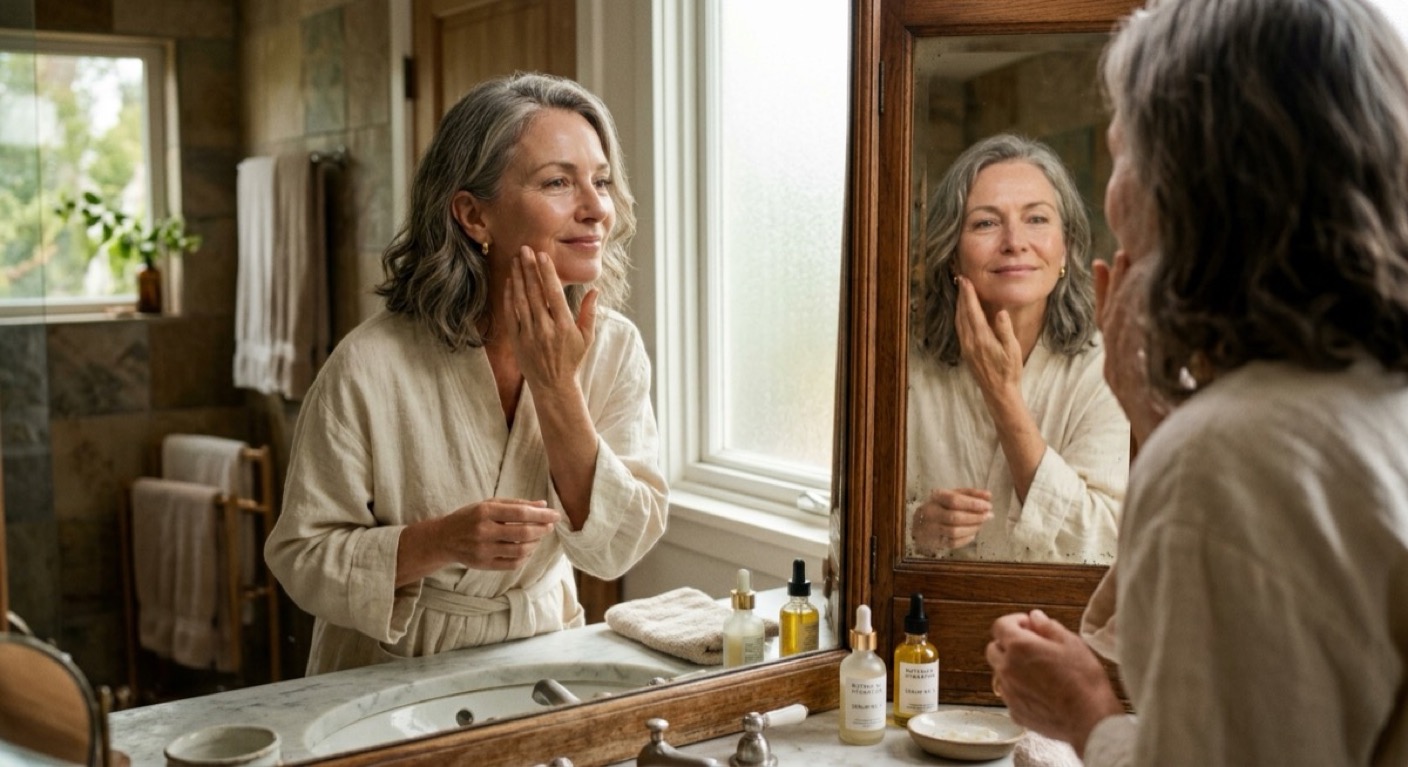
4,300 Women on Menopause and Skin, What They Actually Said
Menopause changes skin. That part is well established in dermatology. What Galderma’s new global survey reveals is everything that follows: the anxiety, the quiet withdrawal, the confidence that slips alongside elasticity, and the widely shared frustration of learning about it all too late.
Three Changes Per Woman, on Average
The survey reached more than 4,300 peri and postmenopausal women between ages 45 and 60 across 9 countries spanning 5 continents. Since menopause onset, the average respondent reported experiencing 3 distinct skin changes. The most common were facial lines and wrinkles (59%), loss of facial firmness (58%), and facial dryness (56%). Body-wide changes were nearly as prevalent: loss of firmness on the body affected 54%, and body dryness was reported by 58%, slightly higher than the face.
The biology behind this is estrogen withdrawal. As estrogen levels fall, the skin loses two of its most important structural components at once: collagen, which gives skin its firmness and bounce, and hyaluronic acid, a molecule that holds water in the dermis. Sebum production drops too, thinning the barrier that keeps skin resilient against environmental stress. The result is dryness, sagging, and lines arriving together, not gradually one by one.
Respondents rated the severity of these changes an average of 6 out of 10, significant enough to notice daily, not severe enough to dominate a medical conversation.
When the Mirror Affects More Than Appearance
The emotional picture is where the data becomes harder to ignore. 60% of respondents said they felt less attractive since menopause. 57% experienced anxiety related to skin changes. 55% reported reduced self-confidence. 46% said they had pulled back from social activities.
These are not marginal numbers. They describe a widely shared experience in which physical changes in the skin create a ripple effect across psychological and social life. The survey did not ask whether those feelings were rational or irrational, which is the right call: it simply documented what women said happened.
The Information Gap
Over half of respondents said they learned about menopause-related skin changes only through personal experience, meaning no doctor, no article, no conversation prepared them before symptoms appeared. More than 30% said they wished they had known in their 30s. Over 60% said earlier knowledge would have led them to make different choices.
That gap in anticipatory education matters because estrogen decline is not sudden. It begins gradually in the early to mid-40s during perimenopause, the transitional phase before periods stop entirely. The window for proactive skin support exists well before the changes become visible, but most women enter it without knowing the transition has started.
On what they would consider doing: 47% said they would explore anti-wrinkle treatments, and 41% expressed openness to hyaluronic acid-based treatments.
What Galderma Is Doing About It
The company announced it will include menopausal status as a standard variable in all its injectable aesthetics clinical trials going forward. This is a meaningful structural change. The majority of aesthetic clinical trials to date have not separated participants by hormonal status, meaning findings have been averaged across pre and postmenopausal populations whose skin behaves quite differently. Disaggregating by menopausal status would produce data that is more actionable for both clinicians and patients. It also signals a broader shift in how the aesthetics industry is beginning to think about women’s hormonal biology as a variable worth tracking, not an afterthought.