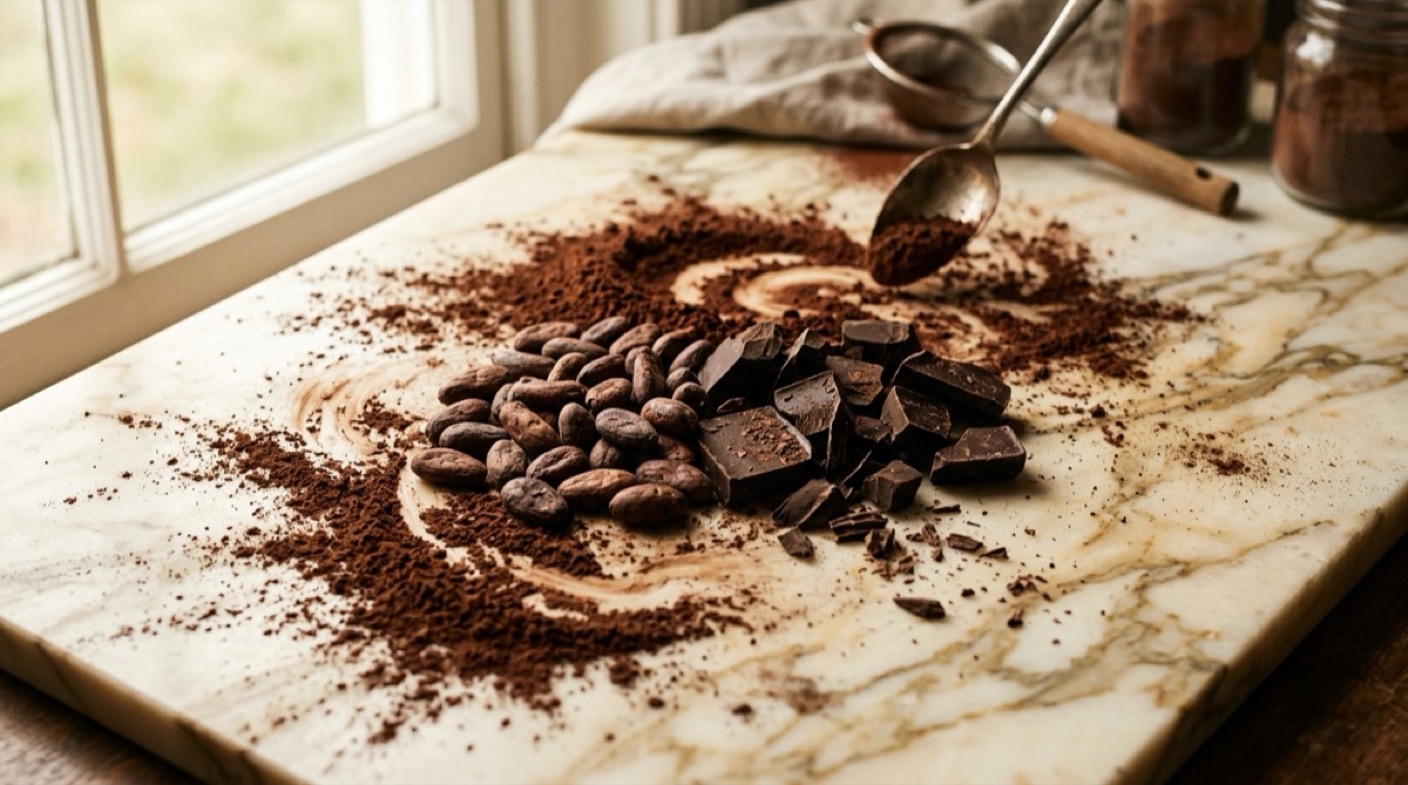
24 Weeks of Cocoa Flavanols Restore Photo-Aged Skin Elasticity by 8.6 Points
Over six months, women with photo-aged skin who consumed cocoa flavanols daily showed 8.6 percentage points more elasticity than those who didn’t. The improvement came from food, not a serum or a procedure.
Cocoa Flavanols: A Polyphenol Built for Skin Defense
Cacao pods produce flavanols, a class of polyphenols in the catechin family, primarily epicatechin and catechin. These compounds evolved to protect the seed against oxidative damage from UV radiation and environmental stress. When consumed, they’re absorbed through the gut and carried through the bloodstream to peripheral tissues, including skin.
The mechanism is relevant here: cocoa flavanols suppress matrix metalloproteinases (MMPs), enzymes that degrade collagen and elastin in UV-exposed skin. They also support vascular function, which matters for dermal nutrient delivery. A German study testing 326mg of high-flavanol cocoa over 12 weeks found subcutaneous blood flow increased measurably, and skin thickness grew from 1.11mm to 1.24mm. The low-flavanol control group showed neither change.
This is worth noting because the effects reach layers that topical products cannot.
320mg, 24 Weeks: The Clinical Benchmark
The key study (Yoon et al., Journal of Nutrition, 2016) enrolled moderately photo-aged Korean women between ages 43 and 86 in a randomized, double-blind, placebo-controlled trial. One group consumed a cocoa beverage delivering 320mg of total cocoa flavanols per day; the other received a visually identical placebo beverage. Duration: 24 weeks.
Two primary endpoints were evaluated. First, average skin roughness (Rz, the mean height difference across the skin surface, measured by profilometry). Second, gross skin elasticity, measured at the temple, a site where photo-aging typically concentrates.
At 24 weeks, the cocoa group had significantly lower roughness scores (8.7 percentage points lower, p=0.023). Elasticity results followed the same pattern.
What 8.6 Percentage Points Actually Means
The between-group difference in gross elasticity was 9.1 percentage points at 12 weeks (p=0.020) and 8.6 percentage points at 24 weeks (p=0.027). In clinical dermatology, 1–2% shifts in elasticity are considered measurable. A difference above 8 percentage points is substantial enough to be perceptible in the mirror.
A separate trial (Mogollon 2014, Nutrition Journal) corroborates this direction: women consuming high-flavanol chocolate improved net elasticity by 0.09mm over 12 weeks, compared to 0.02mm in the low-flavanol group (p<0.05).
Photo-aged skin responds to flavanols in part because of how UV exposure degrades hyaluronic acid (HA) synthesis. Cell studies show cocoa flavanols upregulate HAS-2, the enzyme responsible for producing hyaluronic acid in the dermis. Where photo-aging has already diminished this pathway, there’s more to recover, which may explain why improvements are more visible in photo-aged skin than in younger, unexposed skin.
Can You Get There with Dark Chocolate?
The clinical trial used a purpose-formulated high-flavanol cocoa product. It’s worth translating 320mg into everyday food terms.
| Food | Serving | Estimated Flavanol Content |
|---|---|---|
| Dark chocolate (70%+ cacao) | 30g | ~80–120mg |
| Natural cocoa powder (non-alkalized) | 1 tbsp (5–7g) | ~60–100mg |
| Milk chocolate (35–40% cacao) | 30g | ~10–30mg |
| Dutch-processed cocoa powder | 1 tbsp | ~5–15mg |
Reaching 320mg daily through dark chocolate alone would require 2–3 servings of 30g. Practically, that’s achievable for some, but not at the cost of adding 500+ calories from sugar and fat. For the specific dose used in the trial, a high-flavanol cocoa supplement or an epicatechin-standardized product is more practical.
Why Dutching Changes Everything
“100% cocoa powder” or “unsweetened” tells you nothing about flavanol content. What matters is whether the cocoa has been alkali-processed (Dutch processing, or “dutching”).
Dutch processing neutralizes cocoa’s natural acidity, deepening color and rounding out bitterness. The trade-off: flavanols oxidize and break down significantly during the process. Natural (non-alkalized) cocoa powder retains far more of its original polyphenol content. It’s lighter in color and has a slightly sharper flavor, but from a flavanol standpoint it’s a meaningfully different product.
How to identify it: look for “dutch processed,” “alkalized,” “processed with alkali,” or “dutched” on the ingredient label. If those terms are absent, you’re most likely looking at natural cocoa. The same logic applies to dark chocolate: high cacao percentage does not guarantee high flavanol content if alkali processing was part of manufacturing.
Who This Data Is Most Relevant For
The trial enrolled women aged 43–86 with visible photo-aging, which means the findings apply most directly to people in their late 30s through 50s who have accumulated meaningful UV exposure, and who are seeing early-to-moderate signs of reduced elasticity and roughness at the temple, eye area, or cheek.
If you’re already using topical UV protection and antioxidant skincare, cocoa flavanols work from a different direction. Topicals manage what reaches the skin surface; flavanols work through the bloodstream to support dermal structure. They’re complementary, not redundant.
One boundary to note: the study found no statistically significant differences in skin hydration or barrier integrity between groups. If your primary concern is dryness or sensitivity, the evidence here doesn’t point to cocoa flavanols as the primary tool. Elasticity and wrinkle depth are where the data holds.
For those taking anticoagulants or blood pressure medications: high-dose flavanol supplementation can affect platelet aggregation and vascular tone. Check with a healthcare provider before adding a concentrated flavanol supplement on top of existing medications.
Q. Will eating cocoa flavanols cause weight gain?
The clinical trial used a specially formulated cocoa beverage delivering 320mg of flavanols daily. If you’re using dark chocolate (70%+ cacao, roughly 80–120mg of flavanols per 30g) as part of a balanced diet, you can work toward meaningful flavanol intake without excessive calorie addition. Milk chocolate and most hot cocoa mixes are low in flavanols and high in added sugar, making them poor substitutes.
Q. How much caffeine is in cocoa flavanols?
30g of dark chocolate contains roughly 20–25mg of caffeine, far less than a single cup of coffee (80–100mg). Even for people who are caffeine-sensitive, consuming it in the morning or early afternoon is unlikely to affect sleep. For cocoa flavanol supplements, caffeine content varies by product and processing method, so check the label.
Q. Is it safe to take cocoa flavanols during pregnancy?
Pregnant women were not included in the clinical studies reviewed here. Moderate dark chocolate consumption is generally considered safe during pregnancy, but high-dose cocoa flavanol supplements (at or above 320mg/day) lack sufficient safety data for pregnant individuals. If you’re pregnant or breastfeeding, food-based intake at moderate amounts is preferable, and consulting a healthcare provider before using any supplement is advisable.