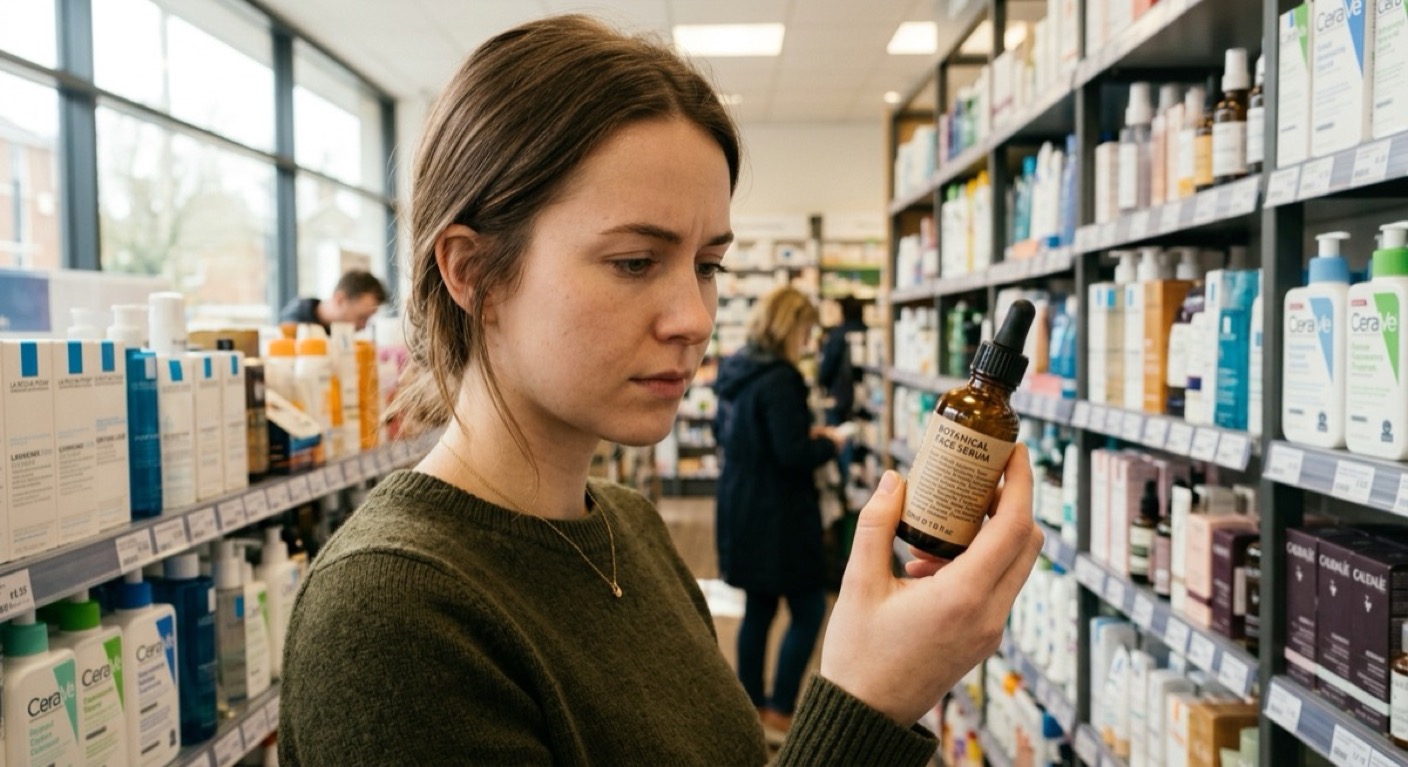
What's Changing on Your Product Label: Canada's 24 Fragrance Allergen Disclosure Starts April 12
Turn over almost any cosmetic or personal care product and you’ll find an ingredient list. For most people, that list ends with “Fragrance” or “Parfum” — a single word that can represent dozens of individual chemical components, kept confidential under trade secret protections. Starting April 12, 2026, Canada is changing that.
Under new Health Canada regulations, cosmetic products must now individually name fragrance allergens present above defined concentration thresholds. The first phase covers 24 allergens. By August 1, the list expands to 81, applying to newly introduced products.
The Problem with “Fragrance”
The word “fragrance” on a label tells you almost nothing. It’s an umbrella term that can legally contain a mixture of dozens of aromatic compounds, solvents, preservatives, and fixatives. Until now, manufacturers weren’t required to disclose which specific fragrance ingredients were used, as long as the blend was listed as a single ingredient.
This opacity has real consequences. Fragrance is consistently ranked among the most common triggers of allergic contact dermatitis — a skin reaction that occurs when an allergen touches the skin. Red patches, itching, or hives on your forearm after applying a body lotion, or irritation around the neck after a hair mist, can point to a specific fragrance compound as the cause. Without ingredient-level disclosure, there’s no way to identify what to avoid.
What Changes on April 12
The new rule sets two different thresholds depending on how a product is used.
Rinse-off products (cleansers, shampoos, body wash, conditioners): allergens present above 0.01% of the formula must be listed by name.
Leave-on products (moisturizers, serums, perfumes, body lotions): the threshold is lower at 0.001%, because these products remain in contact with skin for extended periods.
The logic is straightforward. A cleanser that spends 30 seconds on your skin before rinsing off poses a different exposure profile than a serum you apply every morning and never wash off. The lower threshold for leave-on products reflects that longer contact time.
August 1: From 24 to 81 Allergens
The April rollout covers 24 fragrance allergens identified as the most commonly sensitizing. These include compounds that appear across a wide range of product categories, from luxury fragrances to everyday drugstore cleansers.
From August 1, 2026, newly launched products must disclose 81 allergens — more than three times the initial list. This phased approach gives manufacturers time to update their formulations and labeling while immediately giving consumers access to high-priority information.
Common Allergens You May Start Seeing Listed
Several of the 24 required allergens are compounds that appear frequently in mainstream products.
Limonene: Found naturally in citrus peel, it’s used widely in cleansers, shampoos, and household-scented personal care products to create a fresh, bright scent. Limonene can oxidize over time, and the oxidized form is a more potent allergen.
Linalool: Present in lavender, cinnamon, and mint, linalool is a common ingredient in products marketed as “natural” or “botanical.” It’s a reminder that naturally derived does not automatically mean low-risk for sensitized skin.
Citronellol: A floral-scented compound found in rose and geranium. It’s used in perfumes and skincare with a floral or clean-scent profile.
Eugenol: Extracted from clove, eugenol gives a warm, spiced quality to fragrances. It’s also used in dental products for its antimicrobial properties, but it’s one of the more common causes of fragrance-related skin sensitization.
Cinnamyl Alcohol: Present in cinnamon-derived fragrance families and used in both perfumes and skincare. Patch testing data shows a relatively high rate of positive reactions.
The significance of naming these specifically is that people with known sensitivities — or anyone experiencing unexplained skin reactions — now have a way to cross-reference what’s in the product.
North America Is Moving at Different Speeds
Canada’s April 2026 launch puts it ahead of the US federal timeline. The FDA had initially targeted earlier action on fragrance allergen disclosure, but pushed the implementation to May 2026. Even then, the US approach may differ from Canada’s in scope and threshold design.
At the state level, the US has been more active. Maine and Vermont banned intentional PFAS (per- and polyfluoroalkyl substances — a class of persistent synthetic chemicals) additions in cosmetics starting January 1, 2026. Connecticut introduced PFAS labeling requirements and pre-notification obligations effective July 1, 2026. California’s Prop 65, which requires businesses to provide warnings about significant exposures to chemicals that cause cancer or reproductive harm, added new substances including vinyl acetate and BPS in 2026.
The regulatory picture is patchwork, especially across US states, but the direction is consistent: more disclosure, more specificity, more accountability.
How to Use This When Shopping
You don’t need to memorize 24 allergen names to benefit from this change. Here’s what becomes more practical.
For sensitive skin, checking for specific allergens by name is now possible. If you’ve reacted to a product before and wondered whether linalool or limonene was the cause, that information will be on the label.
For daily staples like cleansers and shampoos, the 0.01% threshold means some products with lower concentrations won’t trigger disclosure. But products that do list allergens give you a cleaner signal.
For leave-on products you use every day, the 0.001% threshold is strict enough that the list will often be more complete. This is where the disclosure matters most.
If you’re trying a new product for the first time, a simple patch test on the inside of your wrist — wait 24 hours before full use — remains a practical first step regardless of what the label says.
The shift that starts April 12 is incremental. But it moves the baseline. “Fragrance” becomes a less convenient hiding place, and the compounds that have been shaping your skin’s response for years start getting names.
Q. Does this affect me if I don’t have known fragrance allergies?
Fragrance allergy is one of the most common causes of contact dermatitis, and many people don’t know they’re sensitized until they react. Expanded disclosure makes it easier to identify problem ingredients before a reaction happens, especially if you have sensitive skin or have experienced redness and itching after using certain products.
Q. Why are the thresholds different for rinse-off and leave-on products?
Longer skin contact time means a greater chance for a substance to be absorbed or trigger a reaction. Rinse-off products like cleansers and shampoos wash away quickly, so the threshold is 0.01%. Leave-on products like moisturizers and serums stay on skin throughout the day, which is why the disclosure kicks in at a lower concentration of 0.001%.
Q. Will existing products already on shelves have to change their labels by August 1?
The August 1 expansion to 81 allergens applies to newly introduced products. Products already in distribution are not required to immediately reformulate or relabel. To get the most complete information, check the label on newly launched products or look up the full ingredient list on the brand’s official website.