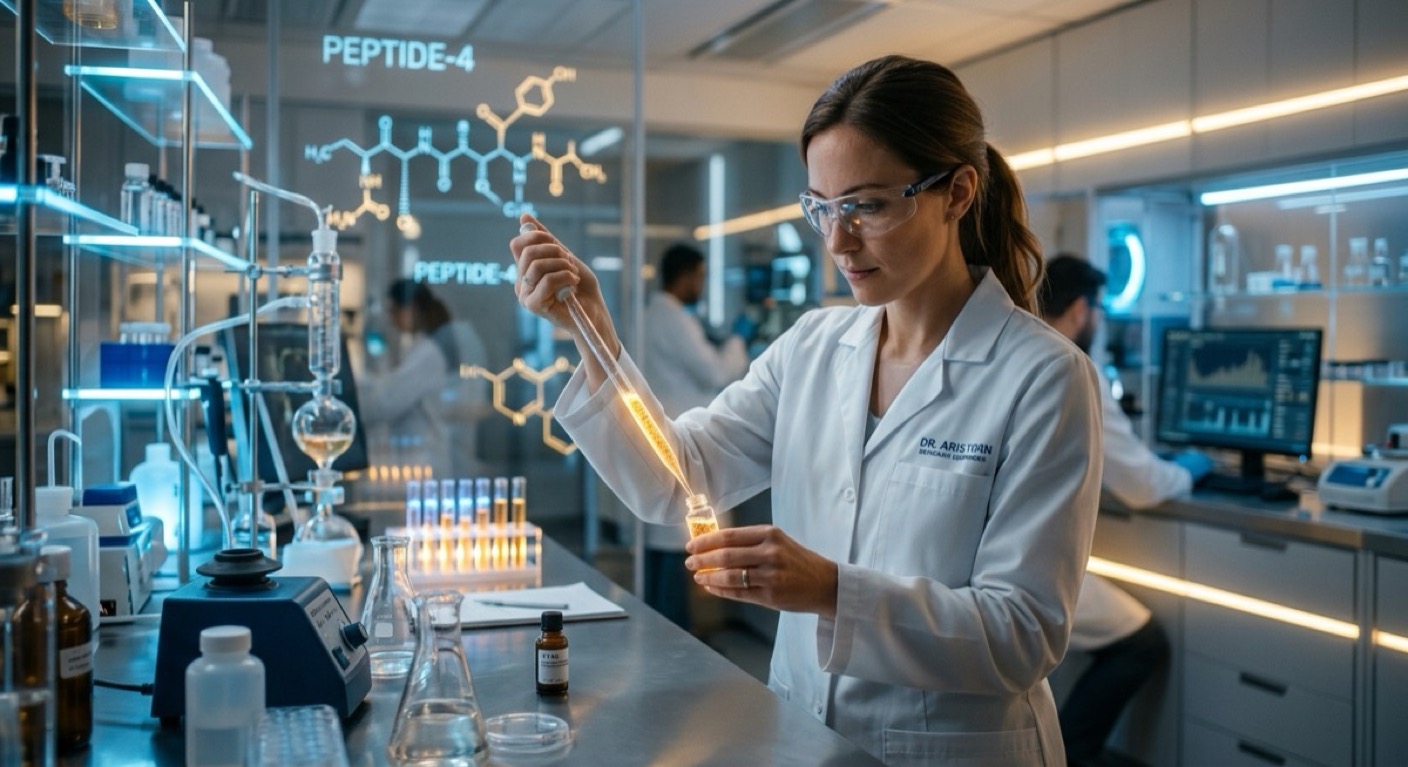
AI-Engineered Peptides Mark the Next Chapter of Skin Longevity
The word “anti-aging” has quietly started to disappear from skincare in 2026. In its place: “skin longevity,” a framework asking not how to reverse time, but how long skin can function at its best. At the center of that shift are peptides designed not in a lab, but by artificial intelligence.
A New Formula for Ingredient Development
Traditional ingredient development was built on years of iterative trial. Hypothesize, synthesize, test, fail, repeat. AI reverses the sequence. Before a single compound enters the lab, machine learning models can simulate the bioactivity (the biological effect on living cells) of thousands of amino acid sequences simultaneously, predict skin penetration rates, and evaluate formulation stability. Only the most promising candidates move to physical synthesis. Development cycles that once took three to five years now compress into months.
The shift is not merely about speed. The range of variables AI can process simultaneously exceeds what a chemist can intuitively manage. How a single amino acid substitution affects collagen synthesis signaling, membrane permeability, and dermal residence time all at once, that is a calculation that requires computational power to explore properly. AI functions both as a processing tool for complexity and as a generator of hypotheses that human researchers might never reach alone.
Multi-Functional Peptide Architectures
The peptides drawing attention in 2026 are not single-purpose molecules. A new class of multi-functional peptide architectures operates on several fronts simultaneously: stimulating collagen production, activating skin cell repair pathways, and improving firmness within a single molecular structure. The working description in research circles is “ingredients that communicate with skin cells.”
This direction extends further when paired with exosomes, the nano-scale biological particles that cells use to exchange information and signals. Signal peptides carry messages promoting collagen and elastin synthesis. Carrier peptides transport minerals such as copper and zinc deeper into the dermis. Neuropeptides modulate skin sensitivity by interacting with sensory nerve pathways. The research frontier involves delivering all three functions within a single formulation architecture, something that was not practically achievable before AI-assisted modeling made it possible to predict how these components interact inside the skin environment.
Pep 14 and the Senescence Question
Senotherapeutic peptide Pep 14 is among the most cited candidates in current skin longevity research. Its mechanism targets cellular senescence, the state in which skin cells lose normal function and begin releasing pro-inflammatory signals into surrounding tissue. Pep 14 works by reducing that senescent cell burden and promoting tissue rejuvenation in parallel.
The comparison data against retinol is what draws particular attention. Pep 14 has shown retinol-comparable tissue regeneration in research settings, without triggering the irritation (redness, peeling, sensitization) associated with retinoid use. The mechanisms, however, are meaningfully different. Retinol accelerates cellular turnover and keratinocyte cycling. Pep 14 works further upstream, targeting the senescent cells themselves, either clearing them or restoring their functional capacity. For anyone already using retinol, the more accurate framing is not substitution but complementary action at a different biological layer.
NAD+ and the Energy Problem
A second category of ingredients gaining momentum alongside peptides addresses something more fundamental: cellular energy. NAD+ (nicotinamide adenine dinucleotide), along with its precursor NMN (nicotinamide mononucleotide), is essential to the processes by which cells generate energy and repair DNA damage.
Skin cells experience declining NAD+ levels with age. Lower NAD+ slows damage recovery, increases inflammatory vulnerability, and reduces the capacity to respond to collagen synthesis signals. Topical delivery of NAD+ or NMN, particularly in combination with peptide carrier systems, is an active area of development. The underlying argument is straightforward: even the most precisely engineered peptide signal is limited if the target cell lacks the metabolic resources to respond to it. Cellular energy and cellular signaling are not separate problems.
Targeting the Hallmarks of Aging
What connects these developments is a shared set of biological targets. Researchers refer to the “hallmarks of aging,” a framework describing the core mechanisms driving cellular deterioration: genomic instability (accumulation of DNA damage over time), telomere attrition (the shortening of chromosome ends with each cell division), epigenetic alterations (changes in how genes are expressed without changes to the underlying DNA sequence), and inflammaging (the chronic, low-grade inflammatory state that accelerates aging processes throughout the body, including skin).
AI-designed peptides are being developed with these specific mechanisms as targets, rather than addressing visible symptoms after the fact. The framing shifts from correction to maintenance, from reactive treatment to proactive cellular support.
Korean R&D at the Precision Formulation Frontier
Korean research and development companies occupy a leading position globally in exosome technology, recombinant growth factors, and advanced peptide combination formulations. The exosome-peptide pairing in particular addresses a delivery challenge that conventional serums cannot solve: getting active signals to the dermal depth where they can influence fibroblast activity and collagen production directly. Current estimates suggest that formulations now in preclinical stages will begin reaching consumer markets within two to three years, with Korean R&D pipelines representing a significant share of what will arrive.
The terminology shift from “anti-aging” to “skin longevity” is not cosmetic. It reflects a genuine change in what skincare research is attempting to achieve at the cellular level, and AI-engineered peptides are the instrument making those attempts more precise than previously possible.
How does AI design peptides?
AI simulates bioactivity across thousands of amino acid sequences, predicts stability and skin penetration, then selects the most effective combinations. This compresses years-long ingredient development cycles into months.
Can Pep 14 replace retinol?
Pep 14 is a senotherapeutic peptide that reduces cellular senescence and promotes tissue rejuvenation, showing retinol-comparable results. However, their mechanisms differ, making them complementary rather than interchangeable.
Are AI-designed peptide products already on the market?
Some brands have launched products using AI-driven ingredient discovery, but most advanced formulations are still in preclinical or early clinical stages. Korean R&D companies are leading in exosome-peptide combination formulations.