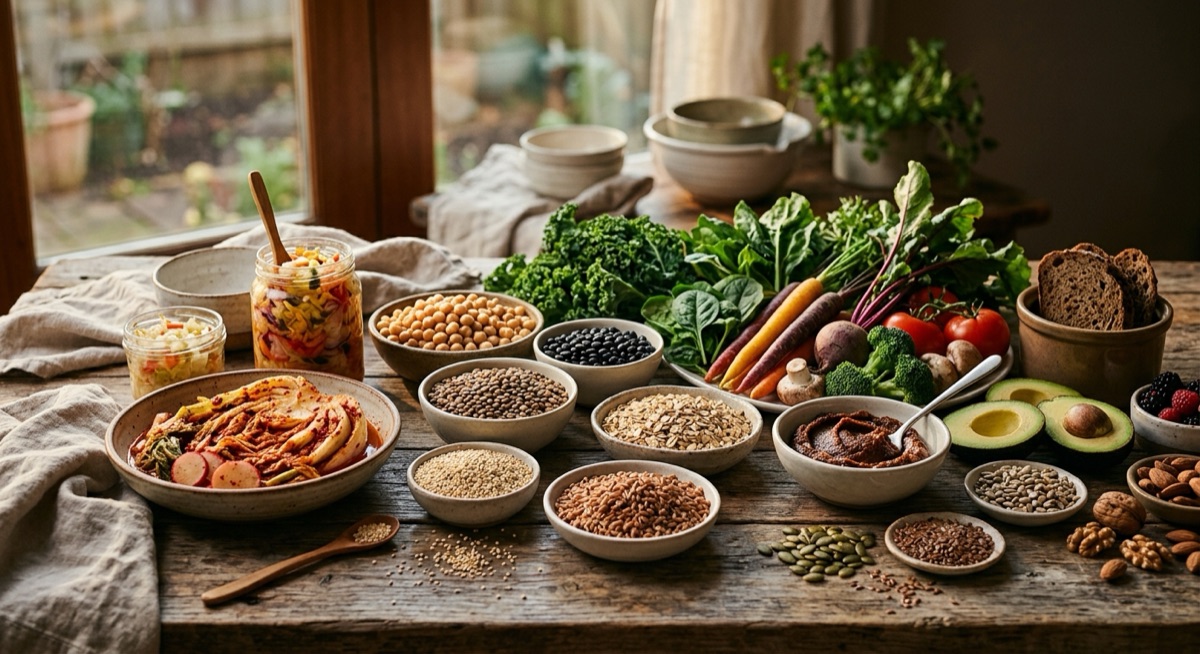
Yale Microbiome Study — Industrialized Diet Recycles Estrogen 7x in Gut. The Hidden Architect of Lifetime Hormone Exposure
Hormones aren’t just made by drugs — they’re remade in the gut. Specifically, estrogen that the liver has processed and excreted gets reactivated by gut microbiomes and returned to the body. This circuit is called the estrobolome. The Yale study published in PNAS on April 28, 2026 quantified for the first time that this circuit is up to 7x more active in industrialized populations than non-industrialized ones. The formula vs breastfed infant difference is 11x. A new frame emerges where lifetime estrogen exposure is decided by what diet·environment you grew up in.
What Is the Estrobolome
The liver conjugates blood estrogen with glucuronic acid into an inactive form, excreted via bile into the gut. Normally this inactive estrogen exits in stool. But certain gut bacteria (notably Bacteroides·Clostridium) secrete the enzyme β-glucuronidase, which breaks the conjugation and reactivates estrogen. Reactivated estrogen reabsorbs through the gut mucosa back into bloodstream. This circuit is the estrobolome.
Yale Study — 4 Continents, 24 Populations
Study design:
- 4 continents (Africa·South America·Asia·North America·Europe), 24 populations
- Industrialized (US·European urban) vs non-industrialized (Amazon·African hunter-gatherer·rural farmer) comparison
- Fecal microbiome metagenomics + β-glucuronidase gene expression·activity measurement
Key results:
| Comparison group | Estrogen recycling capacity |
|---|---|
| Non-industrialized (hunter-gatherer·traditional farming) | Baseline 1x |
| Industrialized (US·European urban) | Up to 7x |
| Formula-fed infants | 11x microbiome diversity gap vs breastfed |
Why more active in industrialized populations:
- Fiber deficiency → β-glucuronidase bacteria dominance
- High antibiotic exposure → microbiome diversity ↓
- Processed food·sugar → Bacteroides·Clostridium proliferation
- Short breastfeeding → infancy microbiome formation gap
Clinical Significance — Lifetime Estrogen Exposure
Direct connection to women’s health:
- Lifetime cumulative estrogen exposure ↑ → breast·ovarian·endometrial cancer·endometriosis risk ↑
- Aligns with industrialized society incidence rates 5~10x higher than non-industrialized for these cancers
- In postmenopausal estrogen-dependent tumor patients, estrobolome changes affect drug efficacy
Estrobolome and drug interactions:
- In aromatase inhibitor (letrozole·anastrozole) users, gut-reactivated estrogen levels determine drug efficacy
- Patients with elevated β-glucuronidase activity may show reduced drug effect
Infancy Is Decisive
The most striking finding is the estrobolome difference between formula-fed vs breastfed infants:
- Breastfed infants: diverse bacteria + low β-glucuronidase activity
- Formula-fed infants: low bacterial diversity + high β-glucuronidase activity
- 11x difference (microbiome diversity basis)
- This gap persists into adolescence·adulthood per observed patterns
The first 6 months~2 years of life build the foundation of lifetime estrogen exposure. Korean society breastfeeding rate at 6 months is ~22% (vs WHO recommendation of 6 months exclusive breastfeeding). US ~25%. Non-industrialized 90%+.
Environmental Factor Matrix
Factors affecting the estrobolome:
| Factor | Direction | Mechanism |
|---|---|---|
| Fiber ↑ | Estrogen recycling ↓ | β-glucuronidase activity ↓ |
| Breastfeeding ↑ | Stable microbiome | Diversity preservation |
| Antibiotic use ↓ | Estrobolome preservation | Microbiome preservation |
| Fermented food ↑ | β-glucuronidase activity ↓ | Lactobacillus enhancement |
| Processed food·sugar ↓ | Estrogen recycling ↓ | Bacteroides reduction |
| Exercise ↑ | Microbiome diversity ↑ | Gut motility ↑ |
Natural Matrix — Estrobolome Normalization Strategy
Diet:
- Fiber 25~35 g/day (women baseline)
- Daily fermented food (kimchi·doenjang·yogurt·kefir)
- Cruciferous vegetables (broccoli·cauliflower): I3C·DIM stabilize estrogen metabolism
- Flaxseed 1~2 tbsp/day: lignans → estrogen balance
Lifestyle:
- Cautious antibiotic use (only when necessary)
- Exercise 150+ min/week moderate intensity
- Chronic stress management (cortisol shifts microbiome)
- Adequate sleep (microbiome circadian rhythm)
Supplement options:
- Probiotics (Lactobacillus·Bifidobacterium multi-strain)
- Calcium D-glucarate (β-glucuronidase inhibitor)
- DIM (diindolylmethane) 100~200 mg/day
Drug Matrix — Estrogen-Dependent Conditions
Breast cancer:
- Hormone receptor-positive patients: estrobolome changes may influence aromatase inhibitor·SERD efficacy
- Microbiome testing may emerge as drug efficacy predictor
Endometriosis:
- Estrogen-dependent disease → estrobolome normalization is adjunct therapy
- New drug ENDO-205 (non-hormonal target) potentially combinable with microbiome matrix
Korean Clinical Significance
Korea’s rapid industrialization shifted the estrobolome within 1~2 generations:
- Pre-1980s: non-industrialized pattern (fiber·fermented food·breastfeeding)
- Post-2000s: industrialized pattern (processed food·antibiotics·formula)
- Result: breast cancer incidence increased
3x between 19802020 (Korea Central Cancer Registry)
This data suggests environmental factors (including the estrobolome) — not just genetics — are major variables in Korean women’s health.
Conclusion
Yale’s PNAS study expands the hormone·drug-centric women’s health frame into a microbiome-based environmental frame. Industrialized diet recycles estrogen 7x in the gut, and the 11x infancy gap accumulates over a lifetime. Beyond drug·hormone testing, microbiome testing + fiber·fermented food·lifestyle is settling as the new primary matrix for women’s health.