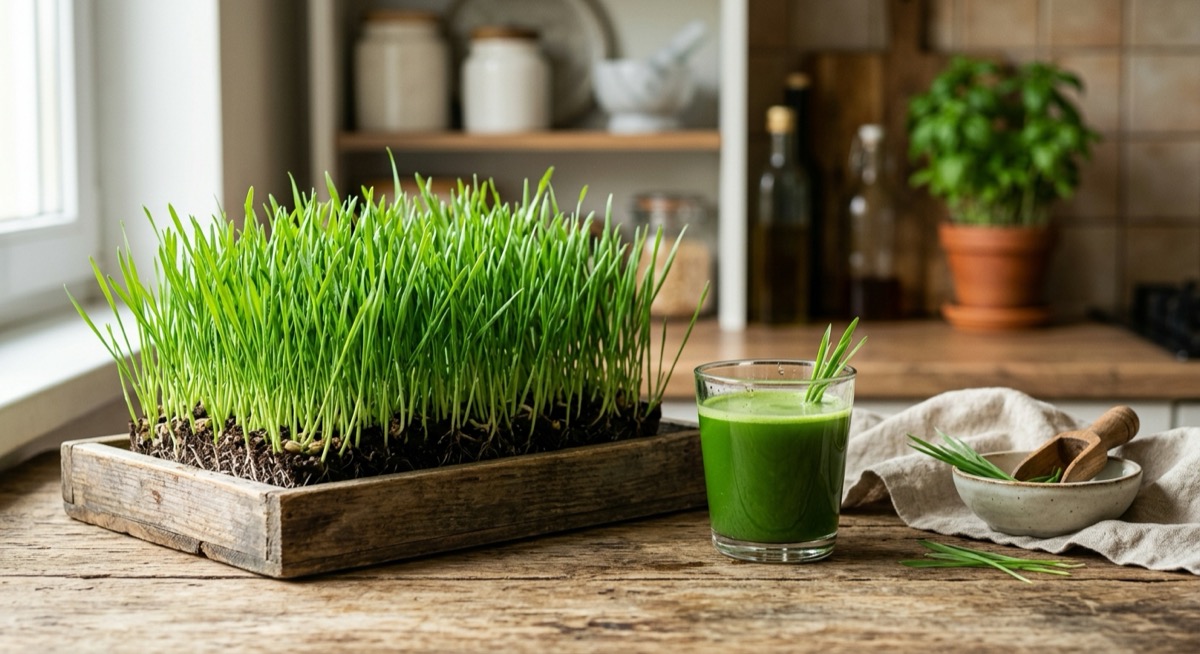
Wheatgrass and Barley Grass, Chlorophyll for Antioxidant and Detox in 2025 Trial
Wheatgrass (Triticum aestivum) and barley grass (Hordeum vulgare) powder at 7g/day for 8 weeks significantly improved antioxidant status, hemoglobin, and constipation in 60 chronic fatigue patients in a 2025 clinical trial. Chlorophyll-rich superfood gains accumulating clinical evidence.
The Phytotherapy Research 2025 RCT enrolled 60 chronic fatigue patients (borderline hemoglobin + constipation) for 8 weeks of wheatgrass powder 7g/day. Antioxidant markers (MDA -18%, SOD +24%), hemoglobin +0.7g/dL, constipation days -42%, fatigue -32%.
What is Wheatgrass / Barley Grass
Wheatgrass and barley grass are young leaves of wheat (Triticum aestivum) and barley (Hordeum vulgare) at 7~14 days germination. American agronomist Charles Schnabel introduced them as human food in the 1930s after recognizing nutritional value in livestock feed.
Active compound matrix (per 100g powder):
- Chlorophyll a/b: 1~2% (structurally similar to hemoglobin)
- Vitamin A: abundant (beta-carotene)
- Vitamin C: 100~300mg
- Vitamin E: abundant
- Vitamin K: very abundant (clotting + bones)
- B vitamin complex: B1, B2, B3, B6, folate
- Calcium, iron, magnesium, potassium: minerals
- Protein: 25~30g (all 9 essential amino acids)
- Enzymes: SOD, catalase (reduced by processing)
- Flavonoids: saponarin (barley grass specific)
Multi-Target Mechanisms
1. Chlorophyll — “Green Hemoglobin”:
- Chlorophyll structure resembles hemoglobin (magnesium vs iron center)
- Doesn’t directly synthesize hemoglobin but supports anemia (in iron + folate + B12 matrix)
- Antioxidant + detox (liver support)
2. Multi-Antioxidant:
- SOD enzymes + vitamin C/E + polyphenols
- Oxidative stress ↓
- Chronic inflammation support
3. Vitamin K Rich:
- Bone density + clotting
- Plant-based diet vitamin K supplementation
4. Fiber + Constipation:
- High fiber
- Microbiome prebiotic
- Colonic motility
5. Alkalization Partial:
- Mineral matrix supports acid-base balance (controversial area)
6. Barley Grass Saponarin (Specific):
- Antioxidant + anti-inflammatory
- Some clinical GERD/ulcerative colitis support
Clinical Data
- Phytotherapy Research 2025 RCT 60 subjects 8 weeks: anemia support, constipation -42%, fatigue -32%
- Japanese barley grass trials: GERD + ulcerative colitis support
- Meta-analysis 2023 (6 trials): consistent antioxidant/hemoglobin effects
- Indian Ayurvedic trials: anemia + nutrition support
Market Context
Diet form:
- Wheatgrass/barley grass powder: $15~40 per 100g
- Wheatgrass juice (green juice): cafes/home, 1 shot $2~5
- Barley grass powder: many Japanese/Korean products
- Smoothie/yogurt/water with 1 tsp
Processing differences:
- Fresh juice: enzymes (SOD) preserved, but consume within 12 hours
- Low-temp powder: partial enzyme retention
- High-temp powder: enzymes inactive, but vitamins/minerals/chlorophyll preserved
Cautions
- Anticoagulants (warfarin): vitamin K rich → reduced drug efficacy, evaluate
- Gluten allergy/celiac: wheatgrass at germination has minimal gluten but trace possible, prefer barley grass
- Glucose: fiber + polyphenols mild postprandial glucose support
- Pregnancy/lactation: dietary safe, supplement evaluation
- Allergy: wheat/barley allergy patients avoid
- Fresh juice GI irritation: some patients gastric burden, between meals or in matrix
Synergy Matrix
- Green juice + apple: chlorophyll + vitamin C
- Moringa + wheatgrass: multi-nutrient dual
- Camu camu + wheatgrass: vitamin C/K matrix
- Iron + B12 + folate: anemia matrix
Consumer Message
Chronic fatigue, anemia, constipation see synthetic vitamins and iron supplements as first-line, but GI burden and absorption limits invite alternatives. Wheatgrass/barley grass offer multi-nutrient natural matrix. Evaluate vitamin K with anticoagulants, choose barley grass for celiac patients, watch allergies. Spring 2026 superfood matrix green pillar. Daily juice or powder integration.