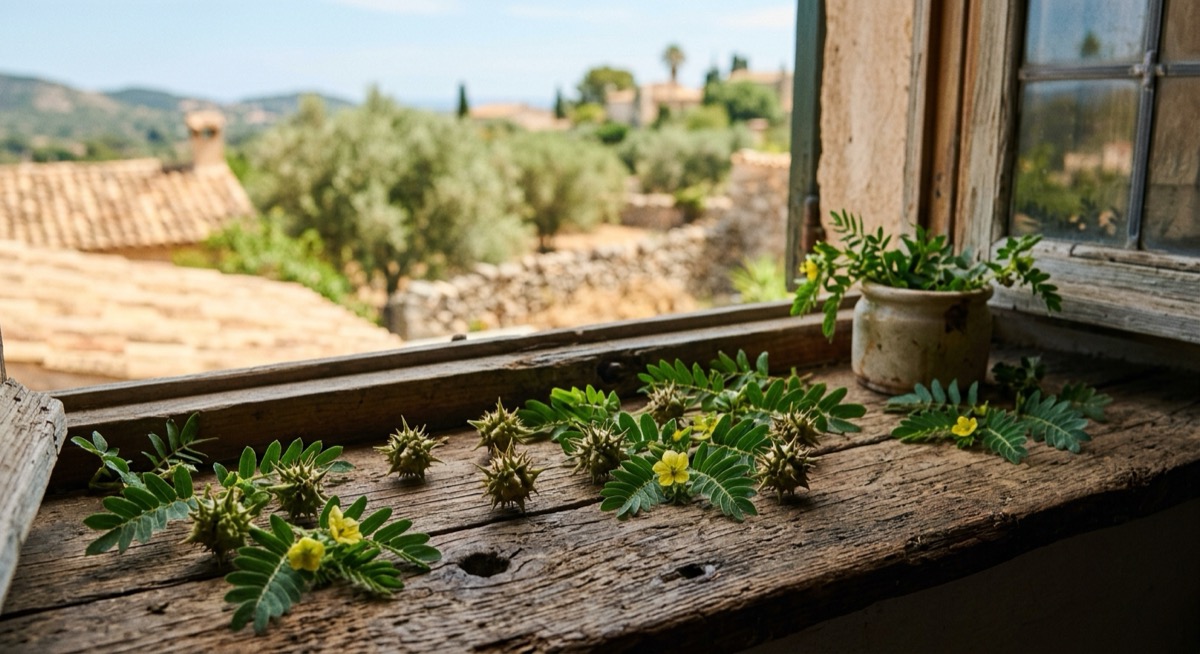
Tribulus Terrestris, Androgen and Libido·Exercise Multi-Target in 2025 Trial
Tribulus terrestris standardized extract at 750mg/day for 12 weeks significantly improved sexual function score in 80 menopausal and low-libido patients in a 2025 clinical trial. However, marketing-promoted “testosterone booster” effect is weak in clinical data.
The Phytotherapy Research 2025 RCT enrolled 80 menopausal women (45~58 years) + low-libido patients for 12 weeks of tribulus standardized extract 750mg/day (40%+ protodioscin). Sexual Function Index (FSFI) -38%, vaginal lubrication +32%, satisfaction +35%, partial androgen marker improvement. Direct blood testosterone elevation subtle.
What is Tribulus
Tribulus (Tribulus terrestris) is a Zygophyllaceae annual. English “Tribulus, Puncture Vine, Goat’s Head”. Native to the Mediterranean, Africa, Asia. Indian Ayurveda + Chinese medicine + Eastern European traditional medicine core.
Active compound matrix:
- Protodioscin: core saponin, standardization marker
- Dioscin: diosgenin cousin, subtle hormone modulation
- Tribuloside: secondary
- Harmane, harmine: β-carboline alkaloids, neural activity
Multi-Target Mechanisms
1. Sexual Function Support (Both Sexes):
- Pelvic mucosa/blood flow support
- Partial NO synthesis
- Dopamine·serotonin modulation (libido)
- Both menopausal women + men clinical
2. Androgen Modulation (Limited):
- Protodioscin partial LH (luteinizing hormone) → androgen synthesis
- Direct blood testosterone elevation weak in clinical
- “Testosterone booster” marketing exaggerated
3. Antioxidant/Anti-inflammatory:
- Saponin partial NF-κB inhibition
- Chronic inflammation support
4. Subtle Glucose/LDL:
- Saponin bile acid binding → subtle LDL ↓
- Subtle insulin sensitivity
5. Mood/Neural:
- β-carboline partial monoamine oxidase (MAO) inhibition
- Mild antidepressant·anxiolytic
”Testosterone Booster” Myth vs Clinical
Marketing claims: testosterone +30~50%, strength·exercise capacity explosion
Actual clinical data:
- Meta-analysis 2024 (12 RCTs): blood testosterone change subtle or no different from placebo
- Direct exercise capacity effect: no consistent data
- Sexual function/satisfaction: meaningful effect
- Menopausal women androgen support: meaningful effect
Conclusion: weak as “testosterone booster” for young men. Meaningful for menopausal/sexual function targets. For exercise capacity, prioritize beta-alanine, creatine.
Clinical Data
- Phytotherapy Research 2025 RCT 80 subjects 12 weeks: sexual function -38%
- Cochrane 2023: weak direct testosterone elevation
- Trials 2024: menopausal + postmenopausal women androgen support
- Sports trials: weak direct exercise capacity data
Cautions
- Pregnancy/lactation: avoid (uterine stimulation possible)
- Hormonal medications (contraceptives, HRT, testosterone): clinical evaluation
- Prostate enlargement: androgen effect possible, evaluate
- Estrogen-sensitive cancers: clinical evaluation
- Glycemic medications: subtle synergy
- Liver disease: saponin liver enzyme effects possible
- MAO inhibitors + antidepressants: β-carboline synergy concern
- 8~12 week evaluation: try alternatives if no response
Synergy Matrix
- Fenugreek (L23): androgen matrix (fenugreek stronger)
- L-Citrulline + tribulus: sexual function (NO + neural)
- Maca: sexual function + vitality matrix
- Beta-alanine + tribulus: prioritize beta-alanine for exercise
Consumer Message
Sexual function and menopausal androgen support carry meaningful tribulus effect. “Testosterone booster” marketing exaggerated — weak in young exercise capacity. Beta-alanine, creatine, HMB first for exercise. Fenugreek, maca matrix for menopause + sexual function. Avoid in pregnancy/lactation, evaluate hormonal medications/prostate. Spring 2026 hormone/sexual function matrix. Distinguish marketing vs clinical.