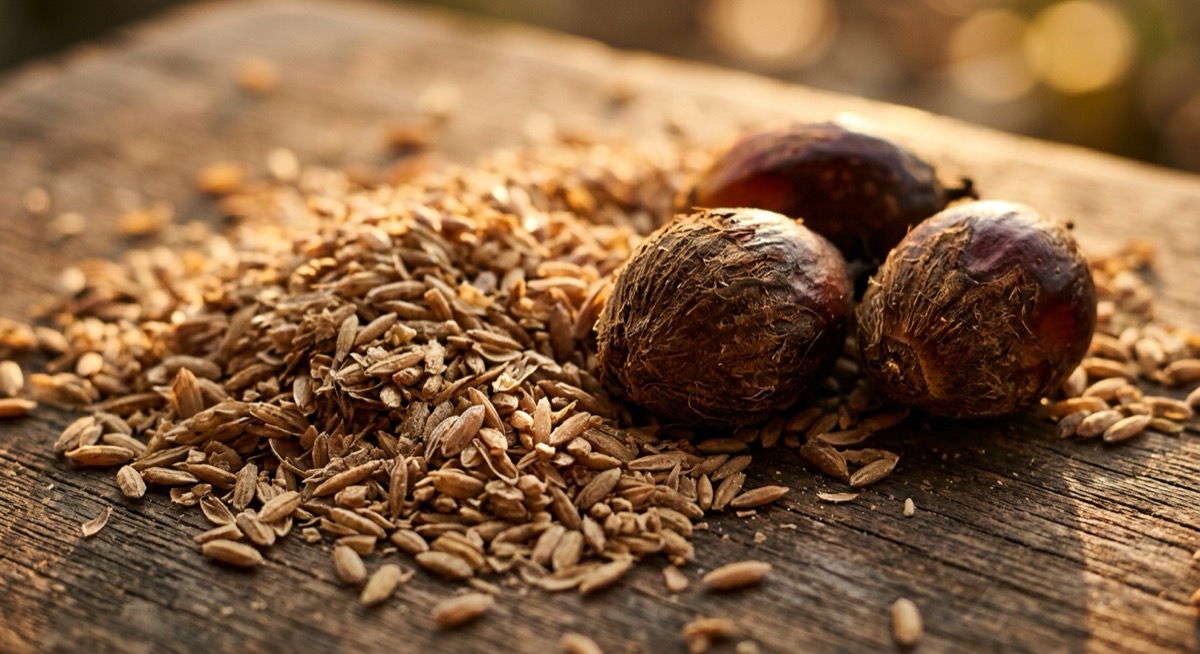
Tocotrienol Inhibits Ferroptosis 15x More Strongly than Tocopherol, Tohoku University Reports
Researchers at Tohoku University (Japan) reported in January 2026 that tocotrienol is 15x more potent than tocopherol at inhibiting ferroptosis (iron-dependent cell death). Both are grouped under “vitamin E,” but the data show they are functionally distinct molecules. Tocotrienol provides stronger protection in ferroptosis-mediated pathologies — aging, neurodegeneration, cardiovascular disease, and certain cancers. A significant signal for the palm-oil and rice-bran tocotrienol market.
The team compared tocotrienol and tocopherol at equal concentrations in a ferroptosis-inducing cell model. Result: tocotrienol inhibited ferroptosis 15x more effectively. Mechanism: tocotrienol’s unsaturated side chain penetrates deeper into membranes and quenches lipid peroxidation chain reactions more rapidly. The data expose the limits of grouping vitamin E as one nutrient.
Vitamin E — Eight Molecules, Not One
Structure:
- α, β, γ, δ × 2 groups = 8 molecules
- Tocopherols: α, β, γ, δ-tocopherol
- Tocotrienols: α, β, γ, δ-tocotrienol
Why they all got lumped under one label:
- α-tocopherol was dominant at the 1922 discovery
- Antioxidant mechanism is shared
- IU units defined against α-tocopherol
- RDAs revolve around α-tocopherol
- The other 7 molecules were eclipsed
Market share:
- Standard multivitamin E: 95%+ α-tocopherol
- Tocotrienol-containing products: <1%
- Price: tocotrienol 3-5x more than tocopherol
- Awareness: most consumers have never heard of tocotrienol
Tocopherol vs Tocotrienol — Structural Difference
Shared structure:
- Chromanol head — the antioxidant active site
- Side chain — controls membrane penetration
Differences:
- Tocopherol: saturated side chain
- Tocotrienol: three double bonds (triene) on the side chain
- Tocotrienol is more flexible and penetrates deeper into membranes
Functional consequence:
- Tocopherol: outer membrane antioxidant action
- Tocotrienol: works deep in the membrane, breaks lipid peroxidation cascades faster
- Higher antioxidant efficiency
Ferroptosis — A Newly Recognized Mode of Cell Death
What it is:
- Named in 2012 by Stockwell at Columbia University
- Iron-dependent cell death
- Cell membrane destruction via lipid peroxidation
- Distinct from apoptosis and necrosis
- Implicated in aging, neurodegeneration, cardiovascular disease, and cancer
Why antioxidants matter:
- Ferroptosis is a lipid peroxidation chain reaction
- Antioxidants can break the chain
- Glutathione (GSH) and GPX4 provide intrinsic defense
- External antioxidants (vitamin E) support these systems
Ferroptosis-related conditions:
- Neurodegeneration: Alzheimer’s, Parkinson’s, Huntington’s
- Cardiovascular: myocardial infarction, heart failure
- Renal: acute kidney injury
- Aging itself: cellular senescence and tissue atrophy
- Cancer: some tumor cells are ferroptosis-sensitive
Why 15x Is Clinically Meaningful
Interpreting 15x:
- 5x is a simple efficiency gap
- 10x suggests mechanistic superiority
- 15x suggests clinical relevance
- Tocotrienol may block ferroptosis that tocopherol cannot
Neuroprotection:
- Alzheimer’s and Parkinson’s hypothesized as ferroptosis-mediated
- Tocotrienol trials are underway
- 6-12 month RCTs in older adults with cognitive decline are needed
- Could shift the standard for neuroprotective supplementation
Cardiovascular:
- LDL oxidation and atherosclerosis tied to ferroptosis
- Tocotrienol potently inhibits LDL oxidation
- Trials in cardiovascular-risk cohorts may accelerate
Skin aging:
- UV and PM exposure → lipid peroxidation → ferroptosis
- Topical tocotrienol formulations in development
- Expect cosmeceutical entries from Korean and Japanese brands
Dietary Sources of Tocotrienol
Top sources (mg/100g):
- Annatto seed: 9-12 mg (delta and gamma forms)
- Crude palm oil: 5-8 mg
- Rice bran oil: 3-5 mg
- Coconut oil: 2-3 mg
- Barley and oats: 0.5-1 mg
Gaps in typical Western and Korean diets:
- Soybean and sunflower oils mostly contain α-tocopherol
- Palm oil and rice bran oil are uncommon
- Annatto is rare outside specific cuisines
- Many people likely undersupplied
Practical sources:
- Switch to rice bran oil
- Fermented soy (natto) carries some
- Whole barley and oats
- Supplementation (50-150 mg/day)
Supplement Selection Guide
Tocotrienol product types:
- Annatto-derived: delta and gamma tocotrienol only, tocopherol-free
- Palm oil-derived: all four forms plus α-tocopherol
- Rice bran-derived: balanced four-form
Dose guide:
- General antioxidant: 50 mg/day
- Active anti-aging: 100-200 mg/day
- Trial doses: 200-400 mg/day
- Side effects: minimal when taken with food
Cautions:
- Increased bleeding risk with warfarin or other anticoagulants
- α-tocopherol competes — co-supplementation can reduce absorption
- Pregnancy and lactation data limited
- Fat-soluble — take with meals
Market Outlook
Current state:
- Multivitamin E = α-tocopherol = the standard
- Few standalone tocotrienol products
- Price gap is a consumer barrier
Next 12-24 months:
- Academic attention will rise post-Tohoku
- Cosmeceutical brands will launch tocotrienol lines
- “Vitamin E” supplements will fragment
- Shift from α-tocopherol-only to multi-tocopherol-and-trienol products
Buying criteria:
- General antioxidant care: α-tocopherol is enough
- Anti-aging or neuroprotection: add tocotrienol
- Family history (Alzheimer’s, cardiovascular): seriously consider tocotrienol
- Pregnancy or lactation: stick to α-tocopherol
Limitations
Study limitations:
- Cell model, not a human trial
- Single mechanism (ferroptosis) tested
- Effects on apoptosis or necrosis not evaluated
- Single group (Tohoku), needs replication
Open questions:
- Will the 15x effect hold in humans?
- Which clinical targets benefit most?
- Synergy or competition with tocopherol when co-administered?
- Long-term safety (2-5 years) unconfirmed
Realistic next steps:
- Human RCTs in cognition, cardiovascular, skin aging
- Optimal tocopherol + tocotrienol combination ratios
- Direct annatto vs palm vs rice bran comparison
- Price reduction unlocking broader market
The Bigger Picture — “Vitamin E” Is Splitting
Past 100 years:
- Vitamin E = α-tocopherol = antioxidant
- IU and RDA built around α-form
- Other forms ignored
New paradigm:
- Tocopherol and tocotrienol separate categories
- α, β, γ, δ each with distinct profiles
- Target-specific and function-specific selection
- The question shifts from “Am I low on vitamin E?” to “Low on which form?”
Bottom Line
A 15x gap between two molecules that share a name. Tocotrienol and tocopherol are not interchangeable. For anyone serious about aging, neuroprotection, cardiovascular protection, or skin defense, an α-tocopherol-only multivitamin may not be enough — adding tocotrienol-containing supplements or foods is a defensible move. Caveat: the data are from a cell model. Human RCTs over the next 12-24 months will tell us how much of the 15x carries through. Safer to wait, but reasonable to start.