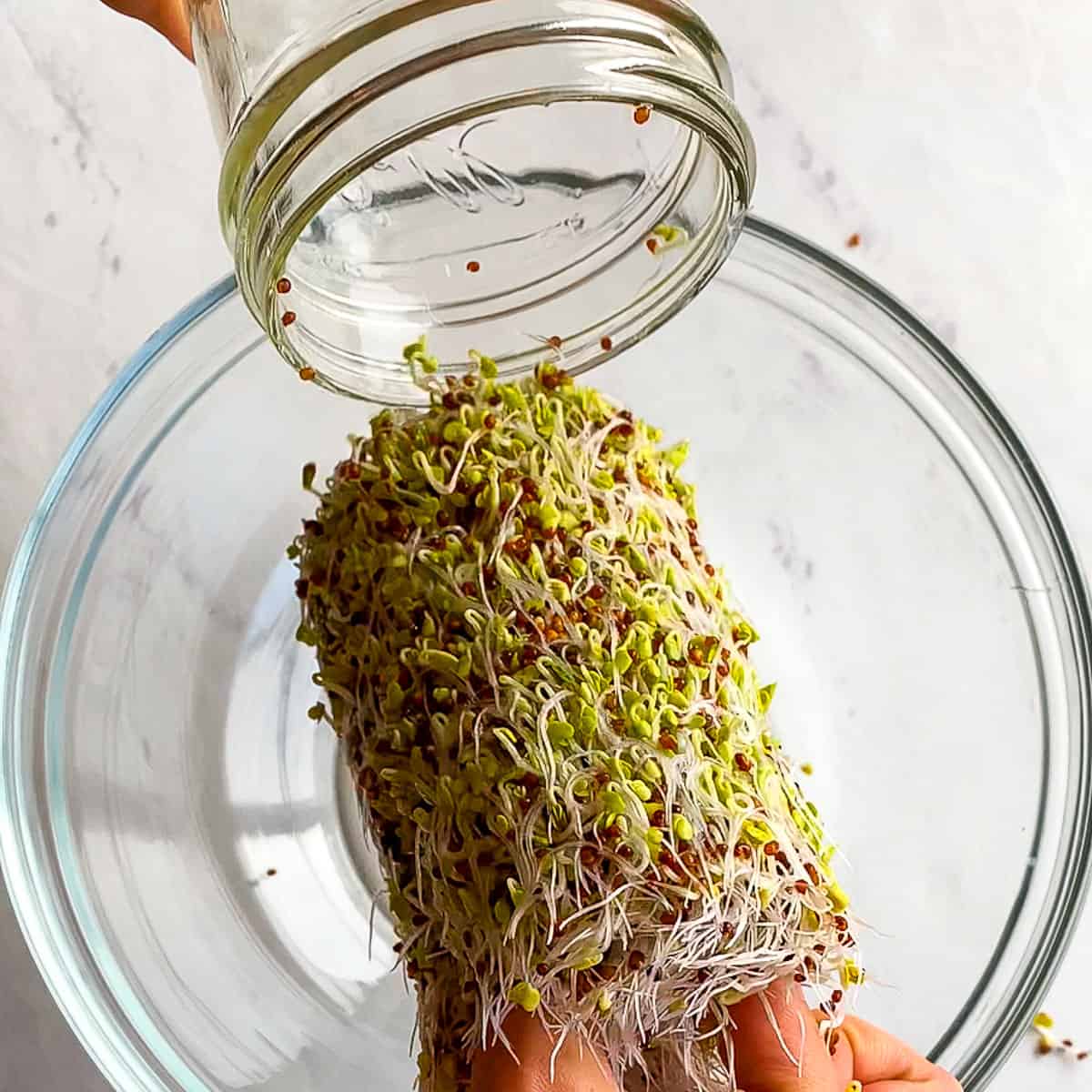
Broccoli Sprouts Have 50x More Sulforaphane. Here's Why It Matters for Skin
Broccoli has maintained a permanent spot on every “healthy foods” list. But the most compelling compound inside it — sulforaphane — is found in dramatically higher concentrations in a form most people walk past at the grocery store: broccoli sprouts. Three-to-five-day-old seedlings, 100g of which contain up to 1,153mg of glucoraphanin, sulforaphane’s precursor. That’s 20 to 50 times the concentration in mature broccoli.
What Sulforaphane Actually Is
Sulforaphane belongs to the isothiocyanate family of compounds found in cruciferous vegetables (broccoli, cabbage, kale, Brussels sprouts). It doesn’t exist preformed in the plant. It’s stored as glucoraphanin, a stable precursor. When cells are broken through chewing or chopping, an enzyme called myrosinase is released and converts glucoraphanin into active sulforaphane.
The reason broccoli sprouts are so much richer is developmental: glucoraphanin concentrations peak in the early germination stage and are gradually converted to other compounds as the plant matures. By the time broccoli reaches full size, most of the glucoraphanin pool has already been metabolized.
The Nrf2 Connection
Sulforaphane’s primary mechanism operates through the Nrf2 pathway — often called the cell’s “antioxidant master switch.” Under normal conditions, Nrf2 is held inactive by the Keap1 protein. Sulforaphane disrupts this Keap1-Nrf2 binding, freeing Nrf2 to migrate to the nucleus and upregulate a battery of endogenous antioxidant enzymes: superoxide dismutase (SOD), catalase, glutathione peroxidase.
The distinction from direct-acting antioxidants like vitamin C is fundamental. Vitamin C neutralizes free radicals directly. Sulforaphane upgrades the cell’s own defense infrastructure. The activation takes more time but sustains longer — Nrf2-driven enzyme expression continues well after sulforaphane itself is cleared from circulation.
For skin, this translates to UV defense. A Johns Hopkins research team demonstrated that topically applied broccoli sprout extract significantly reduced UV-induced erythema (skin redness) in clinical subjects. In oral administration studies, sulforaphane was detected in both plasma and skin tissue at daily doses up to 200μmol, confirming bioavailability to skin from systemic circulation.
How You Prepare It Changes Everything
Preparation method dramatically affects how much sulforaphane you actually absorb. The single biggest variable is myrosinase activity.
Boiling or steaming broccoli deactivates myrosinase through heat. Without active enzyme, glucoraphanin cannot convert to sulforaphane. Glucoraphanin supplements without active myrosinase show roughly 10% conversion efficiency.
To maximize yield:
- Eat sprouts raw: Chewing and chopping, then waiting about 10 minutes before eating, allows myrosinase-glucoraphanin contact time to maximize conversion
- Pair cooked broccoli with mustard seed powder: Mustard seeds are rich in myrosinase. Research found that adding mustard seed powder to cooked broccoli increased sulforaphane metabolites by more than 4x compared to cooked broccoli alone
- Choose stabilized supplements: Products containing active myrosinase alongside glucoraphanin achieve approximately 40% conversion
Who Should Be Cautious
Raw sprouts carry foodborne illness risk (Salmonella, E. coli contamination). Pregnant women, immunocompromised individuals, and elderly people should approach raw sprout consumption carefully.
Those taking warfarin or managing thyroid conditions should maintain consistent cruciferous vegetable intake rather than eliminating or dramatically increasing it, and discuss changes with their healthcare provider.
Individual variation in gut microbiota composition creates significant differences in sulforaphane conversion efficiency. Two people eating identical amounts can show blood sulforaphane levels varying several-fold.
Topical Application
Sulforaphane in skincare remains early-stage. Nrf2 activation through topical application has been demonstrated in research settings, and the UV-protective application — as a complement to sunscreen rather than a replacement — is the most studied direction. Formulation challenges exist: sulforaphane itself is chemically unstable, making stable cosmetic delivery technically demanding. Stabilized broccoli sprout extract formulations are available in a small number of professional-grade products.
Dietary inclusion remains the most accessible route: 100g of broccoli sprouts mixed into salads or smoothies 3-4 times per week delivers glucoraphanin equivalent to a full head of mature broccoli.