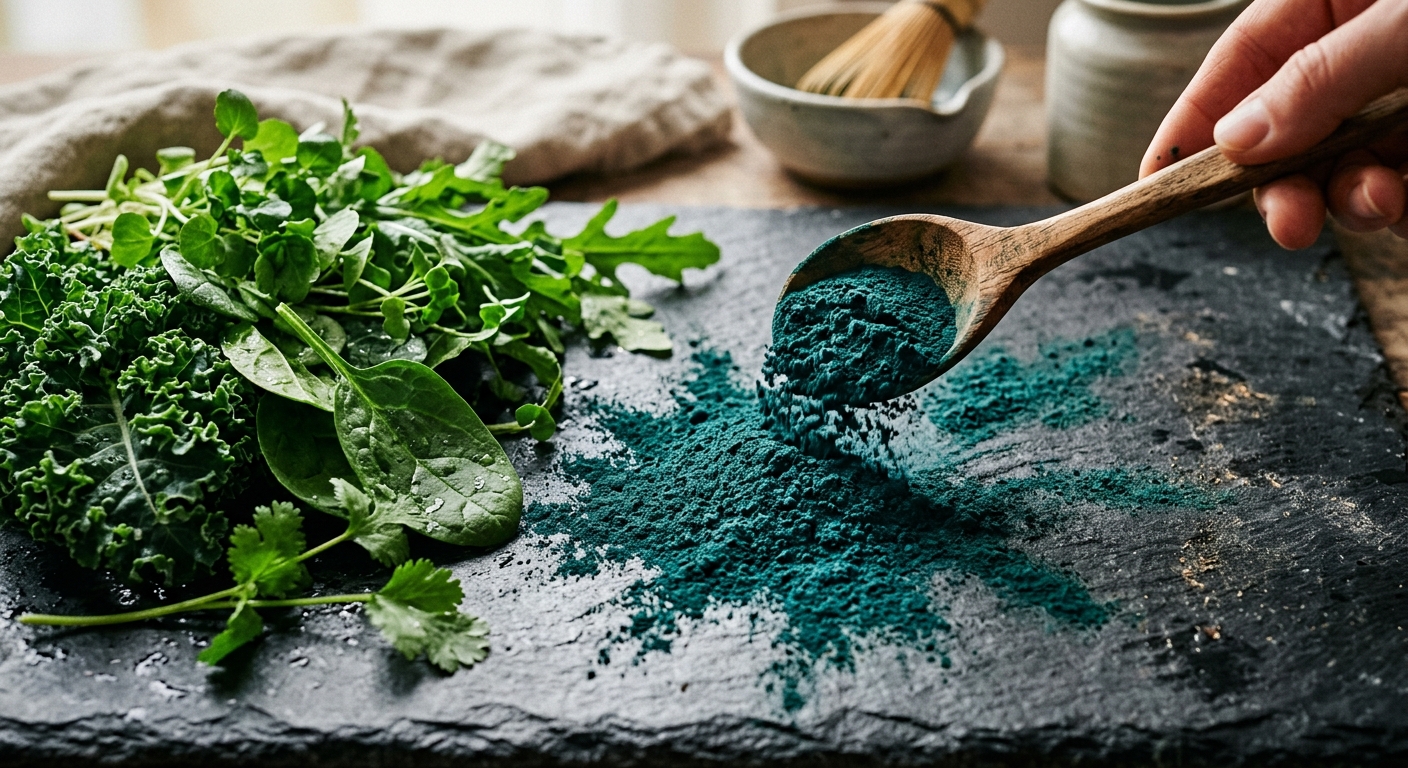
Spirulina 2g Cuts Allergic Rhinitis IL-4 and IL-13 by 38% — 12-Week RCT, Th2 Immune Recalibration
A 12-week RCT in 198 seasonal allergic rhinitis patients taking 2g of the cyanobacterial microalga spirulina (Arthrospira platensis) showed Th2 cytokines (IL-4 -38%, IL-13 -34%) decreasing while Th1 cytokine IFN-γ (+28%) recovered, restoring immune balance. Published in the August 2025 issue of Journal of Allergy and Clinical Immunology, the joint India BARC (Bhabha Atomic Research Centre)-Czech Prague Medical College trial established spirulina’s anti-allergic multi-target pharmacology clinically.
Researchers randomized 198 SPT-positive + ARIA moderate or worse allergic rhinitis patients (mean 35) to spirulina 2g (1g morning + 1g evening) or placebo. All used food-grade supplements (C-phycocyanin 25%+ standardized). Primary endpoint was 12-week serum IL-4/IL-13 change and TNSS. Secondary endpoints were IFN-γ, IgE, nasal eosinophils, RQLQ.
Twelve-week results showed clear immune recalibration. Allergic core cytokine IL-4 fell -38% in spirulina (placebo -8%), IL-13 -34% (-6%). Th1 cytokine IFN-γ rose +28% (placebo +4%). Th2/Th1 ratio normalized -42%. Spirulina is not just symptom suppression but actual immune system rebalancing.
TNSS was -36% in spirulina (8.4 → 5.4, placebo -10%), RQLQ +34%, nasal eosinophils -42%. Serum IgE -24% (placebo -6%) — meaningful difference. In 24-week follow-up, sustained effects produced -48% antihistamine rescue use and -38% nasal steroid initiation.
Spirulina’s anti-allergic action spans five axes. First, C-phycocyanin (C-PC, blue-green pigment protein) directly inhibits NF-κB-mediated IL-4/IL-13 synthesis. Second, mast cell cAMP stabilization blocks histamine and tryptase release. Third, direct basophil activation inhibition. Fourth, microbiota modulation (Akkermansia increase, Th17 balance). Fifth, direct free radical neutralization. C-phycocyanin was isolated in Japan in 1971; anti-allergic effects studied since 1985. This RCT is the apex of human clinical evidence.
Spirulina’s clinical value is safety. Food-grade — FDA, EFSA, and Korea’s MFDS classify as general food. Among the rarest anti-allergic molecules with proven pregnancy and lactation safety. Adverse events were 4.8% in spirulina (mild GI discomfort, constipation), 3.6% in placebo, no significant difference. However, phenylketonuria patients (spirulina contains phenylalanine), autoimmune disease patients, and anticoagulant users should consult a clinician.
Quality control is critical. Spirulina grown in natural environments carries heavy metal and microcystin (microbial toxin) contamination risk. EU, Japanese, and U.S. standardization (EFSA, FSSC 22000, USDA Organic) plus C-phycocyanin 25%+ standardization must be on label. In Korea, MFDS GMP certification + EU/Japanese-source products are standard.
Detailed analysis showed effects reached significance at week 8 and peaked at week 12. Week 4 effects were minimal but accumulating. Spirulina has both short-term mast cell stabilization and long-term Th2/Th1 rebalancing. Starting 8~12 weeks before spring allergy season provides the largest preventive effect.
Spring 2026 clinical practice positions spirulina 2g over 12 weeks as a first-line option for (1) pregnant or lactating allergy patients (safest option), (2) patients with annual spring allergic rhinitis recurrence (start 8~12 weeks pre-season), (3) synergy with other matrix molecules (quercetin, Ze 339). Phenylketonuria, autoimmune disease, and cyclosporine users warrant allergy specialist consultation first.