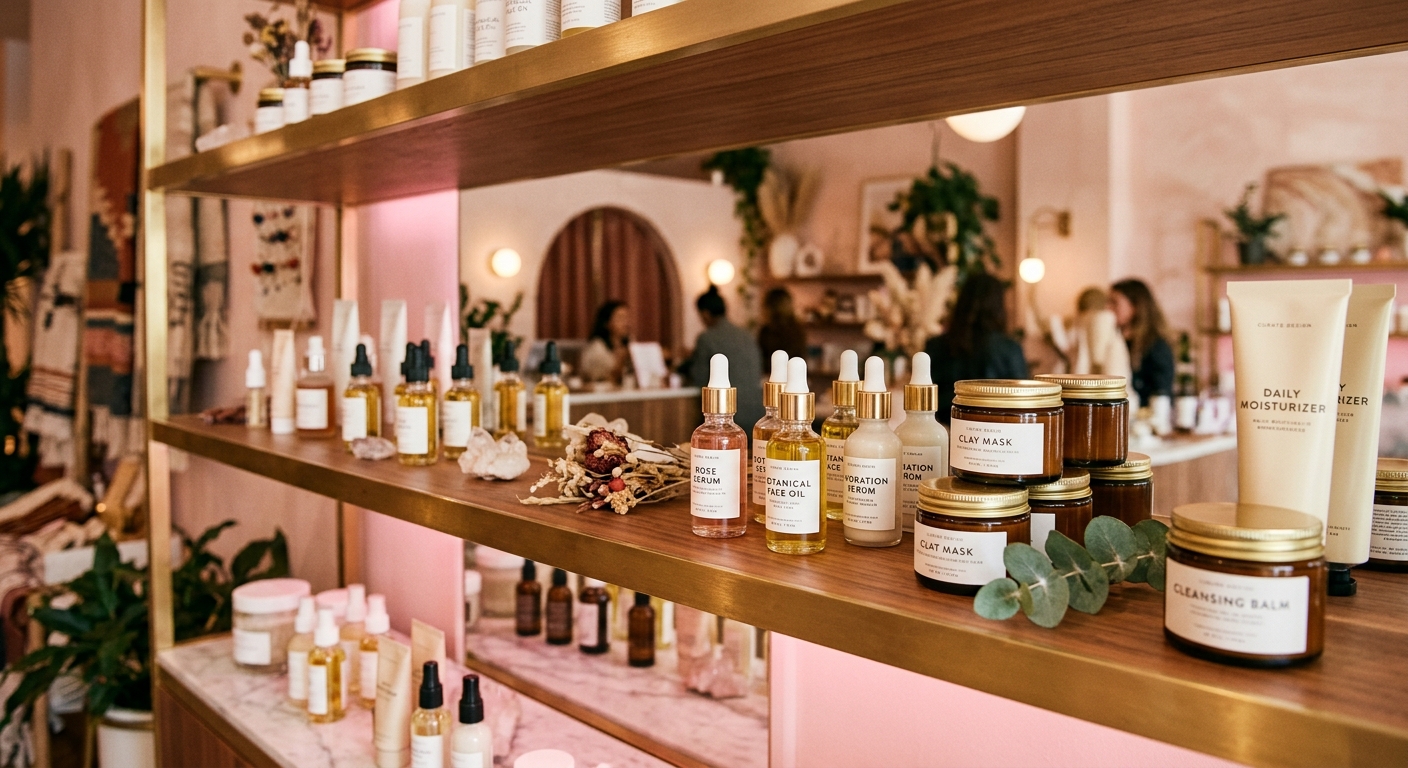
Clean at Sephora Surpasses 3,000 Products and Bans PFAS from Packaging
Clean at Sephora launched in 2018 as one of the first major retailer-led ingredient safety programs in beauty retail. Now in its third iteration, the program has grown to cover more than 3,000 products across over 250 brands. A significant update in December 2025 extended the program’s scope beyond formulation ingredients to packaging materials, adding PFAS, bisphenols, silver salts, and mineral oils to the restricted list.
The Packaging Ban and Why It Matters
Packaging as a safety concern in cosmetics has historically received less attention than formulation. That is changing. Research on chemical migration, the transfer of compounds from container materials into product contents, has accumulated steadily. PFAS used in packaging coatings can migrate into cosmetic formulas, particularly in products with oil-based or emollient-rich textures that increase contact surface interaction.
Sephora’s decision to extend the banned list to packaging materials represents a methodological shift in how the program defines clean. It is no longer sufficient to verify what is deliberately added to the formula. The container itself becomes part of the safety assessment. Bisphenols, which have been the subject of endocrine disruption research, and silver salts, used as antimicrobial agents in some packaging, are the other newly restricted additions.
The 50-Plus Ingredient Categories
The current Clean at Sephora formulation ban covers more than 50 ingredient categories. The list includes parabens (preservatives), sulfates (surfactants), phthalates (fragrance carriers), mineral oil, formaldehyde and formaldehyde-releasing preservatives, and certain synthetic fragrances. The criteria draw on regulatory agency safety data, peer-reviewed research, and consumer safety advocacy organization assessments.
The program is updated periodically rather than being a static list. The December 2025 packaging addition is the kind of revision that distinguishes an evolving standard from a marketing label that stays fixed.
The EU-US Regulatory Gap in Context
The EU restricts over 1,600 ingredients from use in cosmetics. The US FDA maintains an official restriction on 11 ingredients. This numerical gap is frequently cited in clean beauty discussions and forms a large part of the rationale for retailer-led programs.
Almay’s relaunch positioned itself against this gap by committing to ban 500 ingredients and reviewing a catalog of 20,000. Clean at Sephora’s 50-plus category standard falls in a different position on that spectrum, but operates across one of the highest-traffic beauty retail platforms globally, giving its criteria outsized market influence relative to brand-specific programs.
The 2024 Legal Challenge
Clean at Sephora’s labeling faced a consumer lawsuit in 2024 alleging the “clean” designation was misleading. Sephora prevailed. The company’s consistent position has been that “clean” in its program refers to the exclusion of specific ingredient categories, not a claim of complete safety or absence of all potentially harmful compounds. The ruling clarified the legal boundaries of clean beauty marketing language but also underscored the interpretive burden it places on consumers.
What Clean Labels Actually Mean
Retailer standards like Clean at Sephora fill a genuine gap in US cosmetic safety regulation. They also operate without the independent verification infrastructure that regulatory approval processes provide. Knowing that a product carries the Clean at Sephora mark means it has cleared a defined list of ingredient categories as reviewed by the retailer. It does not mean every ingredient in the formula has been individually safety-tested at use concentrations, or that the excluded list is exhaustive relative to current safety science.
The packaging extension in December 2025 reflects the program moving in a more rigorous direction. Tracking how these criteria evolve is more informative than treating any clean label as a fixed, binary judgment.