Sea Buckthorn Omega-7 Mucosal Supplementation: 100-Patient RCT Improved Dry Eye Symptoms and Mucosal Health
Data accumulates on sea buckthorn (Hippophae rhamnoides) oil as an adjunct option for the dry eye epidemic in the digital device era. A 100-patient randomized double-blind placebo-controlled trial showed sea buckthorn oil 2 g/day for 3 months attenuated tear film osmolarity increase and influenced self-reported burning and redness intensity. New supplement category targeting mucosal health.
Trial core results
Participants: 100 patients. Adults with dry eye symptoms.
Intervention: Sea buckthorn oil 2 g/day or placebo. 3 months.
Tear film osmolarity attenuation: Slowed osmolarity increase associated with dry eye. Meaningful difference vs placebo.
Burning intensity: Effect on self-reported maximum burning.
Redness intensity: Effect on self-reported maximum redness.
Side effects: Generally mild.
Animal model additional data: Oral sea buckthorn pulp oil restored tear secretion to normal in dry eye models. Palmitoleate preserved tear secretion and suppressed lacrimal gland inflammatory cytokines.
Sea buckthorn and omega-7
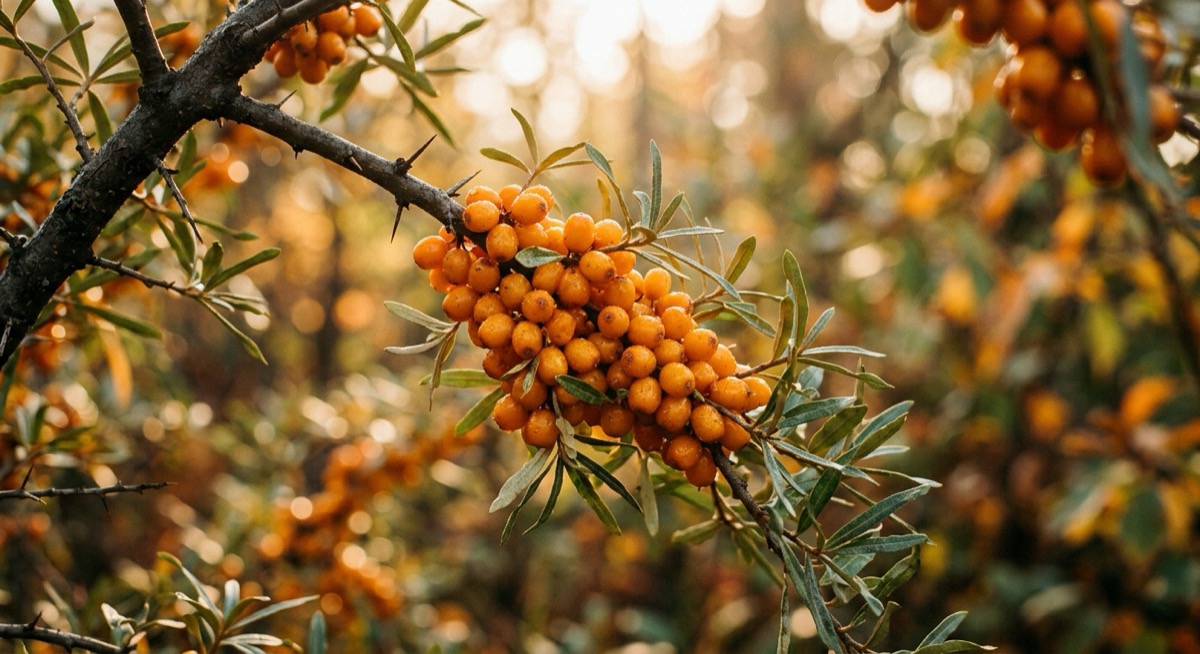
Sea buckthorn: Hippophae rhamnoides. Small thorny shrub native to Central Asia, Siberia, and Europe. Orange berries.
Core actives: Palmitoleic acid (omega-7), omega-3, omega-6, omega-9, vitamins C and E, carotenoids.
Palmitoleic acid (C16:1, omega-7): Uncommon monounsaturated fatty acid. Core of mucosal health.
Oil forms:
- Sea buckthorn pulp oil: Rich in palmitoleic acid (30~40%).
- Sea buckthorn seed oil: Rich in omega-3 and omega-6.
- Both used as supplements. Pulp oil for omega-7 targeting.
Mucosal health mechanism
Eye mucosa: Aids tear secretion, stabilizes tear film.
GI mucosa: Strengthens GI protective layer. Some adjunct data for gastritis.
Oral mucosa: Adjunct for oral dryness.
Vaginal mucosa: Some adjunct data for postmenopausal vaginal dryness.
Respiratory mucosa: Adjunct for chronic nasal dryness.
Skin barrier: Some synergy data for topical + oral.
Mechanism
Mucous secretion stimulation: Palmitoleic acid activates mucous secretion cells.
Inflammation reduction: Some slowing of chronic mucosal inflammation.
Lipid membrane stabilization: Supports cellular membrane lipid composition.
Tear secretion stimulation: Preserves lacrimal gland secretory function.
Mucosal recovery: Aids damaged mucosal recovery.
Comparison to other dry eye options
Omega-3 EPA: Dry eye meta-analysis data. Effects in multiple trials. 800~3,000 mg/day.
Artificial tears: Surface lubrication. Immediate effect. Temporary.
Restasis (cyclosporine): Prescription. Reduces lacrimal gland inflammation.
Xiidra (lifitegrast): Prescription. Chronic dry eye.
Autologous serum tears: Some option.
Topical vitamin A: Some data.
Sea buckthorn: Mucosal multi-targeting. Also supports mucosal health beyond eyes.
Digital device era
Screen-use dry eye: Reduced blinking from prolonged computer/smartphone use. Tear film evaporation.
20-20-20 rule: Every 20 minutes look 20 feet away for 20 seconds. Recovery.
Environmental adjustment: Humidity 40~60%, avoid direct airflow.
Sea buckthorn adjunct: Supplement option on the behavioral foundation.
Who fits
Digital device era dry eye: Adjunct on behavioral foundation (20-20-20, humidity).
Postmenopausal mucosal dryness: Multi-targeting eye, vaginal, oral dryness.
Chronic mucosal inflammation: Adjunct for gastritis, rhinitis, conjunctivitis.
Omega balance targeting: Adding omega-7 alongside omega-3 and omega-6.
Autoimmune dry eye (Sjögren): Adjunct on prescription drug foundation.
Who should be careful
Food allergy: Sea buckthorn allergy possible. Small amount on first use.
Pregnancy/breastfeeding: Limited data. Consult a clinician.
Drug interactions: Caution with anticoagulants. Blood pressure medications.
GI sensitivity: Empty stomach irritation. With meals.
Severe eye disease: Not for monotherapy. Physician evaluation essential.
Dose and timing
Standard dose: Sea buckthorn pulp oil 1~3 g/day.
Clinically validated dose: 2 g/day for 3 months (100-patient RCT basis).
Timing: With meals. Absorption enhanced with fat.
Duration: Effect assessment at 3 months. 6 months sustained if effective.
Daily guide
Step 1 — foundation: 20-20-20 rule, humidity control, screen distance, artificial tears (when needed).
Step 2 — evaluation: Ophthalmology evaluation. Confirm dry eye degree and cause.
Step 3 — sea buckthorn: Pulp oil 2 g/day with meals for 3 months.
Step 4 — combination: Synergy with omega-3 EPA 1~2 g/day.
Step 5 — progression: Physician evaluation of prescription options (Restasis etc.) if chronic or severe.
Dry eye and mucosal dryness are mirrors of environment and behavior. Sea buckthorn is one tool of the mucosal health matrix. Adjunct on the behavioral foundation.