Saffron vs SSRI Meta-Analysis: Comparable Depression and Anxiety Effects with Fewer Side Effects
The world’s most expensive spice saffron accumulates meta-analysis data comparing it to prescription drugs in depression and anxiety treatment. The 2025 Nutrition Reviews meta-analysis reported saffron has comparable efficacy to SSRIs with fewer side effects. The same period’s GRADE-assessed 34-RCT systematic review validated saffron as an effective complementary option for self-reported depression and anxiety.
Meta-analysis core results
Saffron vs SSRI depression effect: No statistically significant difference. Both options effective.
Saffron vs SSRI anxiety effect: No difference. Both options meaningful reduction.
Side effect frequency: Fewer in saffron group. SSRIs commonly cause GI discomfort, sexual dysfunction, sleep changes.
Discontinuation rate: Lower in saffron group. Result of less side effect burden.
Clinical implication: Saffron as potential SSRI alternative. Option for populations avoiding side effects in mild~moderate depression.
12-week Affron trial: Separate randomized double-blind placebo-controlled trial showed Affron (saffron extract) meaningfully improved mood and general wellbeing in adults with self-reported low mood.
Limitations of 6-week short-term trials: Short 6-week trials in healthy adults showed no difference vs placebo. Effect onset requires time.
What is saffron
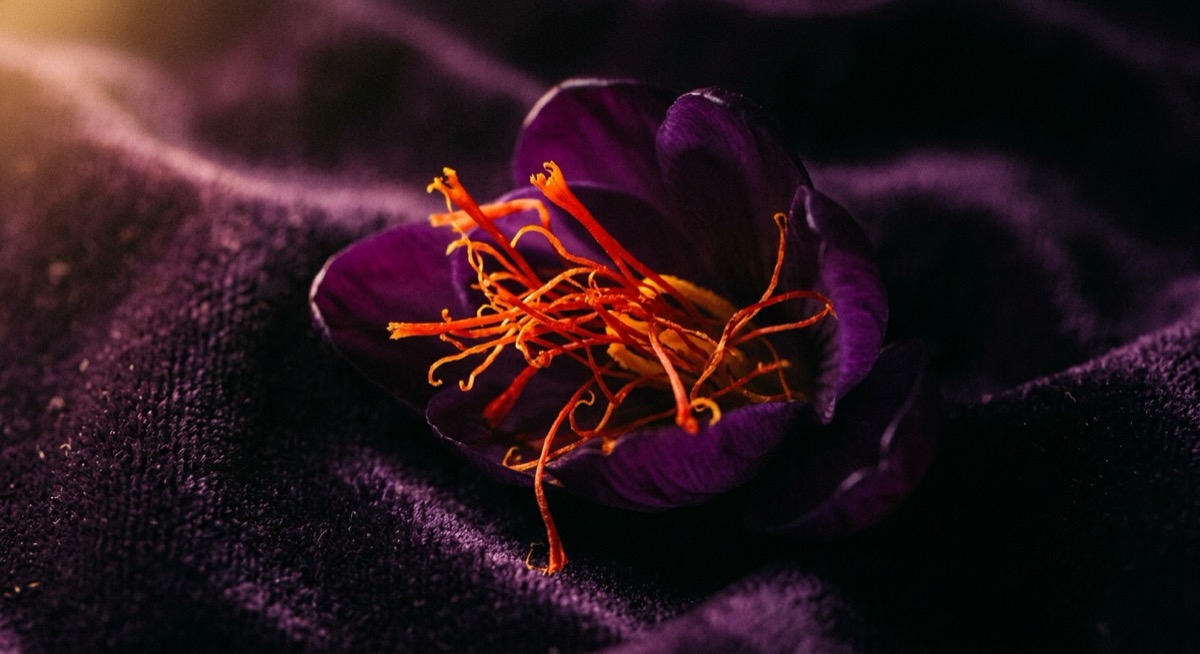
Saffron: Stigma of Crocus sativus flower. World’s most expensive spice (per gram). 150,000~250,000 flowers needed for 1 kg saffron.
Core actives: Crocin, crocetin, safranal, picrocrocin.
Affron®: Standardized saffron extract. Mainly used in trials. 28 mg/day standard dose.
Traditional use: Used 2,500+ years for depression, anxiety, pain, GI disorders in Persian, Indian, Greek traditional medicine.
Mechanism
Serotonin system: Partial serotonin reuptake inhibition. Similar target to SSRIs but milder strength.
Dopamine, norepinephrine: Effects on neurotransmitter balance.
HPA axis regulation: Slows chronic activation of hypothalamic-pituitary-adrenal axis. Cortisol normalization.
Inflammation reduction: Partial NF-κB inhibition. Reduces neuroinflammation accompanying chronic depression.
Oxidative stress reduction: Strengthens brain glutathione system.
BDNF increase: Increased brain-derived neurotrophic factor. Supports neuroplasticity.
GABA receptor: Some data show GABA signaling enhancement. Anxiety calming.
Other clinical data
Medical student trial (2025): Randomized trial in mild~moderate depression medical students showed saffron meaningfully reduced depression score and cortisol.
Scutellaria + saffron combination trial: Combination supplement in adults with depressive symptoms meaningfully improved mood regulation.
Saffron vs SSRI comparison
SSRI strengths: Strong effect. First-line option for severe depression. Insurance coverage. Standardized by prescription.
SSRI weaknesses: GI side effects (nausea, appetite changes), sexual dysfunction, sleep changes, weight changes, withdrawal symptoms on discontinuation.
Saffron strengths: Few side effects. No prescription needed. Natural option. Targeted populations avoiding prescription options.
Saffron weaknesses: Effect onset requires time (2~6 weeks). Limited to mild~moderate depression. Insufficient data in severe cases. Standardization variability. Cost (high-quality extracts).
Combination possible: Some data show SSRI + saffron synergy. Physician consultation essential.
Dose and form
Standard dose: Affron® 28 mg/day or standard saffron extract 30~100 mg/day.
Clinical dose range: 28~100 mg/day validates effects.
Dietary saffron: Difficult to reach clinical doses dietarily (0.1~0.3 g/day standard as spice). Supplements efficient.
Duration: Effect assessment at 4~6 weeks. 3~6 months sustained if effective. Then physician consultation.
Timing: With meals. Avoid GI irritation.
Who fits
Mild~moderate depression: First-line adjunct or alternative. On the foundation of cognitive behavioral therapy (CBT).
Mild anxiety: Similar position to adaptogens (ashwagandha, rhodiola).
SSRI side effect concerns: Populations avoiding prescription due to side effect burden. After physician evaluation.
Postpartum mood changes (mild): Some data in postpartum depression. Physician evaluation essential.
Stress-comorbid depression: Through HPA axis regulation effects.
Seasonal affective disorder (SAD): Some data.
Who should be careful
Severe depression: Inappropriate for monotherapy. SSRIs or other prescription drugs prioritized.
Suicidal ideation: Emergency psychiatric evaluation needed. Cannot be managed with supplements.
Pregnancy/breastfeeding: Limited data. 5+ g saffron in pregnancy may stimulate uterus. Consult a clinician.
Drug interactions: Caution with SSRIs, anticoagulants (warfarin), blood pressure drugs. Consult a clinician.
Bipolar disorder: Some supplements (SAMe, 5-HTP etc.) may induce mania. Saffron also caution.
Excessive intake: 5+ g/day saffron may be toxic (nausea, headache). Adhere to supplement label dose.
Comparison to other natural options
St. John’s Wort: Depression efficacy data. Extensive drug interactions (especially contraceptives, immunosuppressants).
Ashwagandha: Stress targeting. Direct depression targeting weak. Possible synergy with saffron.
Rhodiola: Depression with fatigue. Adaptogenic effects.
5-HTP: Serotonin precursor. Risky with SSRIs.
SAMe: Methylation cycle. Faster effect.
Omega-3 EPA: Depression adjunct. Meta-analysis data.
Vitamin D: Adjunct in deficiency-comorbid depression.
Saffron is part of a matrix, not a standalone option.
Daily guide
Step 1 — evaluation: Physician evaluation. Depression score (PHQ-9), thyroid function, vitamin D, vitamin B12, ferritin tests.
Step 2 — foundation: Cognitive behavioral therapy (CBT), exercise (150+ min/week), sleep hygiene, social connection, stress management.
Step 3 — saffron: Affron® 28 mg/day with meals or standardized extract 30~100 mg/day. 4~6 week assessment.
Step 4 — combination supplements: Omega-3 EPA 1~2 g, vitamin D 1,000~2,000 IU (25~50 μg), magnesium, B vitamins.
Step 5 — progression assessment: If effect weak, SSRI or combination after physician evaluation. Don’t be content with saffron alone.
Step 6 — maintenance: 3~6 months sustained after effect. Then break possible after physician evaluation.
Depression is a multilayered problem. Saffron is one tool of that matrix. Not an alternative to prescription drugs but an adjunct or option for mild cases. Foundation (lifestyle, psychological support) comes first.