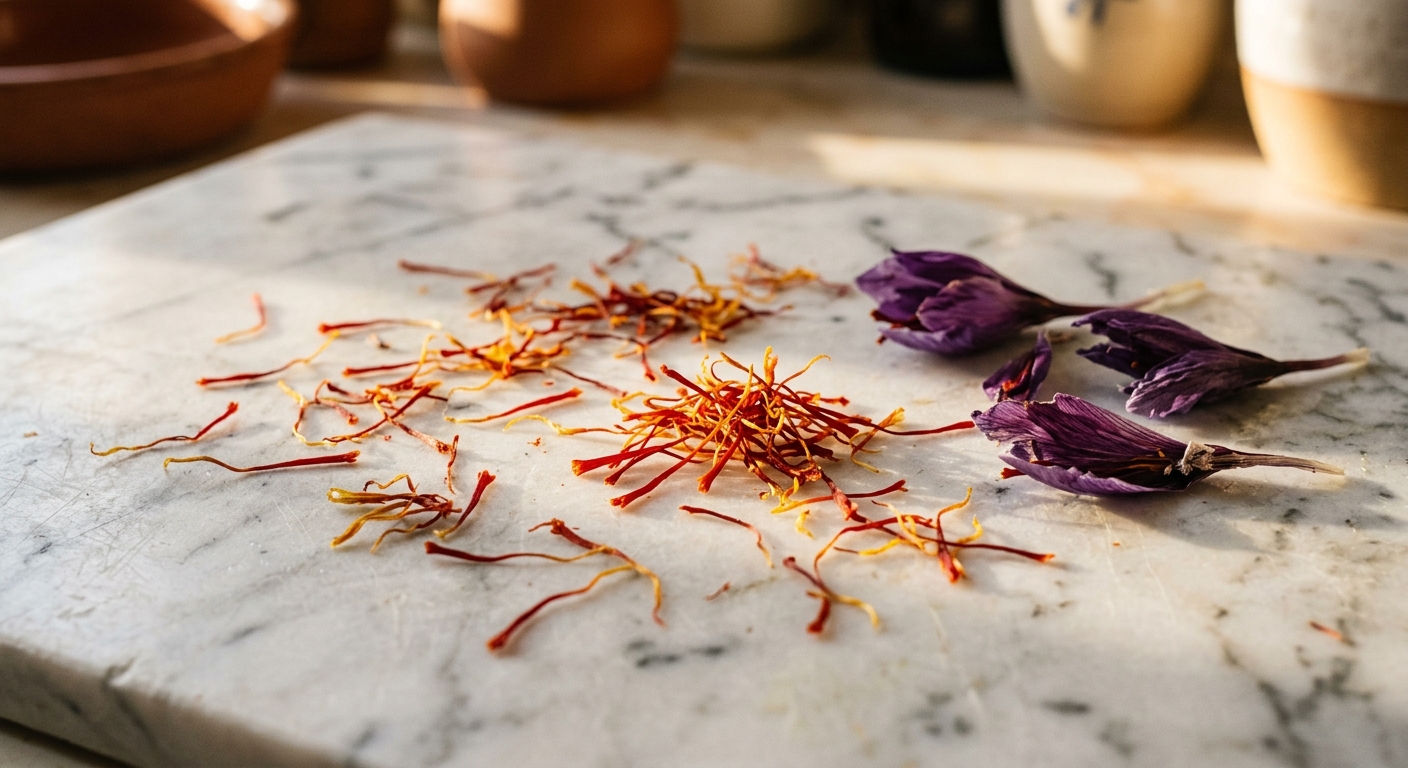
Saffron (Crocus Sativus): The Spice That Brightens Skin and Lifts Mood
One of the world’s most expensive spices is quietly making its case as a serious skincare ingredient. Saffron (Crocus sativus), the vivid crimson stigmas harvested by hand from a small purple crocus flower, has long colored rice dishes and perfumed kitchens across the Middle East and South Asia. What’s newer is the science placing it inside serums and supplement capsules.
Research published in the Journal of Oleo Science puts numbers to what traditional beauty practices in Iran, India, and Morocco have relied on for centuries: saffron extract inhibits the enzyme that drives pigmentation, protects collagen from breakdown, and accelerates skin cell repair. A 2026 analysis in Phytochemistry Reviews adds a gut-brain dimension, tracing how saffron’s compounds may influence mood by reshaping the microbial environment of the digestive system.
What’s Inside Saffron
The bioactive profile of saffron extract breaks down as follows: crocin at 91.0mg/g, picrocrocin at 61.5mg/g, safranal at 3.6mg/g, and crocetin at 1.9mg/g. Crocin and crocetin, the two carotenoid pigments responsible for saffron’s golden hue, are the primary drivers of both skin and mood benefits. Safranal, the volatile compound behind saffron’s distinctive aroma, contributes antioxidant activity as well.
Stopping Pigmentation at the Source
The enzyme tyrosinase triggers melanin production in skin. When it becomes overactive, it creates the uneven pigmentation behind dark spots, post-acne marks, and melasma. Saffron extract inhibits tyrosinase at an IC50 of 0.78mg/mL, meaning it cuts that enzyme’s activity in half at a relatively low concentration.
For context, IC50 is the concentration needed to inhibit 50% of an enzyme’s activity. Lower numbers indicate greater potency. Saffron’s figures are competitive with established brightening actives such as kojic acid and arbutin, and because it does not carry the same irritation risk as hydroquinone, it suits sensitive skin types that find conventional brightening ingredients destabilizing.
Collagen Protection and Skin Repair
Collagenase is an enzyme that degrades collagen, the structural protein keeping skin firm and bouncy. As collagenase activity rises with age, UV exposure, and inflammation, skin loses elasticity and wrinkles deepen. Saffron extract inhibits collagenase at IC50 0.1mg/mL, a particularly low concentration that signals strong potency in this pathway.
In human dermal fibroblast cells (the skin cells responsible for producing collagen and hyaluronic acid), saffron extract promoted synthesis of both. At 25μg/mg, it significantly accelerated cell migration, a measure of how quickly skin closes a wound or replenishes itself after damage. At 100-200μg/mg, it suppressed reactive oxygen species (unstable oxygen molecules that damage cells) and nitric oxide production in immune macrophages, bringing down the inflammatory signal that prolongs skin redness and irritation.
Taken together, saffron is doing several things at once: blocking the enzyme that breaks existing collagen down, helping skin cells produce more of it, and reducing the inflammation that slows the whole repair process.
The Mood Connection
The crossover between saffron’s skin benefits and its neurological effects is not coincidental. Oxidative stress and chronic low-grade inflammation underlie both skin aging and mood dysregulation. Crocin addresses both from a shared root.
Multiple meta-analyses, studies that aggregate results across dozens of randomized controlled trials, found that 30mg per day of standardized saffron extract produced antidepressant effects equivalent to fluoxetine (sold as Prozac) in patients with mild-to-moderate depression. The 2026 Phytochemistry Reviews paper proposes a mechanism through the gut-brain axis, the bidirectional communication network between digestive microbiota and the central nervous system. Crocin and crocetin appear to modulate gut microbial composition in ways that shift serotonin and dopamine availability. This pathway is activated by oral intake rather than topical application.
How to Actually Use It
Topically: Scan ingredient labels for “Crocus sativus flower extract” or “Crocus sativus stigma extract.” Serums with this listed in the first half of the ingredient deck contain a meaningful concentration. For a traditional at-home approach, steep four to five saffron threads in two tablespoons of warm whole milk for 15 minutes. Apply to clean skin, leave for 10 minutes, and rinse. The fat in the milk aids absorption of the fat-soluble carotenoids.
Orally: Clinical trials use 30mg per day of standardized extract, typically split into two 15mg doses with meals. If you are already taking a daily supplement regimen, check whether it includes saffron or related compounds before adding a standalone supplement.
Who should pause: Pregnant women should avoid saffron supplements, as high doses may stimulate uterine contractions. Amounts above 5g per day carry toxicity risk. Those on anticoagulant medications, including warfarin and aspirin therapy, should consult a clinician before starting saffron supplementation.
Frequently Asked Questions
How can I use saffron in my skincare routine?
Look for serums or sheet masks formulated with Crocus sativus stigma extract. For an at-home approach, steep a few threads in warm milk or honey for 10-15 minutes and apply the liquid to cleansed skin. For oral use, clinical studies use around 30mg of standardized saffron extract per day.
How reliable is the evidence for saffron's mood benefits?
Multiple meta-analyses found that 30mg/day of saffron extract matched fluoxetine (Prozac) for mild-to-moderate depression symptom relief. It’s best suited as a complement to healthy habits for mood support, rather than a standalone treatment for severe depression.
Who should be cautious about taking saffron?
High-dose saffron during pregnancy may stimulate uterine contractions and should be avoided. Doses above 5g per day carry toxicity risk. If you take blood thinners such as warfarin, consult your doctor before adding saffron supplements.