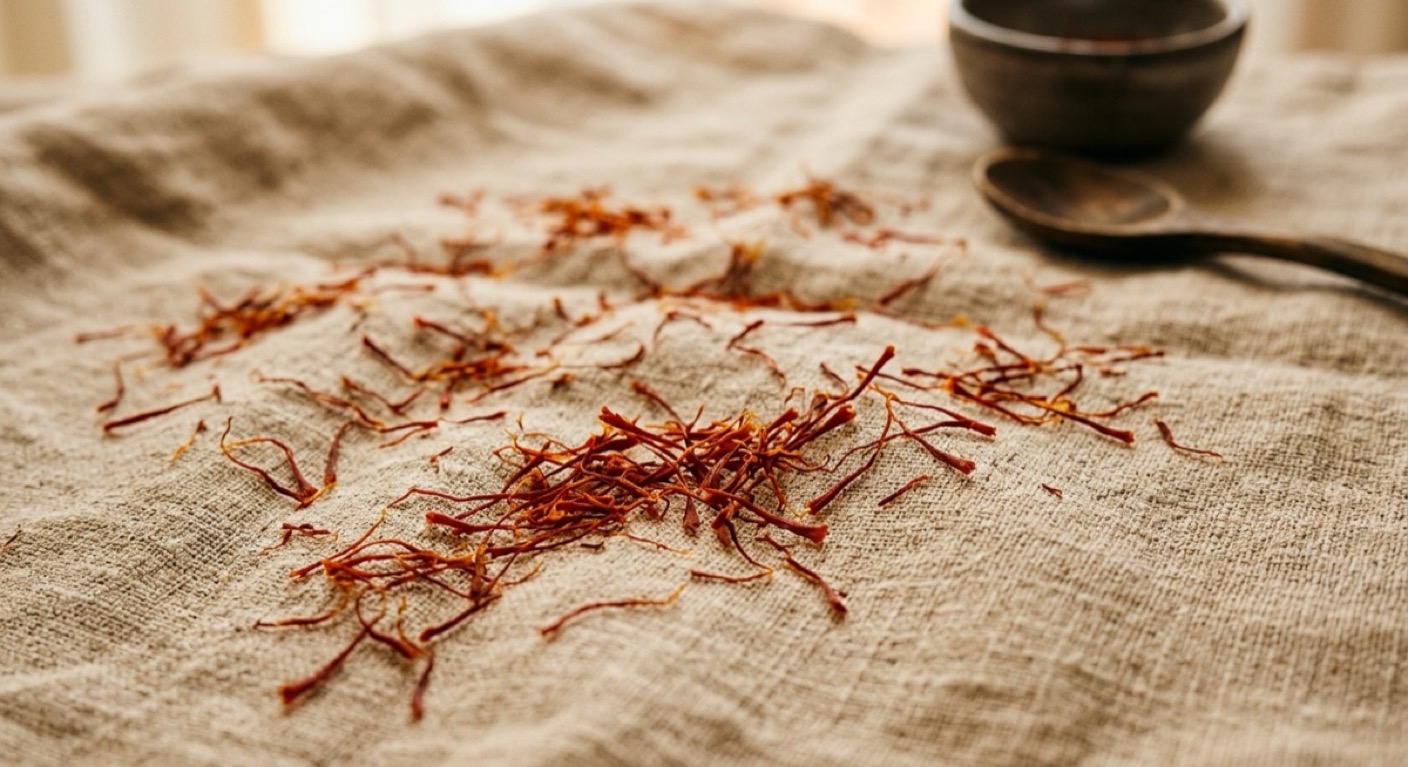
Saffron Extract at 28 mg for 12 Weeks, Mood Improvement in 72% of 202 Adults
Saffron is better known as a spice. A late-2025 clinical dataset has quietly lifted it onto the beauty-from-within shelf, and the size and design of the trial give the move weight.
202 participants, 12 weeks, 28 mg
The trial enrolled 202 healthy adults between 18 and 70, all with subclinical depressive symptoms. That is the gray zone: low mood and flat motivation without a formal diagnosis. The intervention arm took 28 mg of standardized affron saffron extract once daily. The control arm took placebo. Both ran for 12 weeks.
The headline: 72.3% of the saffron arm reached clinically meaningful mood improvement versus 54.3% on placebo, an 18-point gap. It is the largest saffron-mood trial reported to date.
The same research ecosystem published a smaller 6-week trial in 2025 (51 adults) in healthy adults with subclinical neuropsychiatric symptoms. That one did not find a significant composite difference in mood, anxiety, and fatigue. Read together, the two trials draw a line: saffron’s mood effect seems to need both adequate duration (12 weeks or longer) and adequate dose.
Why this ties into the skin-brain axis
What does a mood trial have to do with a beauty aisle? Dermatology increasingly treats the “skin-brain axis” as a formal research area. Chronic stress drives cortisol, which shifts sebum composition, worsens inflammatory acne, accelerates collagen breakdown, and compresses skin recovery windows through poorer sleep. An ingredient that acts on mood therefore has a legitimate downstream effect on skin.
That framing is exactly why saffron landed on beauty-from-within lists at Expo West 2026. MaryRuth’s, Ribobeauty, and others started positioning it as a tie between mood and skin. It also means brands now need to explain that saffron is not a topical ingredient, it is a mood-axis intervention that reaches skin via stress physiology.
Crocin and safranal
The active components most cited are crocin and safranal. Preclinical work links both to serotonin and dopamine reuptake and to GABA signaling. Standardized extracts like affron exist to lock in the ratios. That is why culinary saffron will not reliably reproduce the trial effect. Weight-for-weight, the active content varies too much.
Dose and cautions
Across trials, the useful range sits around 14 to 30 mg/day. The 28 mg used in this 202-person trial is at the upper end. High-dose saffron is not recommended during pregnancy or breastfeeding due to uterine contraction concerns. If you are on antidepressants or anticoagulants, talk with a clinician before adding saffron, because interactions are plausible.
The 12-week clock
What this trial re-emphasizes is time. The 6-week comparator did not find significance. The 12-week trial did. The most common supplement failure is duration, not ingredient. Saffron is the kind of ingredient people quit at week four saying, “I don’t feel much.” That is the wrong clock. Put 12 weeks on the calendar before you start.