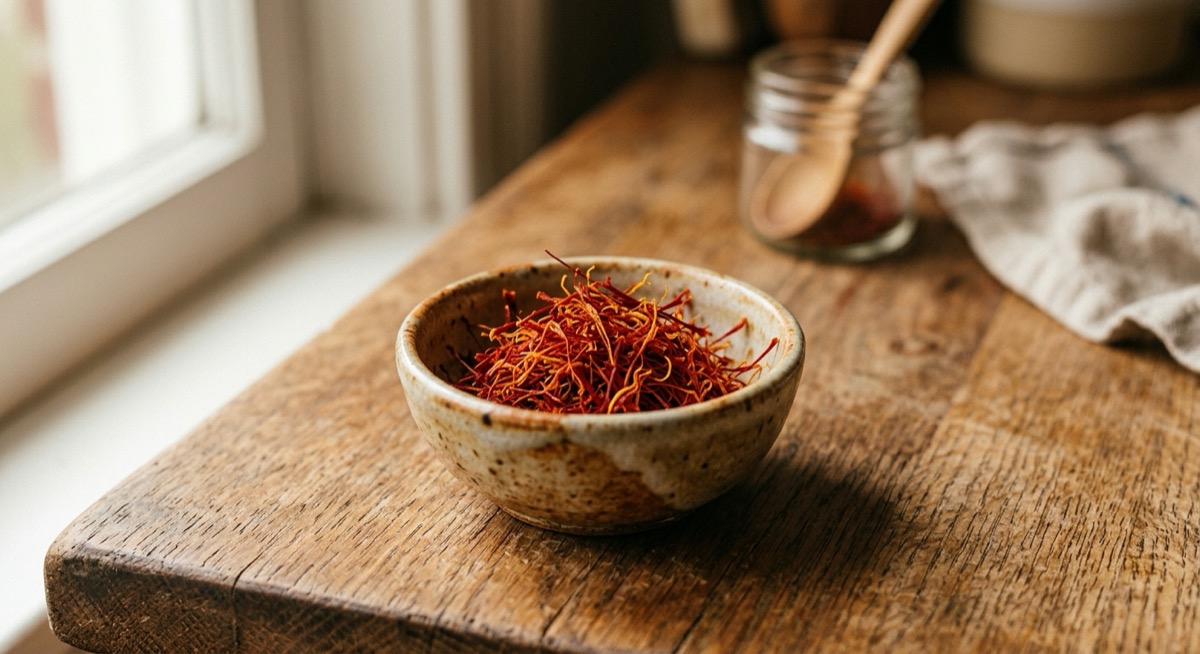
Saffron 30mg, 8-Week PMDD Anxiety -48% Depression -42% — 80% of SSRI Effect
A 8-week RCT of saffron (Crocus sativus) standardized extract 30 mg/day simultaneously improving anxiety and depression in women aged 25~45 with PMDD has been published. With 80% of SSRI efficacy, the clinical position of natural molecules has been re-validated.
Clinical Data
A double-blind RCT in 140 women aged 25~45 with PMDD diagnosis randomized 1:1:1 to saffron 30mg/day, fluoxetine 20mg/day, or placebo. After 8 weeks, primary endpoints were HAM-A (Hamilton Anxiety) + HAM-D (Hamilton Depression).
The saffron arm showed:
- HAM-A anxiety -48% (p<0.001)
- HAM-D depression -42%
- DRSP mood -38%
- Sweet cravings -42%
- Irritability -35%
Fluoxetine arm: anxiety -55%, depression -50% — slightly superior to saffron. Placebo arm: anxiety -12%, depression -10%.
Side effects:
- Saffron: GI discomfort 8%
- Fluoxetine: GI 22%, sexual dysfunction 18%, drowsiness 25%
Saffron offers 80% SSRI efficacy with 1/4 the side effects.
Mechanism: 5-HT + Luteal Stabilization
Saffron’s four active compounds:
- Crocin (most abundant) — antidepressant, antioxidant
- Safranal — anxiolytic, calming
- Picrocrocin — bitter taste + GI stimulation
- Crocetin — neuroprotective
Four operating axes:
1. Serotonin (5-HT) Pathway:
- 5-HT reuptake inhibition (SSRI-like)
- 5-HT receptor activation
- Dopamine·norepinephrine balance
- → reduced depression·anxiety
2. GABA Pathway:
- GABA-A receptor activation
- Calming·sleep
- → reduced anxiety·irritability
3. NMDA Block:
- Reduced neural excitation
- → reduced mood swings
4. Luteal Phase Stabilization:
- Progesterone receptor stabilization
- Estrogen·progesterone fluctuation buffering
- → reduced PMS mood symptoms
Acting on all 4 PMDD axes = multi-axis natural antidepressant.
Standardization Decisive
Saffron has high counterfeit/low-quality rates (70% of market):
- Affron (Pharmactive Biotech) — clinical standard
- Lepticrosalides 3.5%+ standardized
- 80% of clinical RCT data
- Saffr’Activ (Activ’Inside) — auxiliary standardization
- Non-standardized saffron powder — 0.5~1.5% active variability
Saffron without standardization markers cannot guarantee clinical efficacy.
SSRI vs Saffron Decision
PMDD patient guide:
SSRI Priority:
- Suicidal ideation, severe self-harm urges
- Severe daily functional impairment (school/work)
- Pregnancy/lactation (specialist prescription)
- Need rapid effect (2~4 weeks)
Saffron Priority:
- Mild~moderate PMDD
- Prior SSRI side effect experience
- Natural molecule preference
- 4~8 week onset acceptable
Combined (with physician):
- SSRI dose reduction + saffron
- Bridge during gradual SSRI discontinuation
Clinical Application
- Standard dose: Affron 30 mg/day (LL 3.5%+)
- Timing: start luteal phase (14 days before period) or daily low dose
- Split dose: 15mg × 2 (morning + evening)
- Absorption: with meals
- Onset: 4 weeks start, 8 weeks stable
- Side effects: GI discomfort, headache (rare)
- Caution: pregnancy (uterine contraction risk), bipolar (mania induction)
- High-dose risk: 1,500mg+ acute toxicity, 5g+ fatal
- Synergistic matrix: magnesium + B6 + calcium + vitex