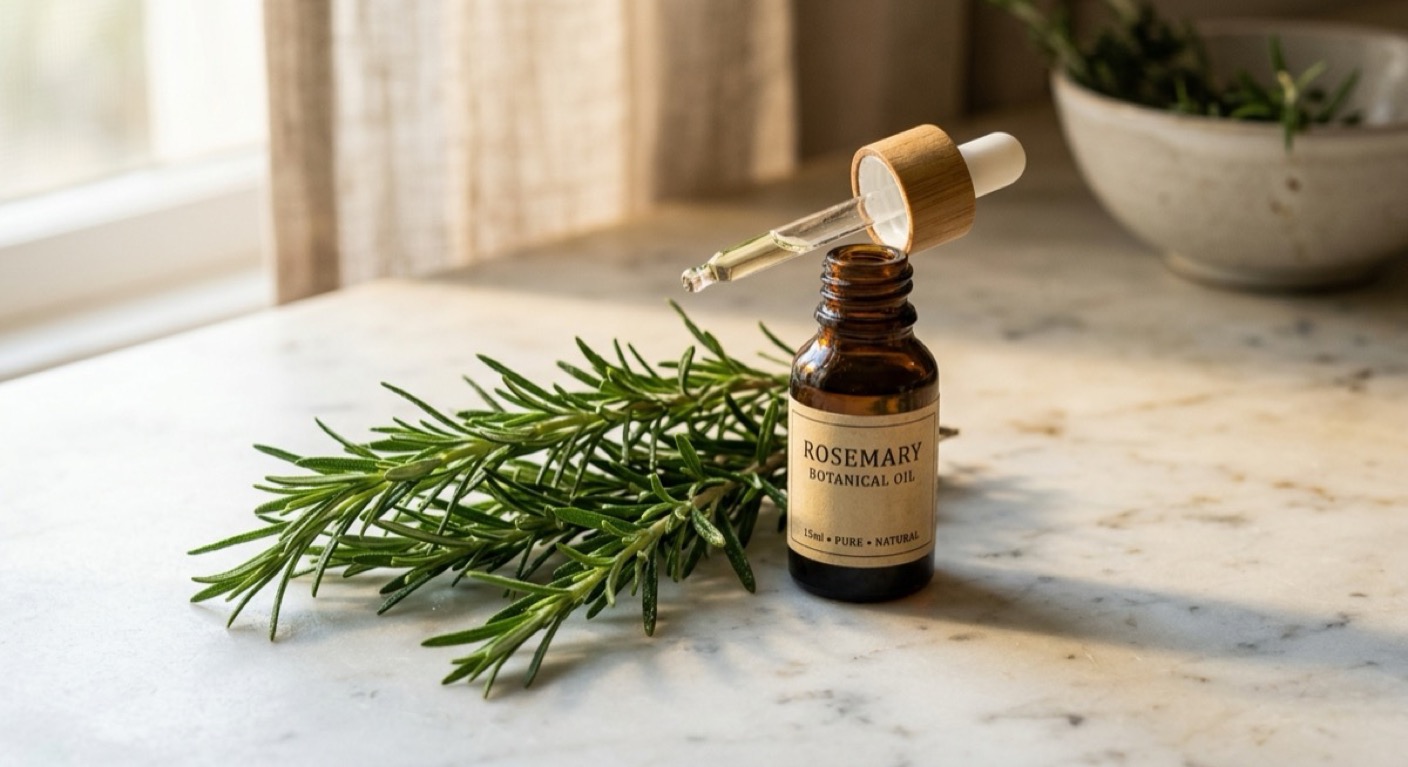
Rosemary Oil Matches Minoxidil 2% for Hair Growth in 6-Month Trial
After six months side by side with minoxidil 2%, rosemary oil produced no statistically significant difference in hair count. That finding, compiled in a PMC systematic review (PMC11549889), adds weight to a growing body of evidence that positions rosemary oil not just as a wellness trend but as a clinically comparable option for androgenetic alopecia.
The trial design
The randomized controlled trial enrolled 100 adult men with androgenetic alopecia, the most common form of hair loss driven by hormone-related follicle miniaturization. Participants were randomly assigned to apply either rosemary oil or minoxidil 2% topically to the scalp over six months.
At the end of the trial, both groups showed a statistically significant increase in hair count. The difference between the two groups was not statistically significant. Both treatments arrived at the same destination.
One area where they diverged was tolerability. Scalp itching was reported more frequently in the minoxidil group. For people who discontinue minoxidil due to skin irritation, this gap in side effect profile is relevant.
Three mechanisms behind the result
Rosemary oil does not work through a single pathway. The systematic review identifies three distinct mechanisms that together explain the clinical outcome.
5-alpha-reductase inhibition. The enzyme 5-alpha-reductase converts testosterone into DHT (dihydrotestosterone), the androgen that progressively shrinks hair follicles in androgenetic alopecia. Among rosemary’s active compounds, 12-methoxycarnosic acid has been shown to inhibit this enzyme at rates between 82.4 and 94.6 percent. For comparison, finasteride, the prescription drug commonly used for the same purpose, inhibits the enzyme at 81.9 percent. The ranges overlap.
Other active compounds identified in the review include carnosic acid, rosmarinic acid, ursolic acid, oleanolic acid, camphor, and caffeic acid. Each contributes to a compound’s overall bioactivity profile, and the synergy between them likely contributes to the overall effect.
Anti-inflammatory action. Around 50 percent of androgenetic alopecia cases show perifollicular inflammatory infiltrate, meaning immune cells have accumulated around the hair follicle and are suppressing its function. This is not always visible and is often overlooked as a contributing factor. Rosemary oil’s anti-inflammatory compounds work to reduce this local immune response, addressing a mechanism that purely vasodilatory treatments do not target.
Vasodilation and blood flow. Hair follicles depend on blood supply for oxygen and nutrients. Rosemary oil improves blood flow to the scalp, which creates a more favorable environment for active follicles. This is also the primary mechanism of minoxidil. The two compounds share this pathway, which partially explains their comparable outcomes.
Why this matters now
Minoxidil is among the most widely used over-the-counter hair loss treatments globally. It is accessible and well-studied. But sustained use comes with known drawbacks: scalp irritation, cardiovascular concerns at higher doses, and the well-documented rebound shedding that follows abrupt discontinuation. These issues have driven both clinicians and consumers to look for alternatives with better long-term tolerability.
Rosemary oil addresses this partly through its multi-compound structure. Rather than targeting a single receptor or enzyme, it acts across three pathways simultaneously. Whether this multi-target approach translates to broader applicability or just equivalent efficacy in a specific population remains an open question for future research.
The current evidence base covers male androgenetic alopecia. Trials focused on female hair loss patterns or other alopecia subtypes have not yet reached the same scale or rigor.
Practical notes on use
Rosemary oil should not be applied neat to the scalp. A 2 to 3 percent dilution in a carrier oil, jojoba and coconut being the most commonly used, is the standard approach before massaging into the scalp. The clinical benefit in the trial emerged over six months, which sets the minimum bar for evaluating whether it is working for any individual.
For those currently using minoxidil, switching without guidance carries risk. Rebound shedding after discontinuation is real and can be disorienting. A consultation with a dermatologist before changing a treatment routine remains the most reasonable starting point.