Dasatinib + Quercetin Senolytic: 6-Month DNA Methylation Clock Tracking Trials
The dasatinib (Dasatinib) + quercetin (Quercetin, D+Q) senolytic combination is being studied in human trials that track senescent cell clearance and DNA methylation aging clocks simultaneously throughout 2025-2026.
Senolytics: A New Approach to Removing Senescent Cells
Senescent cells stop dividing without dying, remaining in tissue and releasing inflammatory cytokines via the Senescence-Associated Secretory Phenotype (SASP). As we age, these cells accumulate, accelerating surrounding tissue aging and chronic inflammation.
Senolytics selectively kill these cells. D+Q was the first human clinical senolytic combination, with 2019 data showing reduced senescent cells in diabetic kidney disease patients’ adipose tissue.
12-Week Trial Design
A single-arm trial in older adults at Alzheimer’s risk used dasatinib 100 mg + quercetin 1,250 mg on a 2-day consecutive pulse every 2 weeks for 12 weeks (6 total doses). This intermittent pulse protocol exploits senescent cells’ slow accumulation and time-to-reaccumulation.
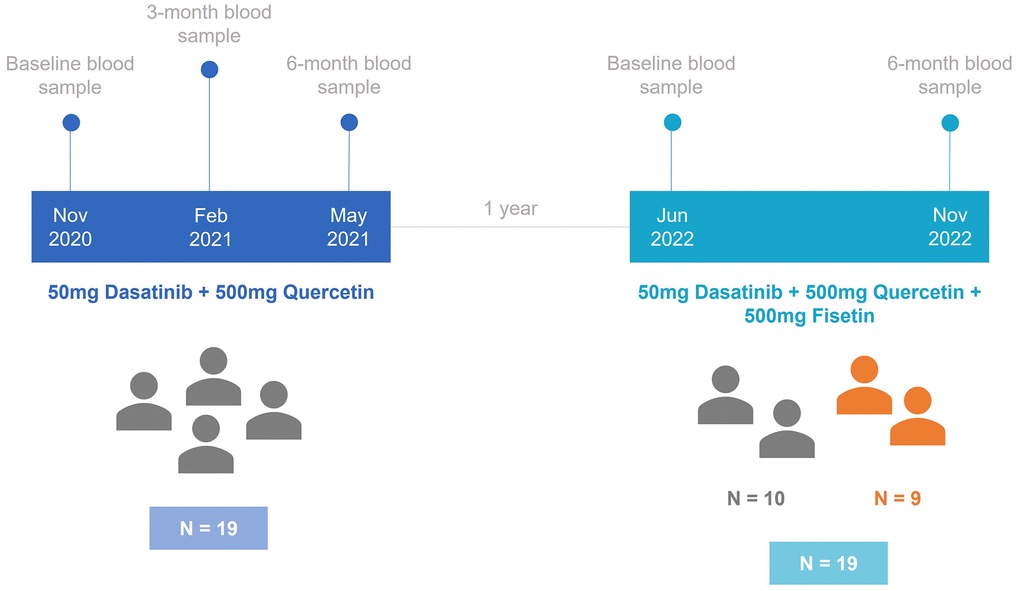
A 19-participant 6-month trial measured DNA methylation at baseline, 3 months, and 6 months.
DNA Methylation Aging Clocks
DNA methylation clocks like Horvath clock, GrimAge, PhenoAge predict biological age more accurately than chronological age. Longevity intervention research uses these as real-time biomarkers.
D+Q + fisetin long-term tracking trials are rare attempts to directly observe how methylation clocks move after intervention. Results answer whether intermittent senolytic therapy measurably affects biological age.
Quercetin’s Intrinsic Value
Quercetin is a flavonoid naturally present in onions, apple peel, green tea, and red grapes. Alone, it has antioxidant, anti-inflammatory, and antihistamine effects, widely used as cold, allergy, and exercise recovery supplements.
Senolytic efficacy, however, mainly emerges with dasatinib. Dasatinib blocks senescent cells’ BCL-2 family survival pathways, while quercetin inhibits the PI3K pathway, a complementary action at the core.
Dasatinib’s Prescription Barrier
Dasatinib is a chronic myeloid leukemia (CML) treatment requiring prescription. Side effects include blood cell reductions, pleural effusion, and cardiovascular risks, so even low-dose intermittent senolytic use requires clinician supervision.
Consumer-accessible senolytic options are quercetin alone, fisetin, or plant extract combinations, with effects weaker than D+Q.
Fisetin Emerges as Alternative
Fisetin, another flavonoid from strawberries and apples, shows stronger senolytic effects than quercetin in animal data. Human trials for elderly sepsis, knee osteoarthritis, and Alzheimer’s risk groups are currently underway, drawing attention as an OTC-accessible option.
2026 Senolytic Research Pipeline
Active 2025-2026 human trials:
- Elderly sepsis prevention: fisetin 20 mg/kg single or 2-dose, 220 participants
- Alzheimer’s risk: D+Q + fisetin 12-week intermittent
- Psychiatric elderly: D+Q safety assessment
- Cognition/mobility: D+Q + fisetin combined
Current Consumer Conclusion
Senolytic therapy is still in research phase. OTC quercetin and fisetin supplements have low risk but limited senolytic evidence, while serious senolytic trials focus on prescription drugs requiring clinician supervision.
The research wave is clearly shifting longevity medicine’s direction. Aging is moving from being “a process that just happens” toward being “a cellular target intervention can modify”.