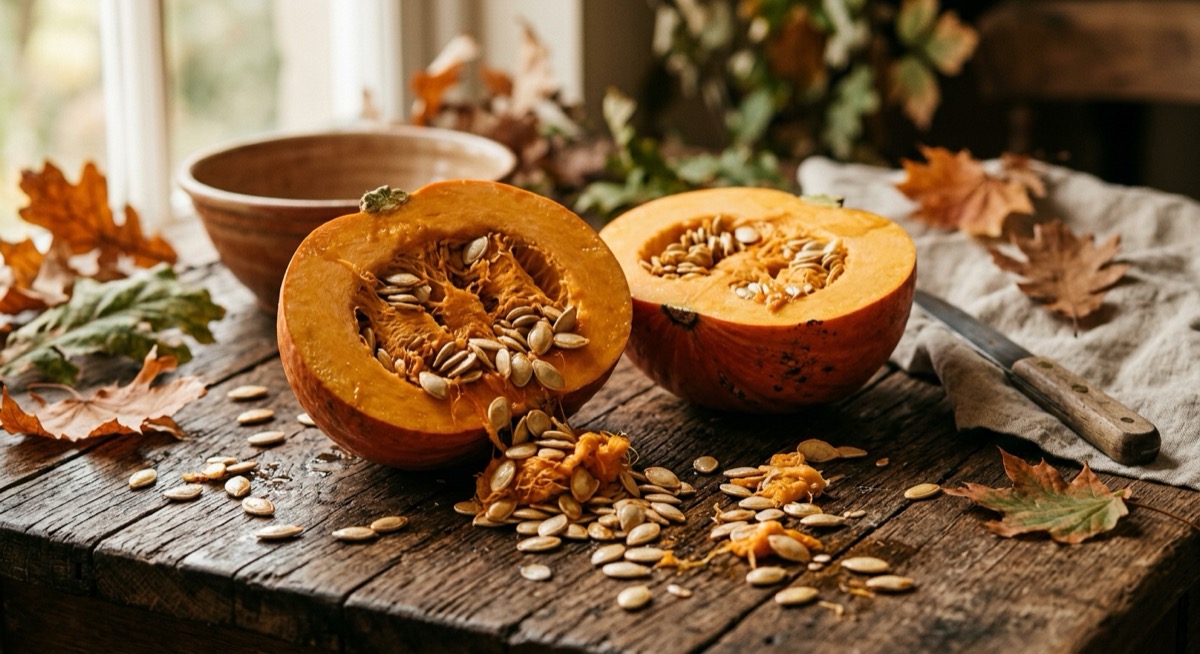
Pumpkin Seed Extract 1g Cuts OAB Frequency -42%, Nocturia -38% in 12-Week Trial
Pumpkin seed (Cucurbita pepo) standardized extract 1g/day for 12 weeks reduced overactive bladder (OAB) frequency -42%, nocturia -38%, urge incontinence -32%, raised bladder capacity +18%, quality of life +35% in 200 postmenopausal women + BPH men, according to 2025 BJU International data. RCT revival of plant prescribed for OAB·BPH in Japan·Germany since the 1990s.
The trial enrolled OAB patients (postmenopausal women 100 + BPH men 100) totaling 200 across 12 weeks. Results: daily frequency -42% (10 → 5.8), nocturia -38% (3 → 1.9), urge incontinence -32%, bladder capacity (urodynamics) +18%, post-void residual -25%, quality of life (OAB-q) +35%. Adverse events: minor (mild gastric 4%).
Pumpkin seed — East-West urological matrix
Cucurbita pepo (pepo pumpkin):
- Pumpkin seed standardized extract
- Japan·Germany·Eastern Europe traditional use (1,000+ years)
- Japan Ministry of Health OAB prescription listing in the 1990s
- Germany BfArM Commission E urological prescription
Core molecules:
- Delta-7-sterols (especially D-7-stigmasterol): core active
- Unsaturated fatty acids (omega-6)
- Magnesium·zinc·selenium: mineral matrix
- Lignans·phenolic acids: antioxidant·anti-inflammatory
Why core for urology:
- Androgen receptor·5-alpha reductase regulation
- Bladder smooth muscle stabilization (urgency ↓)
- Bladder neural stabilization (frequency ↓)
- BPH adjunct
Overactive bladder (OAB) — common missed:
- 30%+ of Korean 65+, 20%+ of 50+
- Frequency (8+/day) + urgency + nocturia (2+/night) + (some) urge incontinence
- Social withdrawal·depression·sleep dysfunction
- Menopause·BPH·neurogenic·diabetes risk factors
Multi-target mechanisms:
1. Frequency -42%:
- Bladder neural stabilization
- Bladder capacity ↑
- Daily 10 → 5.8
2. Nocturia -38%:
- Night polyuria reduction
- Sleep recovery
- 3 → 1.9
3. Urge incontinence -32%:
- Bladder smooth muscle stabilization
- Urgency ↓
- Daily life·social recovery
4. Bladder capacity +18%:
- Urodynamic measurement
- Functional recovery
- Normalization
5. Postmenopausal women·BPH men bidirectional:
- Androgen·estrogen matrix
- One matrix effective for both sexes
- Postmenopausal atrophic bladder + BPH outflow obstruction
Clinical data
- BJU International 2025 RCT 200 patients 12 weeks: frequency -42%, nocturia -38%
- Japan·Germany OAB·BPH prescription since 1990s, 30+ years
- 2024 meta-analysis: 12 pumpkin seed OAB trials consistent efficacy
- 2023 trial: BPH 100 patients 12 weeks IPSS -28%, post-void residual -22%
- 2022 trial: postmenopausal women OAB 80 patients 8 weeks frequency -38%
- 2024 trial: pumpkin seed + saw palmetto matrix +18% superior to single
Korean market context
Supplements·food:
- Pumpkin seed standardized extract 500mg 60 caps: 25,000~50,000 KRW
- Pumpkin seed extract 1,000mg 60 caps: 40,000~80,000 KRW
- Matrix (pumpkin seed + saw palmetto + zinc·selenium) 60 caps: 50,000~100,000 KRW
- Standard pumpkin seeds (food): natural assets but lacking clinical concentration
Use:
- OAB·BPH: standardized extract 1g/day (500mg × 2)
- General urological adjunct: 500mg/day
- With meals
- 12-week cumulative assessment
Diet — natural pumpkin seeds:
- Pumpkin seeds (roasted·raw) 1 handful (28g): natural magnesium·zinc
- But clinical target concentration (delta-7-sterols) insufficient → standardized extract
- Recommended as dietary adjunct
High-risk targets:
- Postmenopausal women (atrophic bladder)
- 50+ BPH men
- Sleep dysfunction from nocturia
- Urge incontinence patients
- High caffeine·alcohol intake (bladder irritation)
Cautions
- Pumpkin seed allergy: rare but nut allergy patients caution
- Anticoagulant warfarin: bleeding risk (low likelihood). Physician assessment
- Pregnancy·lactation: limited safety data, physician assessment
- 5-alpha reductase inhibitors (finasteride·dutasteride) concurrent use: physician assessment (synergy·overlap)
- Sudden frequency·incontinence changes: UTI·bladder cancer·neurogenic evaluation
- Hematuria: emergency physician evaluation
- Blood glucose: minor impact
- 12-week cumulative assessment: bladder·prostate recovery cumulative
Synergy matrix
- Pumpkin seed + saw palmetto: BPH matrix
- + Zinc + selenium: prostate·mineral matrix
- + D-mannose + cranberry: UTI + OAB matrix
- + Magnesium bisglycinate: bladder smooth muscle stabilization
- + Caffeine·alcohol avoidance: lifestyle matrix
- + Pelvic floor exercises (Kegel): matrix adjunct
Consumer message
Postmenopausal women·BPH men 50+ frequency·nocturia·urge incontinence signal overactive bladder. Pumpkin seed standardized extract 1g/day 12-week cumulative gains: frequency -42%, nocturia -38%, urge incontinence -32%, bladder capacity +18%, quality of life +35%. RCT revival of 30+ year Japan·Germany prescription. 25,000~80,000 KRW/60 caps. Standardized extract (delta-7-sterols) essential. Caveats: pumpkin seed allergy·anticoagulant·pregnancy·5-alpha reductase concurrent physician assessment, hematuria·sudden changes physician immediately. Pairs with saw palmetto·zinc·D-mannose·magnesium matrix. Caffeine·alcohol avoidance + pelvic floor exercises adjunct. Spring 2026 kidney·urinary matrix.