PQQ: The Nutrient That Builds New Mitochondria to Slow Aging
Two of the most noticeable signs of aging, declining muscle mass and fading memory, share a common underlying mechanism. Both are closely tied to mitochondria, the energy-producing organelles inside every cell.
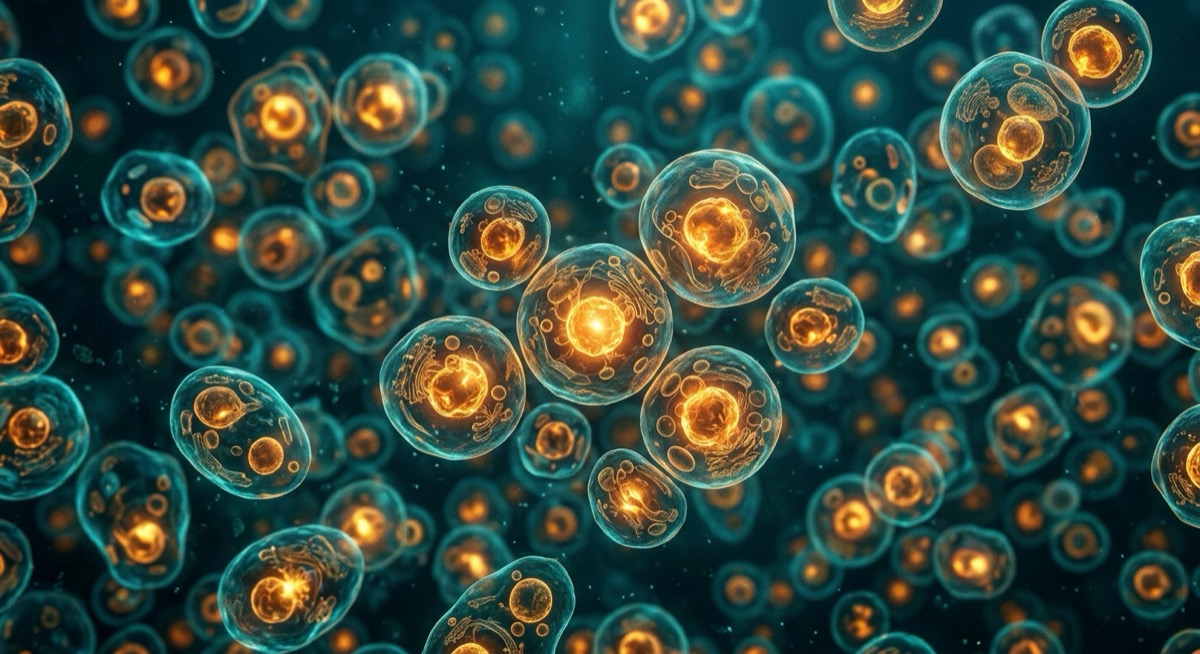
Mitochondrial count decreases with age, and the ones that remain operate less efficiently. While CoQ10 and NAD+ precursors support function within existing mitochondria, PQQ (pyrroloquinoline quinone) takes a different route. It stimulates the creation of new mitochondria through a process called mitochondrial biogenesis.
Frontiers in Aging 2026: Attenuating Age-Related Muscle Loss
A 2026 study published in Frontiers in Aging by a Mitsubishi Gas Chemical research team provides direct evidence for PQQ’s role in age-related muscle decline. Aged mice received PQQ supplementation over a nine-week period.
The results showed significant attenuation of muscle atrophy. The mechanism was traced through PGC-1α activation, which upregulated mitochondrial biogenesis and reduced oxidative stress and inflammation within muscle tissue. Attenuation effects were also observed in a malnutrition model, suggesting PQQ may compensate for metabolic decline associated with both aging and nutritional deficiency.
PGC-1α is not a narrow target. In muscle tissue, it serves as a master regulator of exercise adaptation, fat oxidation, and mitochondrial density maintenance. Its activation by PQQ suggests potential benefits for metabolic efficiency beyond basic anti-aging applications.
NGF Activation: The Cognitive Pathway
PQQ research extends beyond muscle. Earlier studies established that PQQ activates NGF (nerve growth factor), a protein essential for the survival, growth, and maintenance of neurons. NGF plays a central role in memory formation and cognitive function.
NGF levels are notably reduced in the brains of Alzheimer’s patients. While direct causation cannot be claimed from association data, this relationship has drawn sustained interest in PQQ as a cognitive aging intervention. A small human trial conducted in Japan found that participants who took PQQ for twelve weeks showed improvements on memory and attention tests compared to placebo.
A Nutrient That Declines With Age
PQQ is not synthesized by the human body. It must come from diet, and dietary sources are extraordinarily low in concentration. Natto contains approximately 6.1μg per 100g, parsley about 3.4μg per 100g. These are thousands of times below the 10-20mg daily doses used in clinical research.
As aging progresses, the enzyme systems that respond to PQQ become less active, and mitochondrial biogenesis signaling weakens. This is the core reason PQQ appears on aging researchers’ radar. Need increases, dietary supply remains trivially small, and endogenous pathways decline simultaneously.
Dosing and Combinations
Clinical observations cluster around 10-20mg daily. PQQ is frequently combined with CoQ10 because of their complementary relationship: PQQ builds new mitochondria, CoQ10 supports efficient energy production within them. The combination addresses both the quantity and quality dimensions of mitochondrial decline.
Reported adverse effects are rare. Some individuals experience headache or fatigue at high doses, but safety signals have not appeared in major studies at 20mg or below. Pregnant individuals and those on prescription medications should consult a healthcare provider before use.
The changes that come with age, less energy, slower recall, longer recovery, are often attributed simply to getting older. PQQ research suggests that at least part of these changes reflect measurable declines in mitochondrial number and function, and that targeting this process is a viable strategy.