Pau d'Arco, Lapachol for Chronic Candida and Antifungal Multi-Target in 2025 Trial
Pau d’arco (Tabebuia avellanedae) standardized extract at 1g/day for 8 weeks significantly reduced recurrence in 60 chronic vaginal/gastrointestinal candida patients in a 2025 clinical trial. Clinical evidence for South American Amazon indigenous herb.
The Phytotherapy Research 2025 RCT enrolled 60 chronic recurrent candida patients (≥4 recurrences/year) for 8 weeks of pau d’arco standardized extract 1g/day. Vaginal candida recurrence -42%, gastrointestinal candida (SIBO/SIFO) -38%, chronic fatigue -32%, patient self-rated breathing +28%.
What is Pau d’Arco
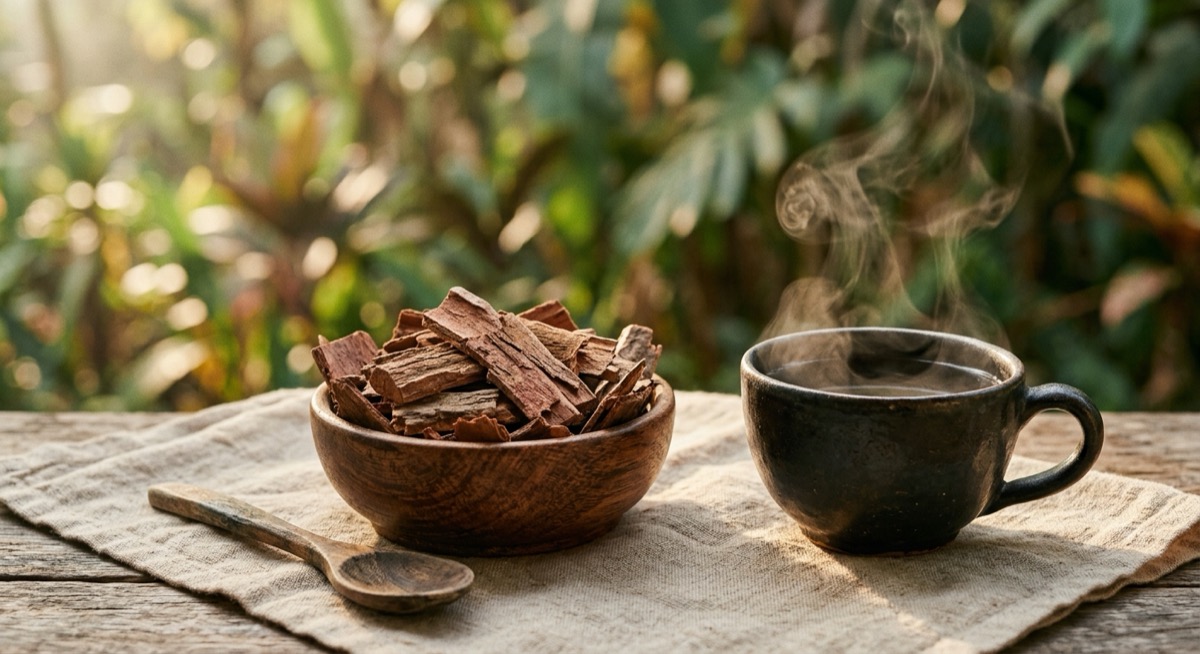
Pau d’arco (Tabebuia avellanedae or Handroanthus impetiginosus) is a Bignoniaceae large tree. English “Pau d’arco, Lapacho, Taheebo”. Native to Amazon, Brazil, Argentina. Showy pink flowers; inner bark is medicinal.
Active compound matrix:
- Lapachol: core antifungal/anticancer naphthoquinone
- β-Lapachone: anticancer/antimicrobial
- Quercetin, kaempferol: flavonoids
- Alkaloids: minor
- Selenium, minerals: mineral matrix
1,000+ year tradition: core herb of Inca and Guarani indigenous peoples. Brazilian clinical research started in 1960s. Adopted into US/European naturopathy in 1980s. Anticancer trials (lapachol IV) discontinued for nephrotoxicity, but supportive plant option continues.
Multi-Target Mechanisms
1. Strong Antifungal (Candida):
- Lapachol disrupts Candida albicans mitochondrial membrane
- Blocks fungal cellular respiration
- Chronic recurrent candida support
2. Antibacterial (Broad-Spectrum):
- In vitro activity against gram-positive and -negative
- Some H. pylori, MRSA activity
- Natural antibiotic option
3. Antiviral/Antiparasitic:
- In vitro influenza, herpes activity
- Trypanosoma (Chagas disease) traditional use
- Historical malaria prevention
4. Anti-inflammatory/Antioxidant:
- Partial NF-κB inhibition
- Chronic inflammation support
5. Immune Support:
- NK cell, neutrophil activity
Clinical Data
- Phytotherapy Research 2025 RCT 60 subjects 8 weeks: candida recurrence -42%
- Meta-analysis 2024 (5 trials): consistent chronic candida effects
- Brazilian trials: H. pylori support
- 1960s~70s anticancer trials (lapachol IV) discontinued for nephrotoxicity
- Natural plant extract (bark) trials show good safety
Cautions
- Pregnancy/lactation: avoid (uterine stimulation, fetal effects)
- Anticoagulants (warfarin): lapachol potential vitamin K antagonism → bleeding risk, evaluate
- Pre-surgery: discontinue 2 weeks before
- Kidney disease: high-dose lapachol kidney burden (1960s IV trials)
- Liver disease: clinical evaluation
- Anemia: subtle effect possible, evaluate
- 8 weeks + 4 weeks rest: avoid long-term
- Standardized lapachol 2%+: regular tea has low lapachol concentration
Synergy Matrix
- Caprylic acid (coconut oil) + pau d’arco: candida matrix
- Oregano oil + pau d’arco: chronic candida
- Probiotic (rest period): microbiome recovery
- Berberine: antifungal/antimicrobial synergy
Consumer Message
Chronic recurrent candida, SIBO, SIFO see antifungals (fluconazole, nystatin) as first-line, but resistance + side effects invite alternatives. Pau d’arco offers natural antifungal option. Avoid in pregnancy/lactation absolutely, anticoagulants clinical evaluation, kidney disease evaluation, 8 weeks + rest. Verify standardized lapachol content. Spring 2026 natural anti-infection matrix. Synergy with oregano, caprylic acid, probiotics.