Can 5kDa Hyaluronic Acid Reach Your Skin When Swallowed? A 12-Week Double-Blind Trial Has Answers
The question of whether swallowing hyaluronic acid actually delivers it to the skin has lingered as a vague claim for years. A randomized, double-blind, placebo-controlled trial published in Scientific Reports (2025) put numbers to that question. 150 healthy adults received either 60mg/day or 120mg/day of low-molecular-weight sodium hyaluronate, or placebo, for 12 weeks. The 120mg group showed statistically significant improvements versus placebo across skin hydration, transepidermal water loss (TEWL), periorbital wrinkle depth, elasticity, and natural moisturizing factor (NMF) levels.
The conclusion is not simply “it worked.” What makes this trial meaningful is that it shows which molecular weight clears the absorption threshold, and why.
Molecular Weight Is Not a Detail — It Determines the Route
Hyaluronic acid behaves like an entirely different molecule depending on its size.
High-MW HA (1,000–1,800 kDa), used in injectables and premium skincare, holds water at up to 1,000 times its own weight. As a topical, it forms an excellent surface barrier. Taken orally, it is simply too large to cross the intestinal mucosa and passes through largely unabsorbed.
Mid-range HA (~100 kDa) shows some absorption, but with high individual variability. The gut microbiome, specifically Bacteroides spp., must first break it down into low-MW oligosaccharides before the absorption window opens. How much of this conversion happens depends on a person’s microbiome composition.
Oligo-HA around 5 kDa does not require this conversion step. In tetrasaccharide form (HA4), it falls within the size range that can pass directly through intestinal mucosal channels. A 2024 mouse study (PMID 37081790) confirmed that orally administered 5kDa HA significantly raised HA concentrations in plasma, skin, bladder, and eye tissue. After crossing the gut wall, it distributes via the bloodstream to peripheral tissues, where it activates a multi-molecular-weight cellular signaling system.
Sub-1kDa HA has higher raw absorption but too little structural capacity to hold water or activate biological signaling effectively. The 5kDa range currently sits at the intersection of practical bioavailability and functional activity.
The Numbers From 12 Weeks
The trial was led by Contipro’s research team in the Czech Republic. 150 healthy Caucasian adults were randomized into three arms (SH60, SH120, placebo) and assessed by dermatologists at weeks 4, 8, and 12.
SH120 outcomes versus placebo:
- Skin hydration (cheeks and forehead): Statistically significant increase (p < 0.05)
- TEWL (transepidermal water loss): Significantly decreased, indicating improved barrier function
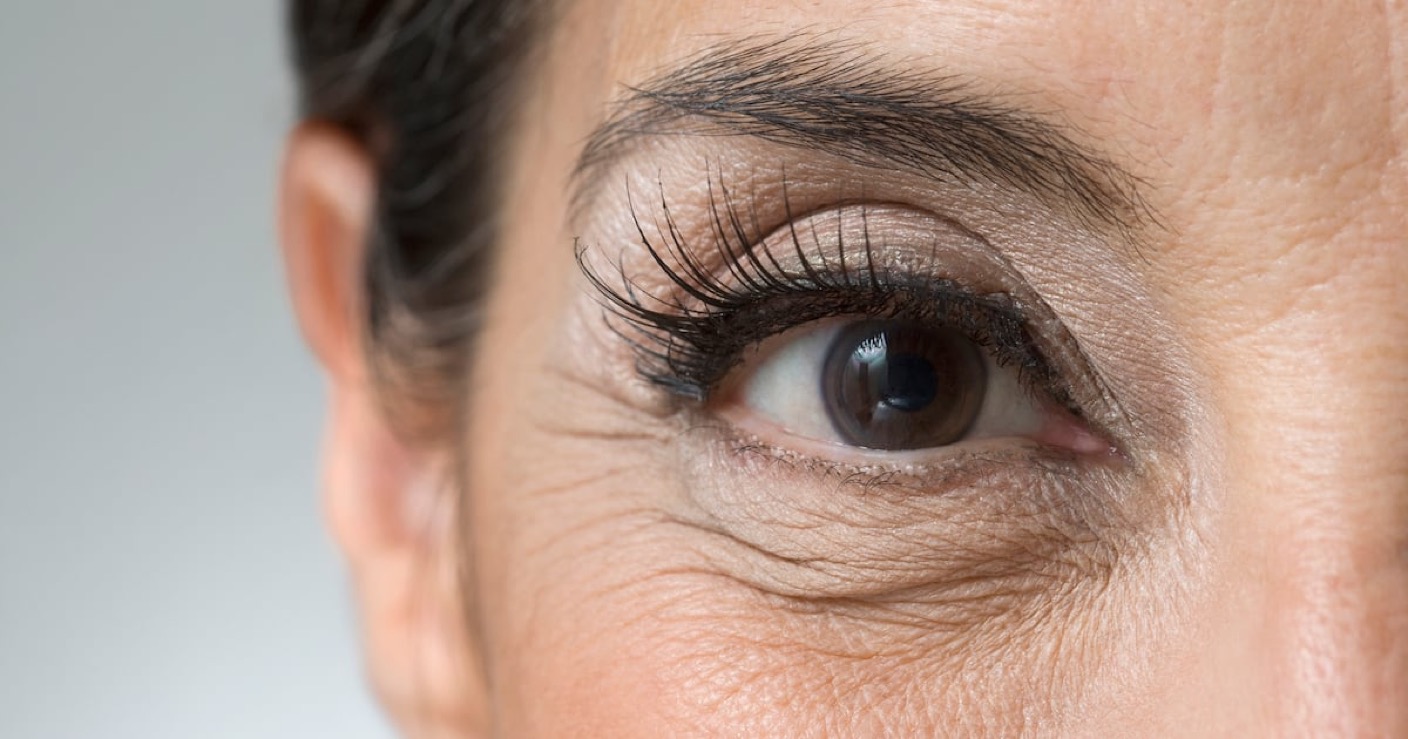
- Periorbital wrinkle depth: Significantly reduced versus placebo
- Skin elasticity: Significantly improved
- Natural moisturizing factor (NMF): Elevated levels measured by LC-MS/MS, meaning the stratum corneum’s own moisture-production capacity increased
The SH60 group showed improvements in the same direction but with smaller effect sizes. Skin redness, pore size, and gloss showed no significant changes in either group.
No serious adverse events were reported over the 12-week period.
The gap between 60mg and 120mg results matters. It suggests a dose-response relationship, which means label claims like “contains hyaluronic acid” without specifying molecular weight or effective dose leave the relevant question unanswered.
What the Intestinal Absorption Threshold Actually Means
The reason 5kDa functions as a threshold involves the physical structure of the gut lining.
The small intestinal mucosa contains transport channels sized for small molecules: digested sugars, amino acids, and water-soluble compounds in the low-kilodalton range. High-MW HA exceeds this limit by hundreds of times. At 5kDa, HA in HA4 tetrasaccharide form falls within the passable range.
Once absorbed, it enters the bloodstream and disperses to peripheral tissues. Animal studies confirmed its presence in skin, bladder, eyes, and gut tissue after oral dosing. That distribution is what makes systemic skin effects mechanistically plausible.
One important clarification: overall oral bioavailability of HA remains low. Estimates put it around 0.2%. The point is not that all ingested HA reaches the skin, but that even at low absorption rates, the 150-person trial registered measurable changes in multiple skin parameters. A small absolute amount of HA in the right molecular form, reaching the right tissue layer, is enough to produce a detectable effect.
High-MW Supplements: Not Useless, But Different
Dismissing high-MW oral HA entirely is not supported by the evidence. But it operates through a different mechanism, with more variability built in.
High-MW HA undergoes partial fermentation by Bacteroides spp. in the colon, generating oligosaccharide fragments that are partially absorbed. In people with robust populations of these bacteria, this indirect route can yield meaningful systemic HA. In people with low Bacteroides counts, the conversion barely happens.
PEGylation and fermentation-derived HA modifications aim to improve oral absorption of high-MW forms. These modifications help, but they still depend on gut conditions that vary substantially between individuals.
5kDa HA bypasses this bottleneck entirely. The absorption mechanism does not depend on microbiome composition, which likely explains the more consistent clinical outcomes seen in controlled trials with low-MW forms.
Oral vs. Topical: Different Layers, Different Jobs
Topical and oral HA are not competing claims. They target different layers of the skin.
Topical high-MW HA (1,000kDa+) forms a moisture-trapping film on the skin surface. It works at the level of the stratum corneum, reducing evaporative water loss from the outside. Some lower-MW topical HA penetrates into the upper epidermis, but reaching the dermis transdermally remains difficult.
Oral low-MW HA travels via blood to the dermal extracellular matrix. The dermis is where skin thickness, elasticity, and moisture storage capacity are set. The simultaneous improvements in elasticity, wrinkle depth, epidermal thickness, and TEWL in this trial are consistent with activity at that dermal layer, not just the surface.
The comparison to low-MW collagen peptides clarifies the distinction further. Di- and tripeptide collagen fragments stimulate fibroblasts to produce more collagen and HA endogenously. Low-MW HA directly supplements the extracellular matrix while activating CD44 receptor signaling. Collagen peptides act upstream on the production pathway; low-MW HA acts on delivery and signaling at the destination. Many clinical formulations combine both.
Who Has the Most to Gain
Not everyone benefits equally from oral HA supplementation, and the trial’s population has limitations worth noting.
Skin aged 40 and beyond: Dermal HA content declines steadily from early adulthood. Histological studies have shown that dermal HA concentration can fall to less than half between the early thirties and early sixties. This loss happens in layers topical products cannot reach. Oral delivery addresses it more directly.
Perimenopausal and postmenopausal skin: Declining estrogen reduces expression of hyaluronic acid synthase 2 (HAS2), one of the primary enzymes driving endogenous HA production. Rapid dermal moisture loss during this period is a leading driver of visible sagging and fine lines. Internal supplementation may offer more leverage than topicals alone during this window.
High-sweat activities — marathon training, hot yoga, cycling: Repeated perspiration, UV exposure, and physical barrier disruption demand consistent barrier function and moisture retention. The TEWL reduction and NMF elevation in this trial both point toward improved intrinsic barrier capacity, not just surface hydration.
A note on scope: the trial enrolled healthy Caucasian adults. Findings may not translate directly to other skin types, ethnicities, or people with specific skin conditions. If you are already taking a beauty supplement or multivitamin that lists hyaluronic acid, checking the molecular weight and actual dose listed on the label is the more useful first step than adding a second product.
If the molecule cannot be absorbed, it cannot do anything. This trial’s contribution is that it defines where the absorption threshold sits, and confirms that measurable skin changes follow when the right molecular form is used at sufficient dose. When evaluating any oral HA supplement, molecular weight and dose are not incidental details — they are the relevant specifications.