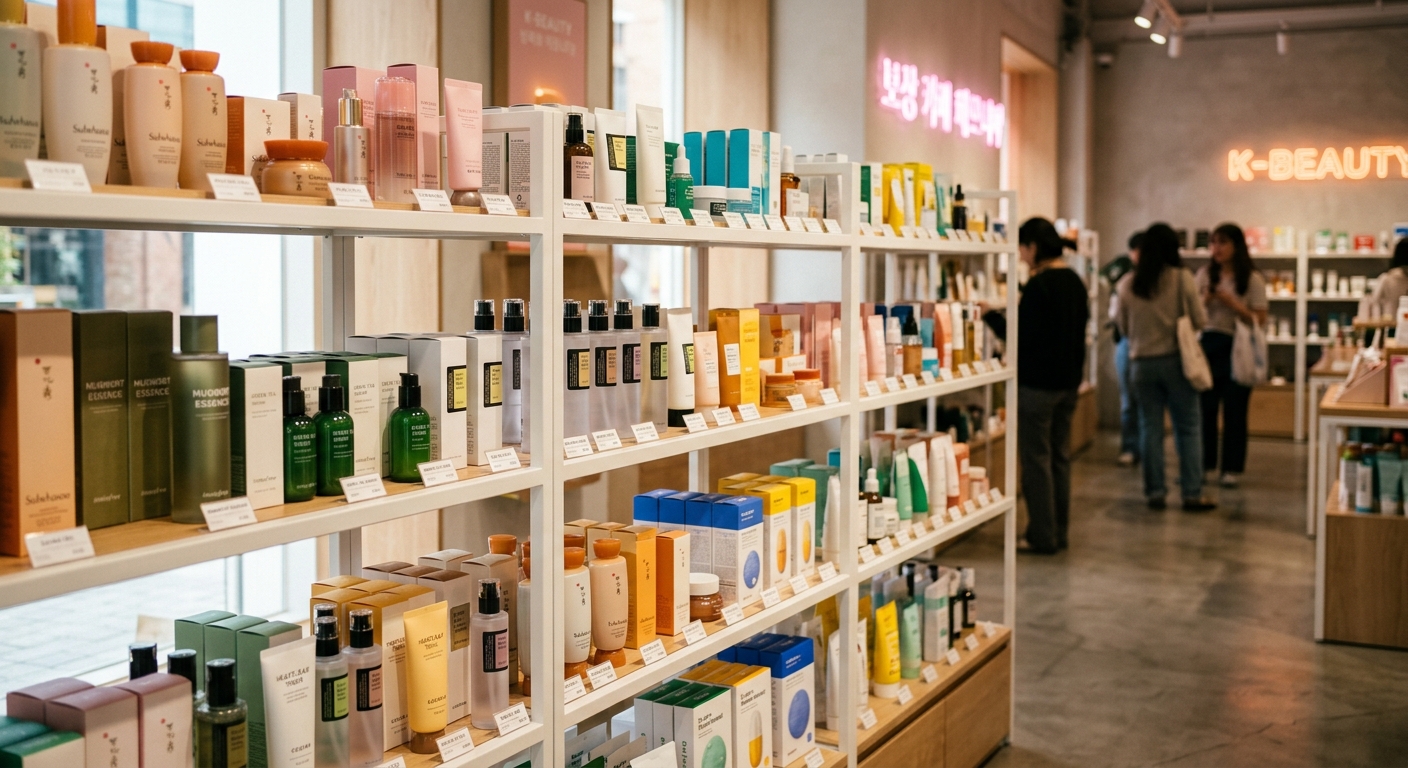
Olive Young Data Shows Capsule Cream Searches Up 1,379% in 2026
Olive Young, the dominant health and beauty retail platform in South Korea, has released search trend data that maps exactly where consumer attention in K-beauty is moving in 2026. The numbers are specific: capsule cream searches up 1,379% year over year, gel cream up 196%, PDRN up 90%, niacinamide up 26%.
What a 1,379% search increase actually signals
Triple-digit search growth typically reflects an emerging consumer awareness of a new category. A number above 1,000% means the category barely registered in search before and is now actively being explored. For capsule cream, that shift happened within a single year.
Capsule cream delivers active ingredients encased in micro-capsules that break on contact with skin. The sensory element (the pop of the capsule) is a tactile differentiator in a category where texture innovation is increasingly the primary purchase driver. But the functional case is also real: encapsulation protects oxidation-sensitive ingredients, such as retinol and unstable vitamin C derivatives, and allows higher concentrations to be delivered to skin without degrading before application.
The premium positioning of capsule formats pairs with consumer willingness to pay for visible technology in skincare.
PDRN moves from clinic to consumer
PDRN (polydeoxyribonucleotide, a compound derived from salmon DNA) has been used in dermatology practices for years via injection for wound healing and tissue repair. Its 90% search growth on Olive Young reflects the ingredient’s migration from clinical settings into topical consumer products.
The mechanism driving interest is PDRN’s association with cell regeneration. Post-procedure skin, barrier-compromised skin, and aging skin are all contexts where consumers are seeking ingredients with regenerative rather than simply moisturizing properties. PDRN occupies that space.
Niacinamide’s 26% growth is worth noting separately. It is already one of the most widely used actives in K-beauty. Continued growth from an established base suggests that proven, multi-functional ingredients retain strong consumer demand even as newer categories emerge.
Skincare standards entering makeup
A separate data point from Olive Young: searches for soothing, barrier, and moisture-related terms within the makeup category increased more than 150%. This is a direct indicator that consumers are applying skincare criteria when choosing cosmetics.
The “skincare-first” philosophy (build a strong skin baseline, then minimize makeup) has been building for several years globally. Olive Young’s data shows the behavioral shift is now visible in how consumers search for and select makeup products, not just skincare.
Slow aging replaces aggressive actives
K-beauty’s competitive advantage has traditionally been early adoption of high-efficacy actives, acids, retinoids, and concentrated brightening compounds. The 2026 data suggests the leading edge is moving away from that framework.
Slow aging prioritizes barrier function, skin resilience, and long-term skin health over short-term dramatic results. It avoids the cycle of irritation and recovery that high-potency actives can create. Millennials and Gen Z consumers are adopting this approach as part of early wellness, the same behavioral shift driving preventive health spending in supplements and fitness. They are entering the category in their mid-20s rather than waiting for visible aging to appear.
Reading the data as a formulation signal
Olive Young’s scale makes its search data a reliable early indicator of what product development cycles will look like over the next 12-18 months. A 1,379% jump in capsule cream searches is not a trend to monitor. It is a category that has already formed, waiting for more supply to meet it.