Soy Isoflavones Don't Work the Same for Everyone, and S-Equol Is Why
When the same supplement gives one person clear results and another almost nothing, the difference usually lives in the gut. ADM’s Novasoy trial, published in Frontiers in Nutrition, confirmed that story again in postmenopausal women, and specifically in the pathway that turns soy isoflavones into a metabolite called S-equol.
The Hidden Step Behind Isoflavones
Soybeans contain two headline isoflavones, daidzein and genistein. Daidzein is the interesting one here because it is not the final actor. Once swallowed, it needs specific gut bacteria to convert it into S-equol, and a growing body of evidence points to S-equol (not daidzein itself) as the driver of much of the observed benefit in menopausal symptoms and skin aging.
The catch is that not everyone hosts the bacteria required for that conversion. Roughly 50 to 60 percent of Asian populations can produce S-equol, compared to about 20 to 30 percent in Western populations. The rest take in the same isoflavones and register almost no S-equol in their blood.
A Fork in the Road, Visible in the Data
Looked at as a single group, Novasoy produced only modest improvements. Split the same participants into S-equol producers and non-producers, and the picture sharpens: the benefit concentrates among producers, while non-producers show much flatter responses.
That changes the design conversation for isoflavone supplements. The old assumption was that soy isoflavones worked more or less uniformly. The new framing puts gut microbiome status upstream of any dosing decision. Some manufacturers are already sidestepping the variability by supplementing S-equol directly rather than relying on the participant’s gut to produce it.
Can You Tell If You Are a Producer
Commercial testing does exist. The typical protocol has you consume daidzein-containing soy foods for several days and then measures urinary S-equol levels. It is a niche test, not something most clinics offer without a specific reason to ask.
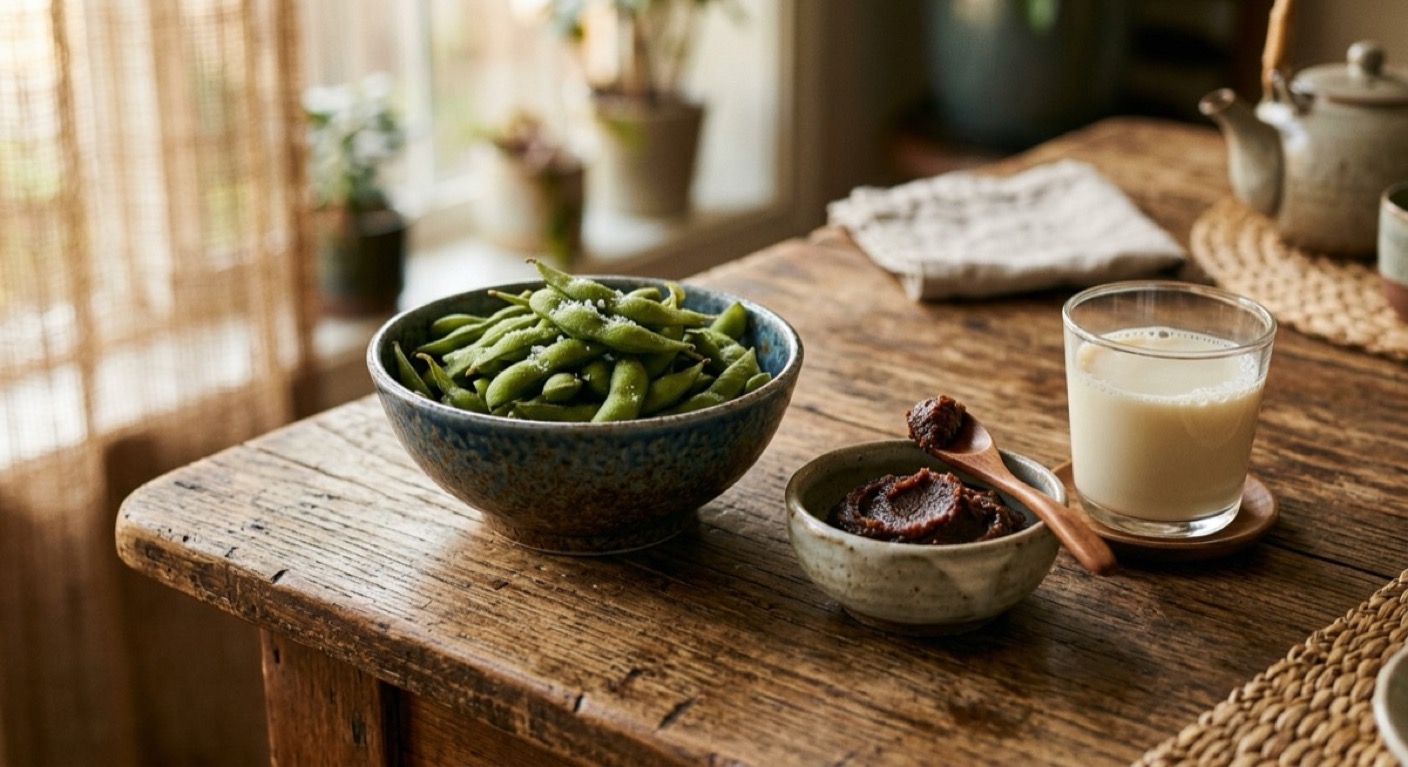
The more practical lever is diet. Regular intake of fermented soy foods such as tempeh, natto, and miso has been linked to shifts in the gut microbiome that, over time, can turn a non-producer into a producer in some cases. The dietary patterns common across parts of Asia are one of the explanations often offered for why postmenopausal outcomes differ across populations.
If you are considering an isoflavone supplement for menopausal symptoms, the most useful first move is to add fermented soy to the diet consistently for several weeks. It is a cheaper experiment than buying the supplement, and it asks the right upstream question before you spend money on the downstream one.