NMN 60-Day Multicenter Trial Confirms Dose-Dependent Effects at 300~900mg
NMN (nicotinamide mononucleotide) is a precursor that the body converts into NAD+ (nicotinamide adenine dinucleotide). NAD+ is an essential coenzyme for cellular energy metabolism, DNA repair, and sirtuin activation, yet its levels naturally decline with age. By age 40, NAD+ levels may drop to roughly half of what they were at 20. Rigorous human clinical data addressing whether NMN supplementation can reverse this decline has now been published in GeroScience.
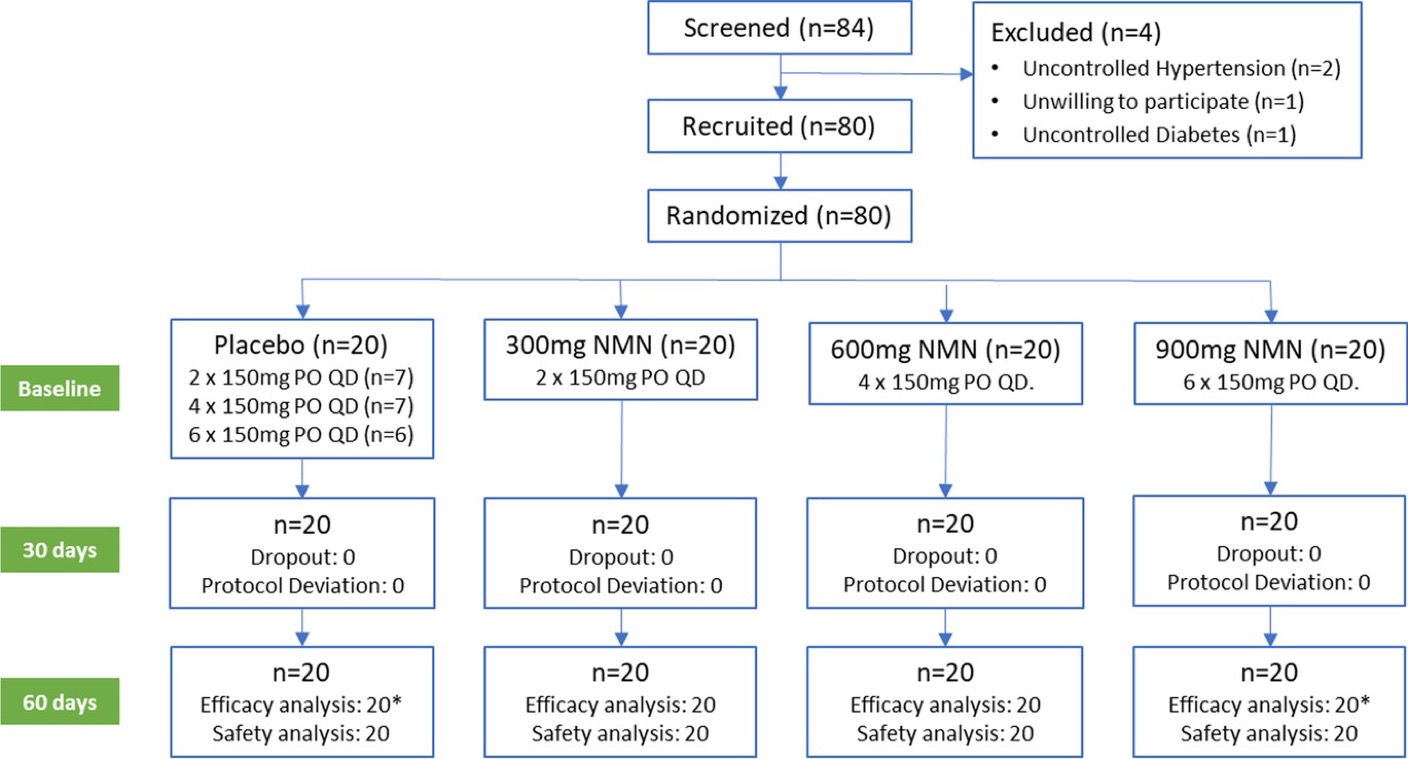
80 Participants, 3 Dose Groups, 60 Days
This Abinopharm-conducted study used a randomized, double-blind, placebo-controlled, multicenter design. Eighty healthy middle-aged adults were divided into four groups of 20: placebo, 300mg, 600mg, and 900mg. Neither participants nor researchers knew who received the actual NMN.
Results broke down across three axes.
First, blood NAD+ increased significantly in all three dose groups compared to placebo. Notably, even the relatively modest 300mg dose produced a significant effect, confirming that oral NMN actually replenishes the body’s NAD+ pool.
Second, physical performance improved in a dose-dependent manner. Higher doses produced greater gains, interpreted as cellular energy metabolism improvements translating into measurable functional outcomes.
Third, positive changes were observed in biological aging markers.
Safety Profile
Over 60 days at doses ranging from 300 to 900mg, no serious adverse events were reported. All dose groups demonstrated favorable safety profiles, and all 80 participants completed the study with zero dropouts. A 0% dropout rate is a meaningful indicator of high tolerability among participants.
Separate Trial: NAD+ Doubled in 14 Days at 1,000mg
A separate clinical trial involving 65 participants reported that NMN at 1,000mg per day doubled blood NAD+ levels within just 14 days. This data suggests that higher doses can produce faster and more substantial NAD+ increases. However, consensus on long-term safety and the optimal NAD+ target level has not yet been reached.
Questions That Remain
The strengths of this study are its multicenter, double-blind, placebo-controlled design and the simultaneous comparison of multiple dose groups. However, 60 days is too short to directly demonstrate longevity effects. Whether the NAD+ increase translates to actual slowing of the aging process, what happens after discontinuation, and the safety profile of long-term use (6 months to 1 year) all require follow-up data.
For those considering NMN supplementation, 300~600mg represents the commonly used range based on current evidence. If you have existing health conditions or are taking other medications, consulting a healthcare provider before starting is the standard we recommend.
Frequently Asked Questions
What is the optimal NMN dose? In this trial, 300mg, 600mg, and 900mg all significantly increased blood NAD+. Physical performance improvement was dose-dependent, and a separate trial showed 1,000mg/day doubled NAD+ in 14 days. There is no consensus on an optimal dose yet, but 300~600mg is the commonly used range.
What are the side effects of NMN? No serious adverse events were reported in this 60-day multicenter trial. All dose groups from 300mg to 900mg showed favorable safety profiles. However, long-term safety data (beyond 6 months) remains limited, so regular health monitoring is recommended for extended use.
How long do NMN effects last? This trial’s observation period was 60 days, and data on NAD+ level changes after discontinuation was not included. Since NAD+ is continuously consumed in the body, ongoing supplementation is likely needed to maintain elevated levels. Additional studies on long-term maintenance are underway.