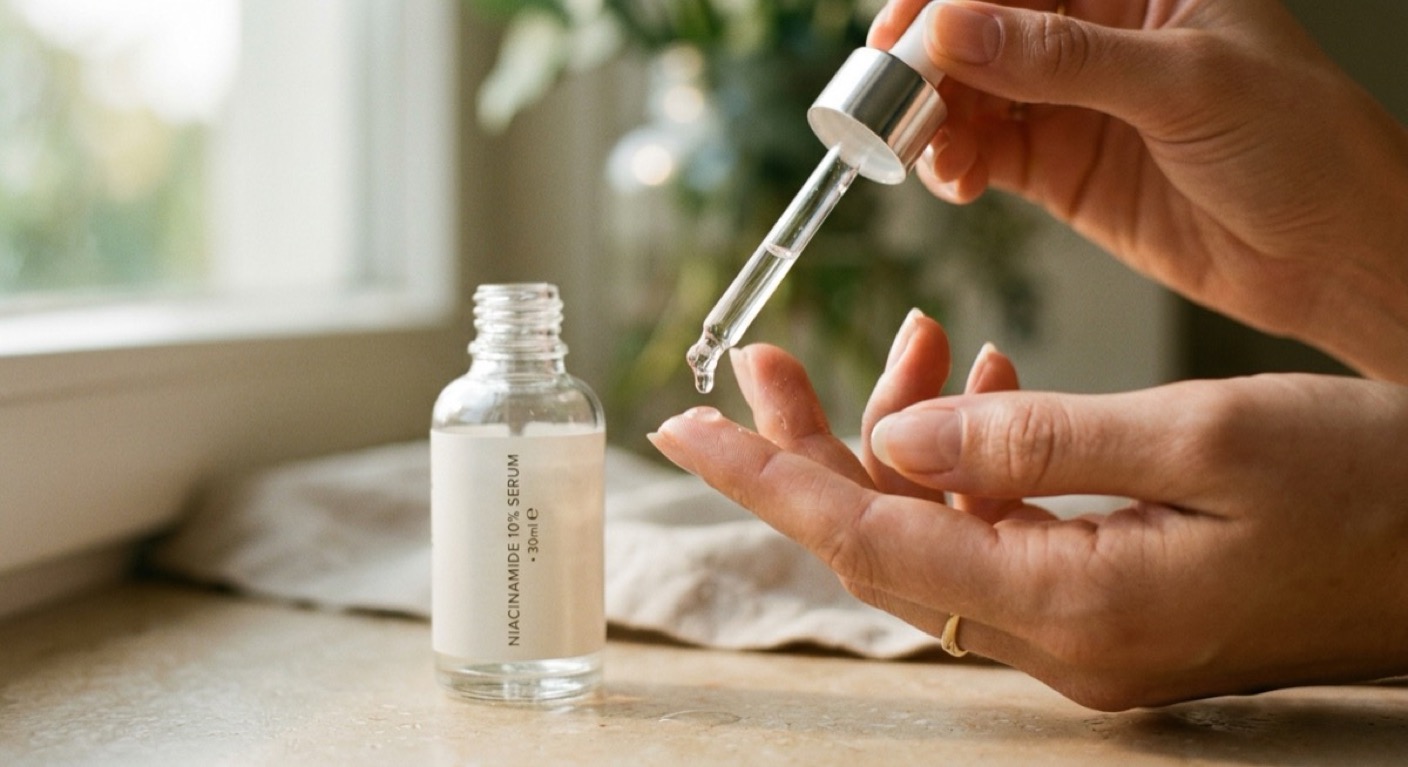
Niacinamide, the Multitasker: Barrier Repair, Acne, and Pigmentation Evidence
Most skincare ingredients are narrowly specialized. They do one thing well and require pairing with other ingredients to address additional concerns. Niacinamide is an exception. A form of vitamin B3, it has accumulated clinical evidence across skin barrier function, acne, pigmentation, and antioxidant activity, often in the same studies.
A comprehensive literature review published in Cosmoderma consolidates that evidence and explains the mechanisms behind each application.
How niacinamide strengthens the skin barrier
The barrier action is mechanistically specific. Niacinamide stimulates the synthesis of ceramides, fatty acids, and cholesterol in skin cells. These three lipid components form the mortar between corneocytes in the stratum corneum, the outermost layer of skin.
When ceramide levels are adequate, the stratum corneum limits transepidermal water loss and resists environmental irritants. When ceramide is depleted, barrier function breaks down, skin becomes dry and reactive, and inflammatory conditions worsen. Atopic dermatitis and eczema consistently show reduced ceramide levels at the sites of skin involvement.
Niacinamide intervenes directly in lipid synthesis, replenishing the structural components that maintain barrier integrity.
Acne: comparable to prescription antibiotics
Of six to eight acne clinical trials reviewed, the majority demonstrated significant reductions in acne lesion counts with topical niacinamide. The benchmark comparison is clindamycin, a topical antibiotic commonly prescribed for inflammatory acne.
Studies found niacinamide’s anti-inflammatory efficacy comparable to clindamycin. It suppresses sebaceous gland activity, reduces sebum production, and attenuates the inflammatory response triggered by Cutibacterium acnes (formerly P. acnes). The appeal over antibiotic options is the absence of resistance risk, which is a growing clinical concern with long-term topical antibiotic use.
Pigmentation: blocking transfer, not production
The mechanism that distinguishes niacinamide from tyrosinase inhibitors like kojic acid or arbutin is where in the pigmentation process it acts. Rather than blocking melanin production at the melanocyte level, niacinamide inhibits the transfer of melanosomes (the organelles that package melanin) from melanocytes to surrounding keratinocytes.
This means melanin is produced but not effectively distributed into the skin’s surface cells, which reduces visible pigmentation over time. In melasma trials using 4 percent niacinamide, approximately 40 percent of participants showed effective pigmentation reduction. Comparative data against hydroquinone and arbutin shows niacinamide offers lower irritation potential for long-term use.
Pairing with retinol and hyaluronic acid
The combination literature supports niacinamide alongside retinol and hyaluronic acid. Retinol accelerates cell turnover and stimulates collagen synthesis but often causes initial dryness, redness, and peeling. Niacinamide’s barrier-strengthening and anti-inflammatory action shortens that adjustment period.
Hyaluronic acid addresses hydration, and niacinamide’s ceramide-stimulating function addresses structural integrity, making them complementary rather than redundant.
Real-world confirmation
A 3-week observational study of actual users found measurable improvements in skin texture and tone within that window, confirmed by both clinical assessment and self-report. The timeline aligns with how quickly the barrier-level changes could plausibly manifest visibly.
For barrier strengthening and acne: expect 4 to 8 weeks. For pigmentation: 8 to 12 weeks minimum. Sun protection used consistently throughout is not optional; UV exposure will counteract pigmentation improvements regardless of niacinamide concentration.
What concentration of niacinamide should I use? 2 to 5 percent addresses most clinical applications. 4 percent is the well-studied dose for melasma. Sensitive skin types should start at the lower end.
Can I use it with retinol? Yes. Niacinamide’s anti-inflammatory and barrier properties buffer retinol’s initial irritation. Many routines use niacinamide in the morning and retinol at night.
How long until I see results? Texture and tone: 3 weeks. Acne and barrier function: 4 to 8 weeks. Pigmentation: 8 to 12 weeks. Sunscreen is required throughout for pigmentation work to hold.