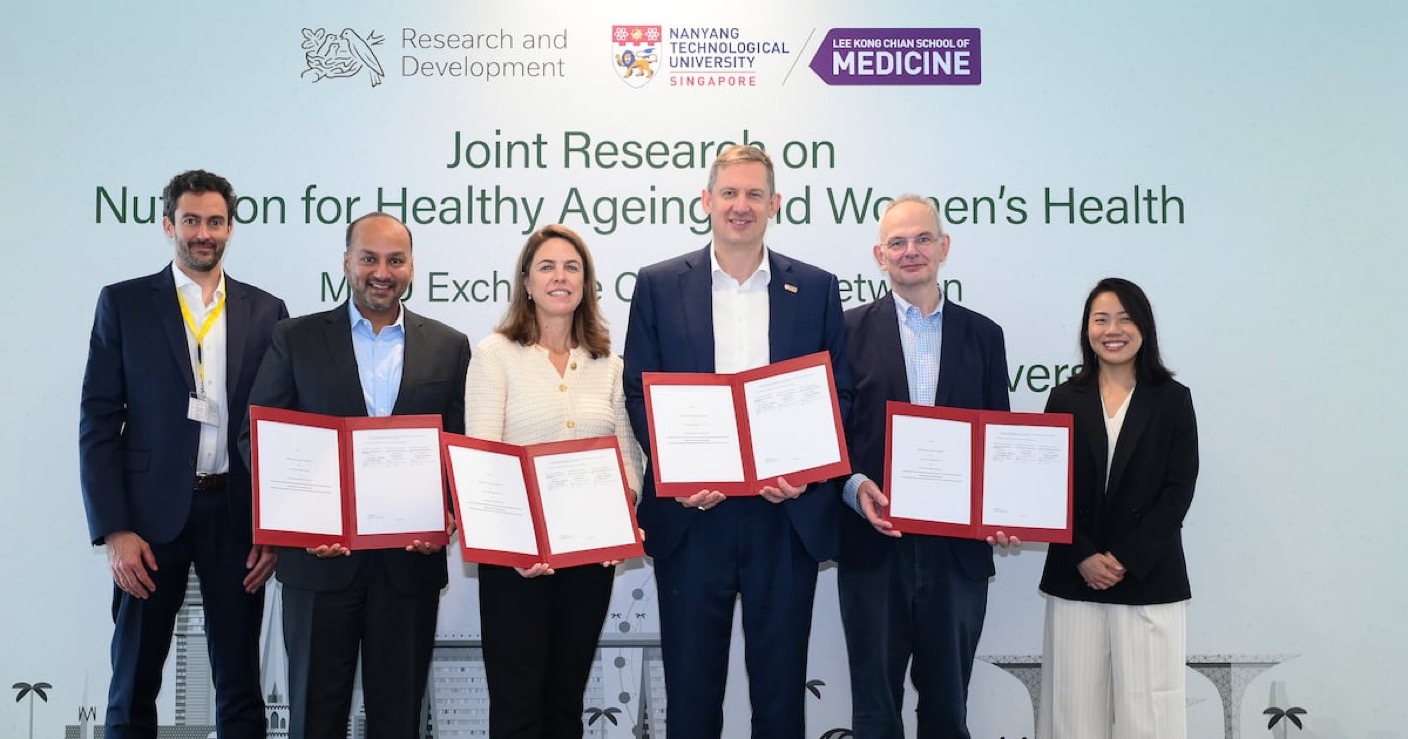
Nestle and NTU Singapore Open Joint Research Lab on Women's Health and Longevity
On April 20, 2026, Nestle Health Science announced a multi-year research partnership with Nanyang Technological University Singapore, Imperial College London, the National Healthcare Group Singapore, the Lee Kong Chian School of Medicine, and Singapore’s Economic Development Board. Two missions anchor the lab. Develop nutrition-based longevity solutions, and identify nutrition solutions tailored to female life stages, particularly menopause.
HELIOS cohort: approximately 50,000 adults as the data backbone
What separates this partnership from other corporate research labs is the data foundation. The lab will draw on anonymized, comprehensive data from the Health for Life in Singapore (HELIOS) population cohort study, built over the past decade. About 50,000 adults’ nutrition, metabolic, hormonal, and lifestyle variables are accumulated.
This scale changes what is possible. Unlike single-arm clinical trials, HELIOS is longitudinal, tracking the same population over time. Causal-flavored questions become tractable. How does a particular nutrition pattern affect cognitive scores, hormone trajectories, or bone density a decade later?
Four research axes
The research focus condenses to four. First, longevity nutrition: identifying molecular targets in aging pathways and optimizing the timing and dose of nutritional interventions. Second, women’s health: stage-specific nutrition tied to peri- and postmenopausal hormone shifts. Third, metabolic health: insulin sensitivity, metabolic flexibility, body composition over time. Fourth, mobility and sleep: sarcopenia prevention and the nutritional drivers of sleep quality.
The interesting part is that these four are not treated as separate silos. Menopausal hormone shifts affect insulin sensitivity, insulin sensitivity affects sleep quality, sleep loops back to hormones. HELIOS lets that chain be observed within one population.
Nestle’s 1980 Singapore R&D base meets academic data
Nestle established its South East Asia R&D Center in Singapore in 1980 and has built nutrition science infrastructure since. This partnership combines that infrastructure with academic research resources. Ryan Carvalho stated that “nutrition plays a fundamental role in helping people maintain their long-term health” and that the partnership will strengthen the evidence on nutrition’s role in healthy longevity.
Industry implication
The takeaway is sharp. The menopausal supplements market is shifting from “how do we package one estrogen analog” to “which patterns hold up under population cohort data.” A single clinical trial is on the order of 100 participants. HELIOS is on the order of 50,000. Different signal strength.
This thread connects to other spring 2026 announcements. PEA SDNN +9.7ms, magnesium L-threonate cutting 7.5 years off cognitive age, MASI down 60-70%. Those marked the era of measurable wellness. Nestle and NTU mark the next chapter, single trial to population cohort.
Direct consumer impact will likely materialize in 12-24 months. As stage-specific nutrition patterns (early peri, mid-meno, post-meno) firm up against cohort data, today’s broad “menopause supplement” aisle will subdivide more precisely. This partnership is the infrastructure starting point.