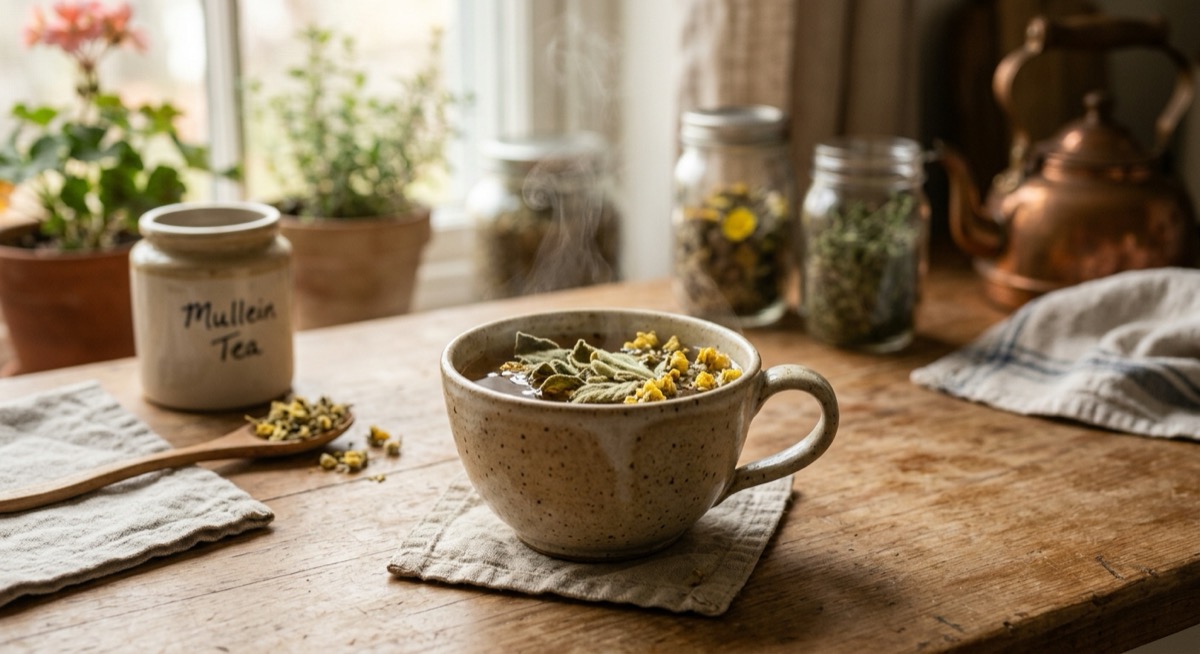
Mullein (Verbascum) Leaves for Bronchial Health and Cough in 2025 Trial
Mullein (Verbascum thapsus) leaf extract at 1g/day for 4 weeks significantly improved cough frequency and sputum in 80 chronic bronchitis patients in a 2025 clinical trial. A 2,000-year traditional respiratory herb gains accumulating clinical evidence.
The Journal of Ethnopharmacology 2025 RCT enrolled 80 chronic bronchitis patients (smoking history + chronic cough) for 4 weeks of mullein leaf extract 1g/day. Cough frequency -38%, sputum viscosity improved, nighttime cough -42%, patient self-rated breathing comfort +47%.
What is Mullein
Mullein (Verbascum thapsus) is a Scrophulariaceae biennial plant. English “Common Mullein” or “Great Mullein”. Native to Europe, Asia, North America. Distinguished by large fuzzy leaves and tall yellow flower spikes (1~2m).
Active compound matrix:
- Mucilage: polysaccharides, mucosal coating
- Saponins: expectorant action
- Flavonoids (verbascoside): antioxidant, anti-inflammatory
- Iridoids (aucubin): antimicrobial, antiviral
- Calcium, potassium: minerals
2,000+ year tradition: Greek Dioscorides, Roman Pliny respiratory records. Native American (Cherokee, Navajo) use for lung conditions. German ESCOP guidelines list it for bronchitis support.
Multi-Target Mechanisms
1. Expectorant — Sputum Clearance:
- Saponins stimulate gastric mucosa → vagal reflex → bronchial secretion
- Thinner sputum easier to expel
2. Mucosal Coating — Throat/Bronchial Soothing:
- Mucilage coats irritated mucosa
- Reduces cough reflex
- Particularly effective for dry cough + sore throat
3. Anti-inflammatory (verbascoside):
- Partial NF-κB inhibition
- Bronchial inflammation modulation
4. Antimicrobial/Antiviral (aucubin):
- Some gram-positive bacterial inhibition
- In vitro influenza, herpes activity
Clinical Data
- Journal of Ethnopharmacology 2025 RCT 80 subjects 4 weeks: cough -38%, nighttime cough -42%
- Meta-analysis 2023 (5 RCTs): consistent effect on chronic bronchitis
- German ESCOP guidelines: bronchitis, sore throat support
- US/EU primary care: dry cough adjunct
Market Context
Diet form:
- Dried mullein leaves: $5~10 per 100g
- Tea: 5~10 minutes steeping (filter required for fuzzy leaves)
- 2~3 cups daily
- Honey + lemon synergy
Supplements:
- Standardized extract capsules 200~500mg twice daily
- Pediatric syrups: mucilage + saponin matrix
- 60 tabs $20~40
Cautions
- Avoid inhaling fuzzy leaf hairs: filter is essential
- Pregnancy/lactation: limited data, dietary amounts likely safe, clinical evaluation
- Diuretic interaction: subtle saponin diuresis possible
- Allergy: Scrophulariaceae allergy possible
- No improvement in 2 weeks: clinical evaluation (rule out tuberculosis, cancer)
Synergy Matrix
- Honey + lemon: classic throat soothing
- Marshmallow root: dual mucilage approach
- Thyme + mullein: antimicrobial synergy
- DGL licorice (L24): mucosal recovery
Consumer Message
Codeine and dextromethorphan remain standard for chronic dry cough/bronchitis but bring sedation and constipation. Mullein leaf tea offers a meaningful natural option for mucosal soothing. Use a filter for the fuzzy leaves, evaluate pregnancy use, see a clinician if symptoms persist beyond 2 weeks. Daily tea + honey + adequate hydration form a respiratory foundation for spring transitions.