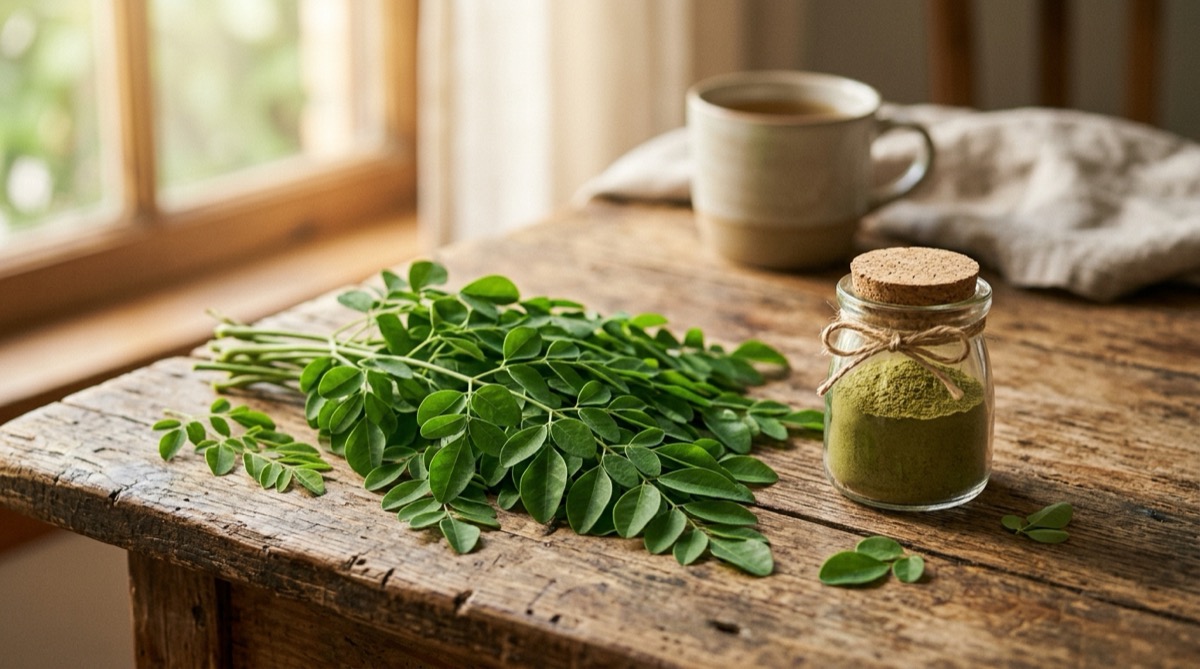
Moringa (Drumstick Tree) for Multi-Nutrient and Glucose in 2025 Trial
Moringa (Moringa oleifera) leaf powder at 6g/day for 12 weeks significantly improved blood glucose and cholesterol in 80 type 2 diabetes patients in a 2025 clinical trial. The “miracle tree” superfood gains accumulating clinical evidence.
The Phytotherapy Research 2025 RCT enrolled 80 type 2 diabetes patients (HbA1c 6.5~9.0%) for 12 weeks of moringa leaf powder 6g/day. HbA1c -0.6%, fasting glucose -22mg/dL, LDL -12%, antioxidant markers (MDA, SOD) improved.
What is Moringa
Moringa (Moringa oleifera) is a Moringaceae perennial tree. English “Drumstick Tree, Moringa, Horseradish Tree”. Native to India, Africa, Southeast Asia. Leaves, pods, and seeds are all edible. 5,000+ year Ayurvedic tradition.
Active compound matrix (per 100g leaves):
- Vitamin A: 6,780μg (2x beef liver)
- Vitamin C: 220mg (7x oranges)
- Vitamin E: 113mg
- Vitamin K: abundant
- Calcium: 440mg (4x milk)
- Iron: 7mg (3x spinach)
- Protein: 9.4g (all 9 essential amino acids)
- Isothiocyanate (moringin): anti-diabetic, anti-cancer
- Quercetin, kaempferol: flavonoids
- Chlorogenic acid: glucose support
WHO and UN recommend it for nutritional supplementation in undernourished regions.
Multi-Target Mechanisms
1. Glucose Support (Isothiocyanate):
- Moringin enhances insulin sensitivity + GLUT4 receptor activity
- Partial alpha-amylase inhibition smooths postprandial glucose
- Chlorogenic acid synergy
2. Cholesterol/Cardiovascular:
- Fiber + saponins bind bile acids → LDL ↓
- Phenolic antioxidants reduce oxidized LDL
3. Antioxidant/Anti-inflammatory:
- Vitamin C + E + multi-polyphenols
- Partial NF-κB inhibition
4. Multi-Nutrient Support:
- Vitamin A deficiency (developing countries, elderly, children)
- Calcium/iron support
- Protein diversification (vegetarian)
Clinical Data
- Phytotherapy Research 2025 RCT 80 subjects 12 weeks: HbA1c -0.6%, LDL -12%
- Meta-analysis 2024 (11 RCTs): consistent type 2 diabetes effects
- Indian trials: micronutrient support in undernourished children/pregnancy
- Filipino trials: lactation support (traditional use)
Market Context
Diet form:
- Moringa leaf powder: $15~30 per 100g
- Moringa tea: 1 tsp dried leaves boiling water 5~10 min
- Moringa capsules: 60 tabs $25~50
- Indian/Southeast Asian supermarkets
Supplements:
- Leaf powder 4~8g/day or extract capsules 500~1,000mg
- Multi-nutrient matrix combinations
Cautions
- Pregnancy: leaf (dietary amount) likely safe, avoid roots/bark (uterine stimulation)
- Lactation: traditionally used as galactagogue
- Glycemic medications: synergy with metformin/insulin → hypoglycemia risk, evaluation
- Hypothyroidism: some clinical data, evaluation
- Kidney stones: oxalate content, avoid in stone patients
- Drug absorption: fiber subtle effect, 1~2 hour separation
Synergy Matrix
- Cinnamon + berberine: glucose matrix
- Psyllium: fiber + LDL synergy
- Vitamin C + E: antioxidant dual
- Fenugreek (L23) + moringa: insulin sensitivity
Consumer Message
Multi-nutrient deficiency, diabetes + cholesterol, and general antioxidant support are typically addressed with synthetic vitamins, metformin, statins. Food-based natural options gain demand. Moringa offers multi-nutrient + glucose + cholesterol in one plant. Avoid roots/bark in pregnancy, evaluate glycemic medications, evaluate thyroid/kidney stones. Spring 2026 multi-nutrient matrix pillar. Daily tea or powder integration.