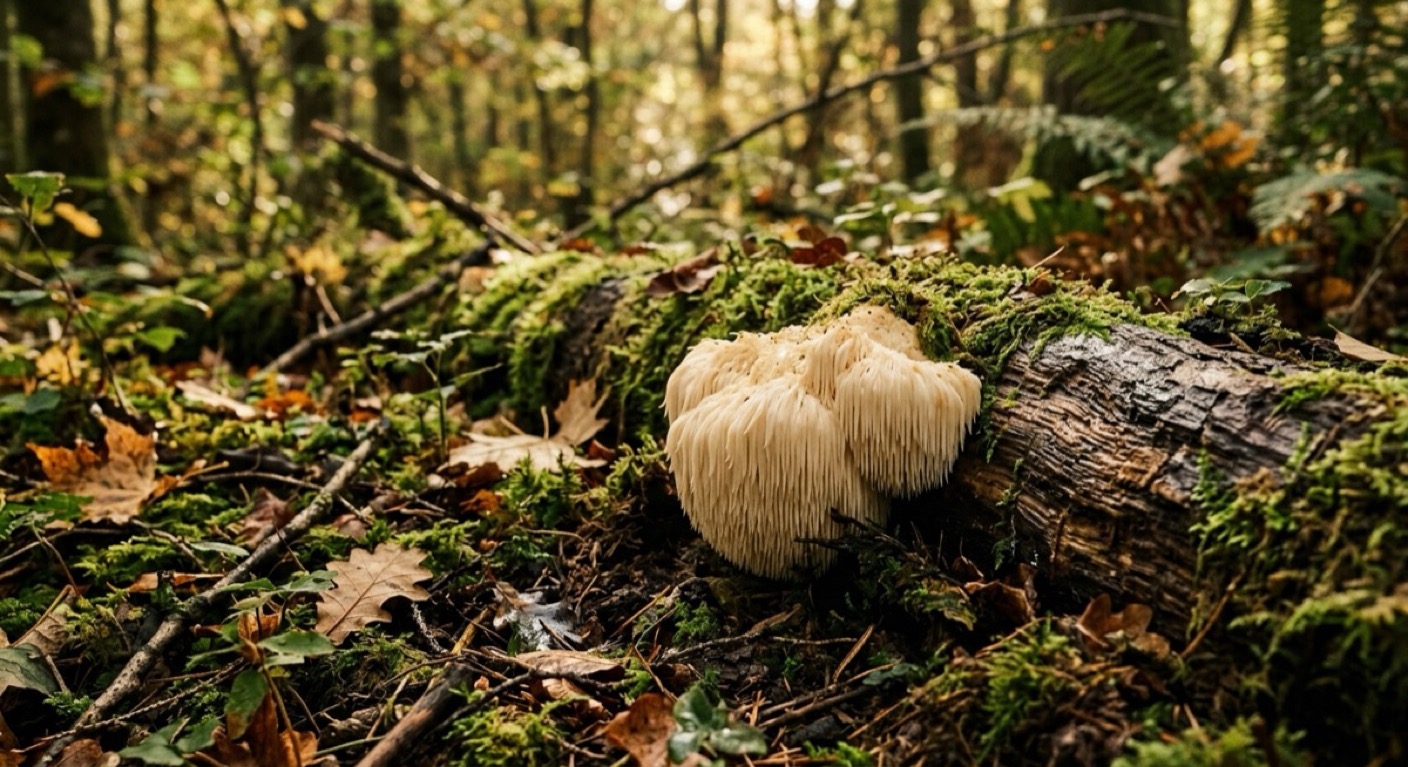
Lion's Mane Mushroom Accelerates Skin Wound Healing Through NGF
A growing body of research positions lion’s mane mushroom (Hericium erinaceus) not just as a nootropic ingredient but as a potential wound healing and skin regeneration agent. A study published via PMC details the mechanism through which its active compounds stimulate nerve growth factor (NGF), with downstream effects on collagen synthesis, skin cell turnover, and inflammation control.
Two compounds, one target
Lion’s mane contains two structurally distinct bioactive compound families: hericenones from the fruiting body and erinacines from the mycelium. Both have been shown to stimulate NGF production in preclinical models.
NGF is primarily known for supporting neuron survival and differentiation in the brain. Its relevance to skin came into focus when researchers confirmed that skin fibroblasts and keratinocytes express NGF receptors. This means the same signaling cascade that supports nerve health can be triggered in skin tissue, with measurable effects on repair processes.
What topical application showed in animal models
When lion’s mane extracts were applied directly to wounds in animal studies, the results fell into two categories.
Regenerative effects:
- Accelerated wound closure compared to control groups
- Increased collagen synthesis, the structural protein that determines skin strength and elasticity
- Enhanced keratinocyte proliferation and migration, the cellular mechanics of wound healing
Protective effects:
- Anti-inflammatory activity reducing excessive inflammatory response at wound sites
- Reduction in scar tissue formation through modulation of collagen deposition
- Antimicrobial properties reducing infection risk at wound sites
NGF also maintains the peripheral nerve endings embedded in skin tissue. Beyond structural repair, this means sensory function restoration after injury, the ability to feel pressure, temperature, and touch, may be supported through the same pathway.
The antioxidant and immune layer
Beyond wound healing, lion’s mane has demonstrated antioxidant activity that reduces oxidative stress on skin cells, anti-inflammatory effects targeting cytokine-mediated skin inflammation, and immune-modulating properties that indirectly support barrier function. These three pathways operating in parallel provide a broader support system for skin health than wound healing alone.
Oral supplementation and practical considerations
Oral dosing in the 500 to 3,000mg per day range is common in supplement products. Extracts standardized to hericenone or erinacine content offer more predictable dosing than raw mushroom powder.
The gap between oral supplementation and topical effects remains an open question. Whether ingested lion’s mane raises NGF levels in skin tissue at clinically meaningful concentrations has not been confirmed in human trials. Topical applications are showing more direct preclinical evidence but have not yet advanced to large-scale human studies.
What is established: the mechanistic pathway from lion’s mane compounds to NGF synthesis to skin cell behavior is documented. The translation into practical skincare and wound management applications is an active area of investigation.