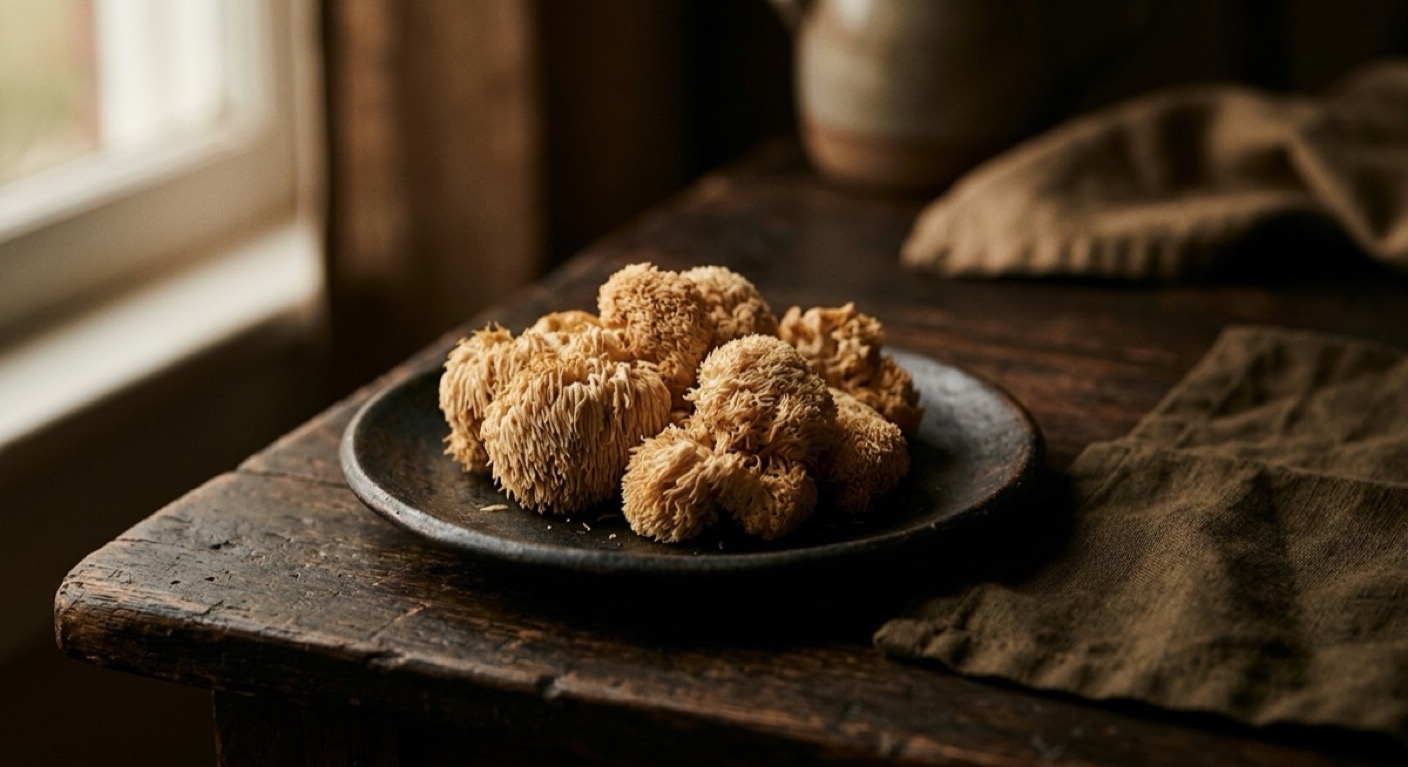
Lion's Mane Mushroom Shows Significant Cognitive Gains After 16 Weeks
A double-blind, placebo-controlled trial published in Nutrients found that adults taking a standardized Hericium erinaceus extract for 16 weeks showed statistically significant improvements in composite cognitive performance compared to placebo. Memory, attention, and processing speed all showed measurable gains where the placebo group did not.
What the Study Found
Participants at risk for mild cognitive decline were randomly assigned to either H. erinaceus hot water extract or an identical placebo. Both groups completed standardized cognitive assessments before and after the 16-week period.
The lion’s mane group posted significant gains across the composite cognitive score. Attention and short-term memory showed the largest individual improvements, while the placebo group showed no significant change across the same window. The effect size was consistent with earlier pilot studies and strengthened the case for lion’s mane as a clinically relevant cognitive support ingredient.
How NGF Connects the Dots
Lion’s mane works through a specific biological pathway: nerve growth factor (NGF) stimulation. NGF is a protein that supports the survival, growth, and maintenance of neurons. As the brain ages, NGF levels decline, and that decline tracks closely with memory deterioration and reduced processing efficiency.
The bioactive compounds in lion’s mane, hericenones (found in the fruiting body) and erinacines (found in the mycelium), are small enough to cross the blood-brain barrier. Once inside the brain, they stimulate NGF synthesis and promote dendritic growth, the branching extensions neurons use to form and strengthen connections. The hippocampus, the brain region central to learning and memory, appears to be particularly responsive.
This distinguishes lion’s mane from stimulants or acute focus aids. It supports the structural substrate of cognition, not a temporary chemical override.
Why 16 Weeks Matters
Cognitive change is not fast. Unlike caffeine, which shifts alertness within an hour, NGF-mediated neuronal support accumulates gradually. Most well-designed lion’s mane trials have found that meaningful changes become measurable between 8 and 16 weeks of consistent use. Studies shorter than that have often returned null results, not because the mechanism is absent, but because the timeline is too short for functional change to register.
The 16-week design of this trial was deliberate. It allows NGF levels to stabilize, dendrites to remodel, and cognitive tasks to reflect the cumulative structural shift. Short-term or inconsistent use misses the window entirely.
Neuroprotection and Anti-Neuroinflammation
Beyond cognition, H. erinaceus is studied for broader neuroprotective effects. Chronic low-grade inflammation in the brain (neuroinflammation) is recognized as a key driver of cognitive aging. Preclinical research shows lion’s mane extract can reduce microglial overactivation and lower pro-inflammatory cytokine levels in brain tissue.
There is also evidence that lion’s mane influences BDNF (brain-derived neurotrophic factor), a protein involved in mood regulation, motivation, and emotional resilience. This is why the ingredient is being explored for anxiety and depression, alongside its cognitive applications. The two pathways are overlapping, and the evidence base for both is growing.
Choosing a Product
Quality variation between lion’s mane products is significant. Many products on the market are whole dried mushroom powder with no standardization and unpredictable active compound levels. Hot water extracts with a declared beta-glucan content of 30% or more offer the most meaningful comparison to clinical trial material.
Clinically studied doses range from 500mg to 3,000mg per day. For cognitive support, 1,000mg2,000mg daily over a minimum of 8 weeks represents the best-supported range. At standard market prices, that translates to roughly $20$40 per month depending on the brand and concentration.
Tolerability is generally good. Mild gastrointestinal discomfort is occasionally reported, and rare skin sensitivity reactions have been documented. Serious adverse events have not appeared in major trials. Those with mushroom allergies should approach with caution.
A Different Kind of Brain Support
When focus is the goal, caffeine is usually the first answer. Lion’s mane operates on a different register. Caffeine blocks adenosine receptors to suppress the sensation of fatigue, producing immediate alertness that fades within hours. Lion’s mane works on a slower timeline, building the structural conditions for sustained cognitive function over months.
Neither is a substitute for the other. The need for acute focus today and the investment in cognitive health three months from now are separate questions with separate answers. Lion’s mane addresses the second.
This trial adds to a growing body of evidence that lion’s mane delivers measurable cognitive benefits when used consistently and at appropriate doses. The 16-week window confirms it, and the NGF mechanism explains why consistency is the only way it works.