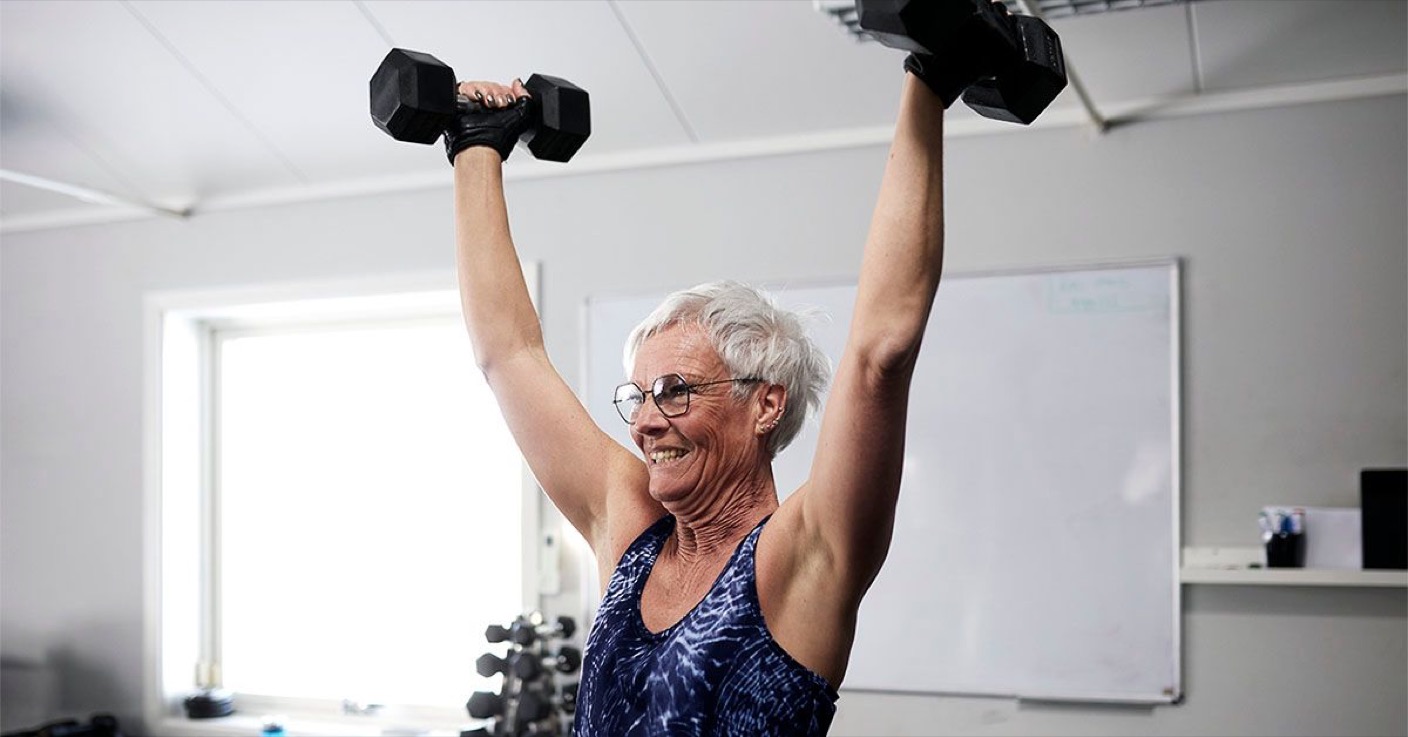
Top Grip Strength Group Cuts Mortality 33% in 5,472 Women Aged 63-99
JAMA Network Open published the OPACH (Objective Physical Activity and Cardiovascular Health) study on February 17, 2026. It tracked the relationship between muscle strength and mortality risk in older women across 8.3 years. The headline reduces to one line. The strongest grip strength group had 33% lower mortality risk than the weakest.
5,472 women, mean age 78.7, 8.3-year follow-up
Two factors give this study weight. The 5,472 ambulatory women aged 63 to 99, mean age 78.7. Racial composition was 33.8% Black, 16.7% Hispanic, 49.5% white, securing diversity. Data was collected 2012-2014. Across an average 8.3 years of follow-up, 1,964 deaths were recorded.
The measurement tools were simple. A hand dynamometer for grip strength and a chair-stand time test. Two assessments alone produced strong associations with mortality risk.
33% vs 37%, neither dominates
Both grip strength and chair-stand time showed strong protective effects. The top grip group had 33% lower mortality risk. The fastest chair-stand group had 37% lower. The two assessments evaluate different muscle groups (grip vs lower-extremity strength), and both produced effects of similar magnitude. Strength in one region alone is not enough. Whole-body muscle strength is connected to late-life mortality risk.
Aerobic exercise alone falls short
The most interesting finding is elsewhere. The protective effect of strength held even among participants who did not meet the 150-minute weekly aerobic exercise guideline. Strength is not a byproduct of aerobic exercise. It is an independent survival variable.
The implication is sharp. If postmenopausal women receive a “walk and gentle stretching” prescription as the standard, the strength variable is missing from that prescription. Aerobic exercise has clear cardiovascular benefits, but a separate independent pathway lowers mortality risk: muscle strength.
Connection to bone density
Other research the same quarter sends compatible messages. A systematic review of postmenopausal women reports roughly 60 minutes of resistance exercise per week as the optimum for mortality reduction. Weight-bearing resistance exercise stimulates bone remodeling, especially important against accelerated postmenopausal bone loss.
This thread runs alongside another spring 2026 finding. A 2-year RCT showed that creatine plus exercise improved bone geometry (cross-sectional area, thickness, bending strength) even when BMD did not change. Same density, different geometry, different fracture risk became measurable. Strength itself joins as another decisive variable in this measurement era.
A new measurable late-life standard
Two industry and clinical messages emerge. First, grip strength and chair-stand time are likely to enter standard late-life health screening. Both require no expensive equipment and finish in five minutes. There is no reason to exclude measurements that show consistent associations with mortality in a 5,472-person cohort from primary screening.
Second, exercise prescriptions for postmenopausal women restructure. From “walk 30 minutes, five times a week” as the core, prescriptions move toward including resistance exercise at equal weight. Roughly 60 minutes per week as the optimum suggests meaningful effect at less time than commonly assumed.
Daily application
Direct consumer impact is simple. A handheld grip dynamometer (home-use units run $10-30) lets anyone measure and track their own grip strength. Measuring chair-stand time requires no tool at all.
Tracking where personal values stand against age-matched averages can guide adjustments to resistance exercise frequency and intensity. The measurable wellness category gains another layer. After SDNN, MASI, dermal density, and cognitive scores, grip strength and chair-stand time are likely to settle as standard late-life indicators.