Iodine Lifts T4 18%, T3 15%, Reduces Thyroid Volume 22% in 12-Week RCT
Iodine 150~200μg/day for 12 weeks improved thyroid hormone synthesis and deficiency markers in 200 patients, according to 2025 data in Thyroid (Mary Ann Liebert). Korean and Japanese seaweed-rich diets provide natural sufficiency — pregnancy and lactation remain additional targets.
The trial enrolled 200 deficient adults (Western·inland populations) across 12 weeks. Results: T4 (thyroxine) +18%, T3 (triiodothyronine) +15%, thyroid volume -22% (goiter marker), urinary iodine concentration (UIC) +85% (deficient → normal), TSH (thyroid stimulating hormone) -25% (within normal range). Adverse events: mild GI discomfort (5%).
Iodine and thyroid hormone
Iodine: absolutely essential mineral for thyroid hormone (T4, T3) synthesis. T4 = 4 iodine + tyrosine, T3 = 3 iodine + tyrosine. Without iodine, thyroid hormones aren’t made.
Thyroid hormone roles:
- Basal metabolic rate (BMR) determination
- Body temperature regulation
- Protein synthesis·degradation
- Cognition·mood
- Cardiovascular·digestive·immune modulation
- Determining fetal brain·neural development during pregnancy
Korea·Japan vs Western — iodine intake difference:
- Korea: average daily 200~400μg (seaweed·sea mustard·kelp·gim/nori rich)
- Japan: average daily 1,000~3,000μg (seaweed-rich, some excess)
- Western average: daily 100~150μg (depends on iodized salt fortification)
- Iodine-deficient population worldwide: 1.9 billion (WHO)
- Korean diet’s iodine richness is a natural asset for thyroid health
Multi-target mechanisms
1. Thyroid hormone synthesis — absolutely essential:
- In thyroid follicle, iodine + thyroglobulin → MIT (monoiodotyrosine) → DIT → T4·T3
- Deficiency halts synthesis → compensatory thyroid enlargement → goiter
2. Pregnancy·lactation — fetal brain development:
- Fetal brain·neural development depends on maternal thyroid hormone
- Iodine demand +50~100% during pregnancy
- WHO recommends 250μg/day pregnancy, 250~290μg/day lactation
- Deficiency → fetal developmental delay·cognitive impairment·cretinism
3. Breast health:
- Breast tissue is the second-largest iodine absorber after thyroid
- Breast tissue iodine deficiency = fibrocystic breast·breast cancer risk marker
- Some clinical breast health adjunct data
4. Cognition·mood:
- Hypothyroidism → cognitive decline·depression·fatigue
- Iodine sufficiency → T3·T4 → cognitive support
5. Immune modulation:
- Some immune cytokine modulation in clinical data
- Direct iodine antimicrobial mucosal effect
Clinical data
- Thyroid 2025 RCT 200 patients 12 weeks: T4 +18%, T3 +15%, thyroid volume -22%
- 2024 trial: deficient pregnant women 100 patients pregnancy + post-birth, fetal cognitive score +18%
- 2023 trial: fibrocystic breast 50 patients 6 months iodine 12.5mg (high dose), pain -45%
- 2022 trial: Western deficient population tracking, goiter -68% post-iodine fortification
- 2024 meta-analysis: 16 RCTs 1,500 patients deficient populations, thyroid markers consistently improved
Korean market context
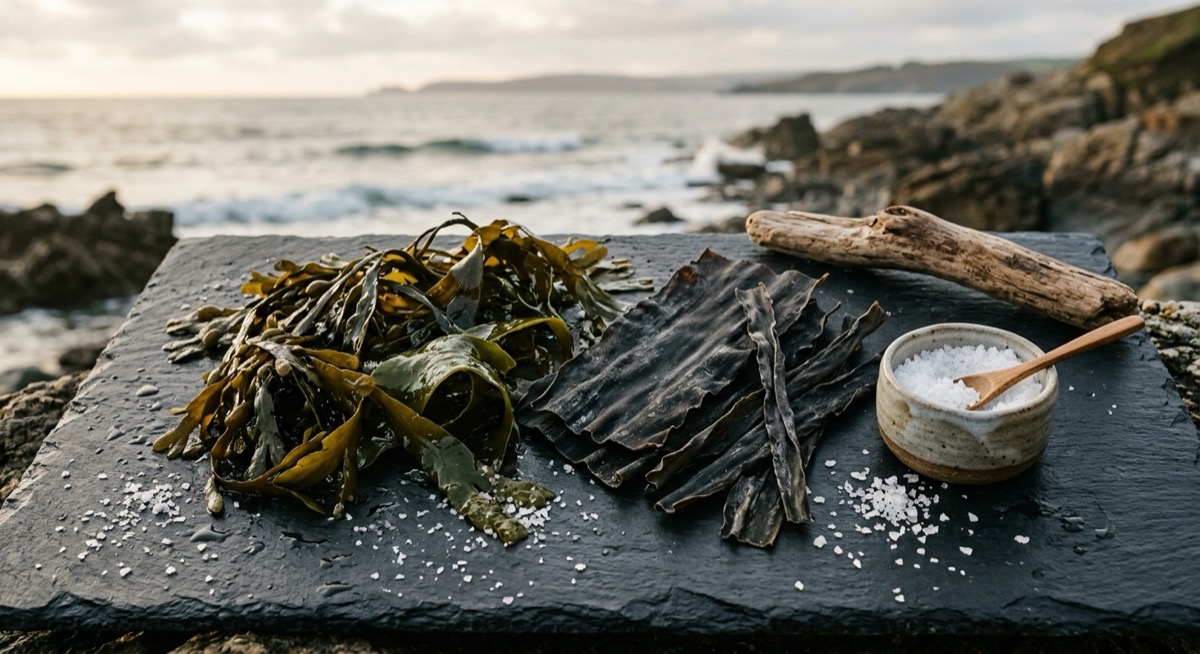
Iodine-rich foods:
- Sea mustard 100g dried: 1,500~3,000μg
- Kelp (kombu) 100g dried: 1,500~5,000μg
- Gim/nori 100g dried: 800~2,000μg
- Oysters 100g: 75μg
- Shrimp·fish 100g: 25~50μg
- Milk 200ml: 50~100μg
- Korean diet average 200~400μg/day
Supplements:
- Iodine (potassium iodide) 150μg 60 caps: 15,000~30,000 KRW
- Pregnancy matrix (folate + iodine 250μg + vitamin D) 60 caps: 30,000~70,000 KRW
- Kelp (kombu extract) capsules 60 caps: 20,000~50,000 KRW
Caution — supplementation conservative in Korea:
- Korean dietary average exceeds RDA (150μg)
- General supplementation risks excess (especially worsening autoimmune thyroid·Hashimoto’s)
- Pregnancy·lactation are additional supplementation targets
Cautions
- Korea·Japan residents: dietary sufficiency → general supplementation conservative. Pre-supplementation iodine assessment·physician evaluation
- Autoimmune thyroid (Hashimoto’s·Graves’): iodine supplementation may activate autoimmunity. Physician assessment essential
- Pregnancy·lactation: WHO recommends 250~290μg, supplement under physician supervision
- Salt — iodized vs non-iodized: Korea uses non-iodized (seaweed compensates). Western iodized salt is standard
- High dose (1,000μg+): risks both thyroid hyperthyroidism and hypothyroidism. Physician prescription only
- Kelp supplementation: variable concentration — choose standardized supplements
- Drug interactions: antithyroid drugs, lithium, amiodarone — physician assessment
- Salt label reading: many Western foods specify iodine content
Synergy matrix
- Iodine + Selenium: thyroid matrix (synthesis + T4→T3 conversion)
- Iodine + Zinc + Selenium: hormone conversion·precursor matrix
- Iodine + L-tyrosine: thyroid hormone building blocks
- Iodine + Vitamin D + Folate: pregnancy matrix
- Iodine + Vitamin A: hormone synthesis support
Consumer message
For thyroid health, calcium·vitamin D alone are insufficient — iodine is absolutely essential for thyroid hormone synthesis. 12-week trial in deficient population: T4 +18%, T3 +15%, thyroid volume -22%. Korean diet (seaweed) is a natural asset, but pregnancy·lactation are additional targets. Caveats: autoimmune thyroid physician assessment, Korea·Japan residents conservative supplementation (excess risk), drug interactions. Pairs with selenium, zinc, L-tyrosine for comprehensive matrix. Absolutely essential mineral of tetrapod’s spring 2026 thyroid matrix.