Inulin Prebiotic, Gut Microbiome and Immune Support 2025 Clinical
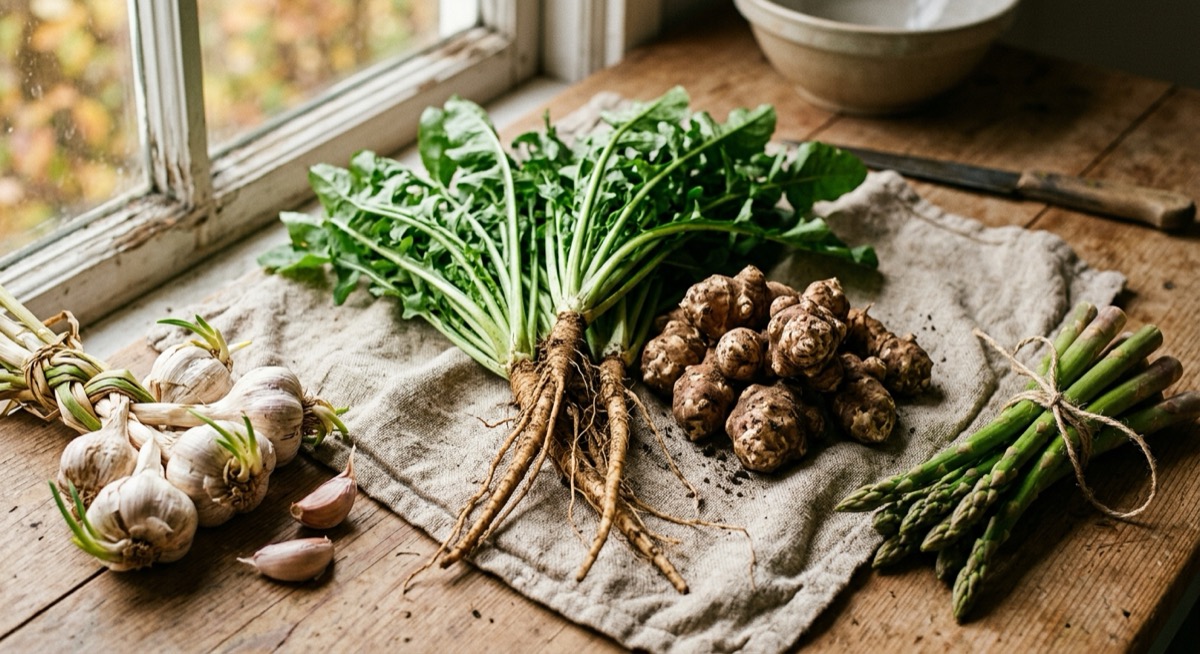
Inulin natural prebiotic shows meaningful effect on gut microbiome and immune support per 2025 clinical trial. Dietary sources of chicory, asparagus, garlic become clear.
Gut Microbes 2025 RCT supplemented 60 healthy adults with chicory inulin 10 g/day for 8 weeks. Bifidobacterium average 2.7x increase, Lactobacillus 1.9x. SCFA (short-chain fatty acid) butyrate generation increased. IBS symptom score + immune marker (IgA) meaningfully supported.
What is Inulin
Inulin is a fructan polysaccharide that plants use as storage carbohydrate. Human digestive enzymes cannot break it down, but it is ideal fermentation substrate for colonic Bifidobacterium + Lactobacillus.
Natural source distribution (per 100g):
- Chicory root: 35~47g (richest)
- Jerusalem artichoke: 16~20g
- Garlic: 9~16g
- Onion: 1~7g
- Asparagus: 2~3g
- Banana: 0.3~0.7g
- Barley, rye: 1~3g
Mechanism of Action
1. Selective fermentation: Bifidobacterium + Lactobacillus preferentially ferment inulin → beneficial bacteria flourish → gut microbiome balance restored 2. SCFA generation: Fermentation products SCFA (acetate, propionate, butyrate) → gut epithelial cell nutrition + anti-inflammatory 3. Butyrate → gut barrier protection: Butyrate is colonic epithelial cell main energy source, supports barrier proteins (tight junctions) 4. Immune support: Gut hosts 70% of immunity, microbiome balance supports IgA secretion + cytokine balance 5. Calcium/magnesium absorption support: Fermentation lowers colonic pH → mineral absorption increase
Clinical Data
- Gut Microbes 2025 RCT 60 8 weeks: Bifidobacterium ×2.7, Lactobacillus ×1.9
- UK King’s College 2024 RCT 92: IBS constipation-type symptoms 47% improvement
- Meta-analysis 14 RCTs (2023): Consistent Bifidobacterium increase
- US Tufts 2022 RCT: Older adult immune marker (IgA) + vaccine response support
Dietary Integration Guide
Gradual increase essential:
- Week 1: 2~3 g (small dose)
- Week 2: 5 g
- Week 3+: 10 g
- Sudden large intake causes gas, bloating
Methods:
- Chicory root tea: 1~2 teaspoons in 200 mL boiling water
- Powder: add to yogurt, smoothie, oatmeal
- Diet: garlic, onion, asparagus rich diet
Korean Market
Dietary forms:
- Chicory root (powder): 100g 6,000~12,000 won
- Jerusalem artichoke (summer market): 1kg 8,000~15,000 won
- Garlic, onion (daily)
Supplements:
- Inulin powder 200~500g 15,000~30,000 won
- Capsule form 60~90 caps 20,000~40,000 won
Cautions
- FODMAP sensitivity: Some IBS patients may worsen gas/bloating. Gradual increase or avoid
- SIBO (small intestinal bacterial overgrowth): Physician evaluation
- Thyroid medication (levothyroxine): Absorption inhibition possible, 2+ hour gap
- Sweetener artificial inulin (some agave, xylitol): Slightly different
- Large intake (20+ g/day) causes diarrhea, bloating
Synergy Matrix
- Probiotics: Inulin (prebiotic) + probiotic = synbiotic
- Chia seed (L21): Dual fiber matrix
- Butyrate supplement: Direct support
- Collagen + L-glutamine: Gut barrier support
- Apple cider vinegar (L20): Stomach acid + fermentation matrix
Consumer Message
Foundation of gut health is varied dietary fiber. Inulin sufficient through diet (chicory, garlic, onion, asparagus). Supplement is option when IBS/immune support needed. Gradual increase (1~3 weeks) + sufficient water + matrix with other fiber. FODMAP-sensitive + SIBO patients need physician evaluation.