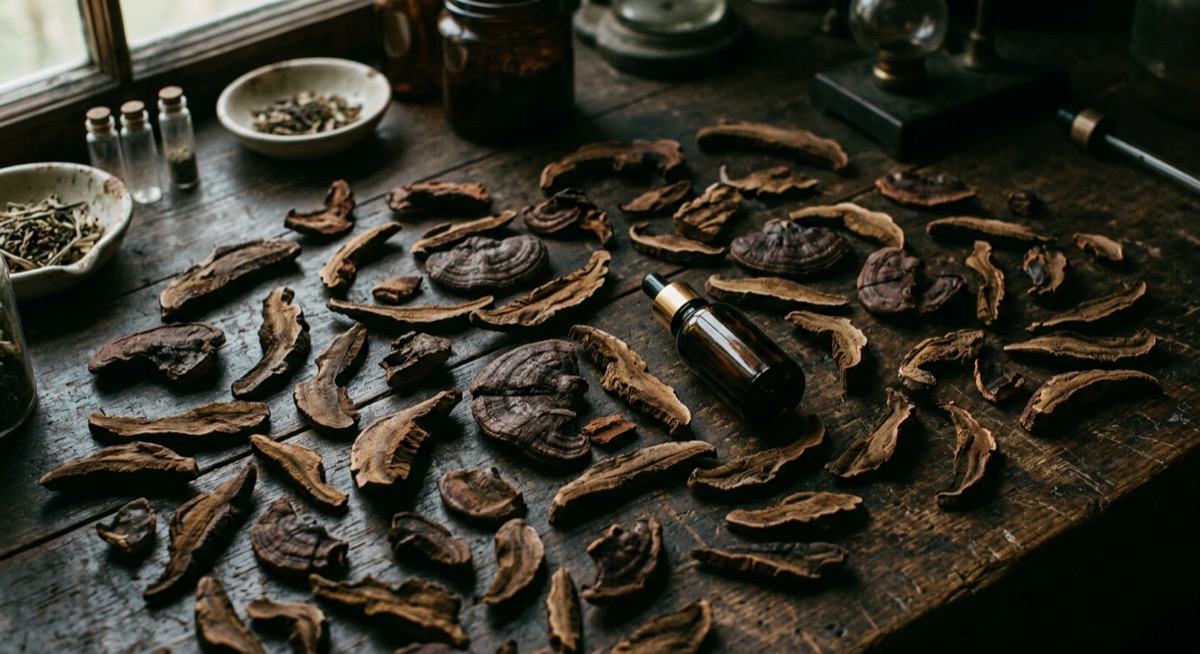
Taiwan's ImDerma Brings Reishi Exosomes to the Scalp with ExoReishi
Reishi mushroom showed up twice at in-cosmetics 2026, in two very different applications. While Italy’s Akott Akosky Dance went after facial aging, Taiwan’s ImDerma Laboratories pointed reishi at the scalp — and used a new delivery format to do it: exosomes.
What ExoReishi is
Taiwanese biotech ImDerma Laboratories unveiled ExoReishi at in-cosmetics Global 2026 in Paris (April 14–16). It is a reishi mushroom (Ganoderma lucidum) derived exosome active designed to improve scalp health, drive follicle recovery, and stimulate hair growth simultaneously.
The company describes the core mechanism as enhanced cellular communication. The active is positioned to activate signaling between hair follicle stem cells, dermal papilla cells, and follicle-adjacent immune cells — pushing follicles from the resting (telogen) phase into the growth (anagen) phase.
Why exosomes are showing up in cosmetics
Exosomes are 30–150 nm vesicles that cells secrete. They carry proteins, microRNAs, lipids, and metabolites, and they deliver this cargo to other cells. In medicine, they are described as the postal system of cellular communication.
Cosmetics and aesthetic-medicine companies began paying attention around 2020. Korea moved first with human stem-cell-derived exosomes in cosmetic procedures, with Japan, the U.S., and Europe following. Human-derived exosomes face regulatory and ethical scrutiny, which has driven research toward plant-derived and microbial-derived alternatives.
Reishi-derived exosomes are the latest case. Extracting exosomes secreted by plant (here, fungal) cells lets formulators chase similar signaling effects without the regulatory weight of human-derived material.
Reishi’s case for hair
In Eastern medicine, reishi has long been used for anti-inflammation, immune modulation, and antioxidant effects. All three matter for the scalp.
First, chronic scalp inflammation is a shared backdrop for androgenetic hair loss (male and female pattern) and telogen effluvium. Chronically activated peri-follicular immune cells slow hair follicle stem cell activity. Reishi’s triterpenoids may suppress NF-κB and reduce this chronic inflammation.
Second, immune modulation matters for alopecia areata, an autoimmune attack on follicles. Reishi beta-glucans have shown immune-modulatory effects in vitro.
Third, antioxidant action protects follicle stem cells from oxidative stress. Once these stem cells are lost, recovery is extremely difficult, making protection a leverage point.
ImDerma’s marketing positions ExoReishi as delivering all three effects in exosome form.
A shifting scalp-care market
The global scalp care market is growing toward $4B+. Minoxidil and finasteride have dominated androgenetic hair loss treatment for over 30 years, but both carry side-effect concerns and require lifelong use. Dutasteride, the third option, shares similar limits.
Topical non-drug categories have moved into this gap. In Korea, scalp toners, scalp serums, and scalp masks have boomed since the early 2020s. The K-beauty scalp category has leaned on peptides (copper peptides, AHK-Cu), plant extracts (Equisetum arvense, brown algae), and fermented ingredients.
Exosomes are seen as the next layer of this category. Rather than a single ingredient, they deliver a packaged bundle of signaling molecules — a more compositionally complex mechanism.
A familiar gap: clinical evidence
As with the GLP-1 face solutions at the same show, ExoReishi’s release did not include human clinical data. In vitro and animal data on plant- and fungal-derived exosomes are accumulating quickly, but scalp-cosmetic trials typically require 8–16 weeks of measuring hair density, thickness, and anagen/telogen ratio.
Whether ImDerma holds clinical data at this stage will be visible in upcoming licensing announcements. Korean brands licensing ExoReishi will need their own clinical work for MFDS functional cosmetic certification (hair-loss symptom relief).
A consumer note
When considering an exosome scalp product, three checks are useful.
First, the exosome source. Human stem-cell-derived, plant-derived, and microbial-derived materials carry different regulatory and safety profiles.
Second, dose disclosure. Exosomes are often labeled as “X particles/mL” or “X μg/mL.” Whether the finished product matches the concentration used in the company’s clinical work is what matters.
Third, scalp penetration data. Whether exosomes actually reach the follicle from the scalp surface (versus stopping at the epidermis) varies by delivery system. Look for penetration data on the label or in brand materials.
The fact that reishi appeared twice at in-cosmetics 2026 is not coincidence. The adaptogen category is moving into the standard active palette of global cosmetics.