Hibiscus Anthocyanin, Blood Pressure and Cardiovascular Multi-Target 2025 Meta-Analysis
Hibiscus (Hibiscus sabdariffa) tea or standardized extract 250~500 mg/day 4~12 weeks meaningfully reduced systolic and diastolic blood pressure in 21 RCT 1,500 participant 2025 meta-analysis. Tea-familiar natural BP support.
Phytotherapy Research 2025 meta-analysis integrated 21 hibiscus RCTs 1,500 participants. Standardized extract 250~500 mg/day or 4~6g dried flowers as tea 4~12 weeks: systolic average -7mmHg, diastolic -3mmHg, LDL cholesterol -5%, partial fasting glucose reduction reported meaningfully.
What is Hibiscus
Hibiscus (Hibiscus sabdariffa, Roselle) is a Malvaceae annual. English “Hibiscus tea, Roselle, Sorrel (West Indies).” Native to Africa, Central/South America, Southeast Asia, Egypt. Familiar deep crimson tea (Karkadeh, Agua de Jamaica).
Active components:
- Anthocyanins: Source of crimson color, antioxidant + vascular support
- Polyphenols: Chlorogenic acid, caffeoylquinic acid
- Organic acids: Citric, hibiscus, malic acids → sourness
- Quercetin: Flavonoid
Multi-Target Mechanism
1. Partial ACE enzyme inhibition: Anthocyanins partially inhibit angiotensin-converting enzyme → BP reduction (weaker than ACEi but consistent) 2. Nitric oxide (NO) synthesis support: Polyphenols support vascular endothelial NO synthesis → gentle vasodilation 3. Diuretic action: Natural potassium + calcium support → mild diuretic effect 4. Antioxidant: Anthocyanins + polyphenols prevent LDL oxidation 5. Anti-inflammatory: NF-κB inhibition
Clinical Data
- Phytotherapy Research 2025 meta-analysis 21 trials 1,500: SBP -7mmHg, DBP -3mmHg
- Meta-analysis 9 (2023): Consistent effect on stage 1 hypertension
- US Tufts 2024 RCT 65 6 weeks: Postprandial glucose -10%
- Mexico clinical 2022: Metabolic syndrome patient LDL + triglyceride reduction
Korean Market
Tea form (most familiar):
- Dried hibiscus flowers 100g 8,000~15,000 won
- Boiling water 200 mL + dried flowers 4~6g + 5~10 min steep
- Vinegar-like sourness, can add honey/mint
- 1~3 cups/day
Supplements:
- Standardized extract capsule 250~500 mg 25,000~45,000 won
- Confirm anthocyanin standardization %
Korean Dietary Integration
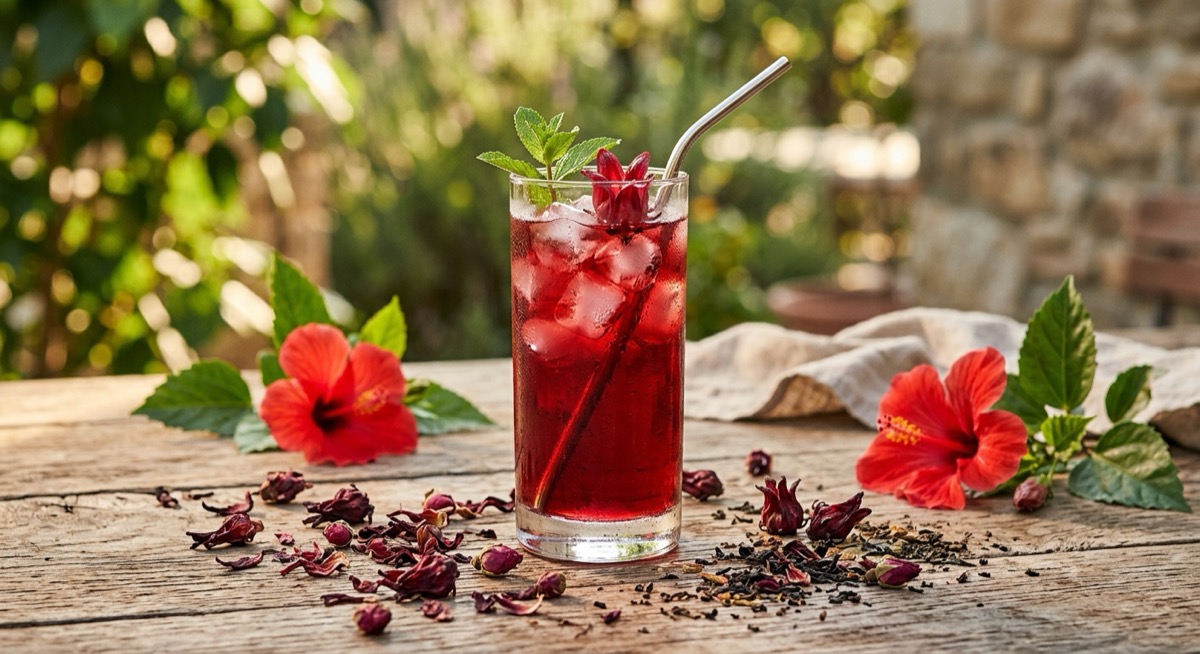
Cool hibiscus tea good for summer. Crimson + slight sourness + antioxidant matrix. Popular in Finland + US, gradually spreading in Korea.
Available at Starbucks + cafes as ‘Hibiscus Tea’ or ‘Berry Hibiscus Refresher.‘
Cautions
- BP medication combination: Synergy possible, physician evaluation
- Pregnancy/lactation: Hormone effect possible, avoid
- Diuretic combination: Synergy with potassium support, BP reduction enhanced
- Glucose drug combination: Mild glucose reduction, caution
- Liver drugs (acetaminophen etc): Some clinical drug metabolism impact
- Stop 2 weeks before surgery (mild anticoagulant)
- Mildly acidic, gastritis/reflux patients some irritation
Synergy Matrix
- Hawthorn (L23): BP dual natural option
- Olive leaf: NO + ACE matrix
- Bergamot polyphenol: LDL synergy
- Magnesium: Vascular + neural stability
- Omega-3 EPA: Cardiovascular comprehensive
Consumer Message
ARB/ACEi/diuretics are powerful BP drugs, but stage 1 hypertension or those with side effects benefit from dietary natural support. Hibiscus tea is most accessible form. BP medication users physician evaluation, avoid in pregnancy/lactation. Diet (low-salt, DASH, Mediterranean) + exercise + sleep foundation. Cool spring/summer beverage as daily matrix.