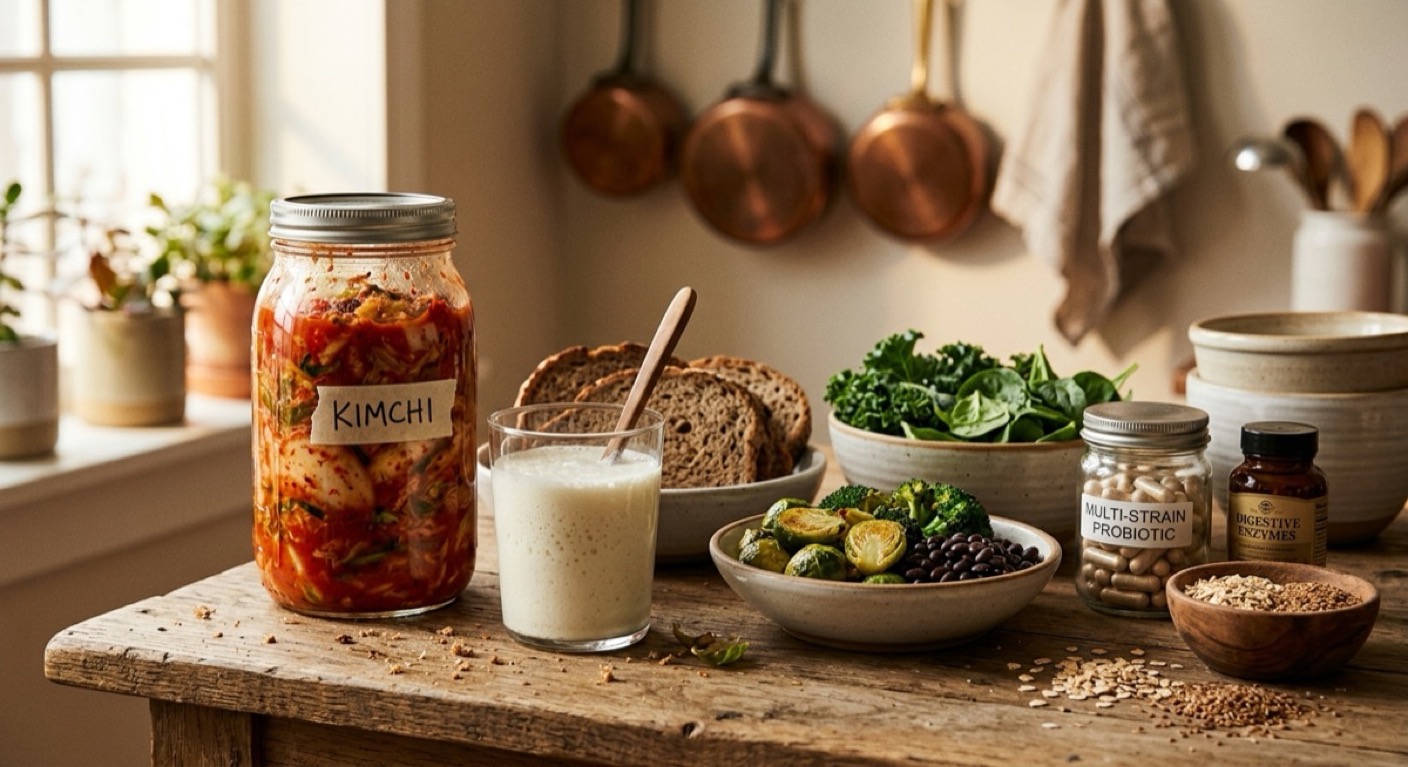
Gut Health Named the Top Global Food and Beverage Trend of 2026
Global food market research firm Innova Market Insights named “Gut Health Hub” the top food and beverage trend of 2026. The gut-health category has been growing for years, but when the scale of market activity and consumer behavior change are taken together, 2026 stands out as the year the shift became unmistakable.
According to Innova’s research, 59% of consumers worldwide are now making conscious choices around functional gut ingredients, specifically probiotics (live beneficial bacteria) and prebiotics (the dietary fibers that feed them). As a result, new product launches in the gut health category surged 61% in 2025 compared to 2024. That number reflects something deeper than a passing trend: consumers have begun connecting gut health directly to immunity, mood, sleep quality, and skin condition, and the market is responding accordingly.
Specific Strains, Measurable Outcomes
Behind the market growth is a growing body of clinical evidence. AG1 published results from a clinical trial showing that consumption of their formula tripled the count of beneficial gut bacteria in participants. That kind of measurement shifts gut health from a loosely defined concept into territory where specific outcomes can be tracked.
ADM and Asahi jointly developed Lactobacillus gasseri CP2305, a strain that has shown effects across multiple areas: stress reduction, mood stabilization, and improved sleep quality. In Korea, Lactobacillus gasseri BNR17, developed by Acebiopham, has received official recognition from the Ministry of Food and Drug Safety for body fat reduction. These are strains that share the same species name but carry entirely different clinical profiles. When choosing a probiotic product, the strain number is what actually tells you what the product has been studied for.
Perimenopause and the Gut Connection
Kaneka’s KABP Menopause Blend showed in a 12-week clinical study that it could help maintain estrogen levels while stabilizing gut microbiome balance. The relationship between declining estrogen and shifts in gut microbiota composition was already understood, but clinical data showing a specific probiotic blend intervening in that process opens new possibilities for the women’s gut health market.
Kaneka is also working with L. sakei proBio65, a strain positioned around skin support, feeding into the growing “beauty-from-within” segment where gut bacteria and skin outcomes are presented as linked.
HMOs Move from Infant Formula to Adult Nutrition
dsm-firmenich is broadening its portfolio of HMOs (human milk oligosaccharides, the complex sugars naturally present in breast milk) with a clear focus on adult applications. HMOs were originally identified as critical for establishing gut immunity in newborns. As research demonstrating their effects on adult gut immunity and microbiome growth accumulates, the ingredient is moving rapidly into adult supplements and functional foods.
On the prebiotic side, Beneo received official health claim approval from Thailand’s Food and Drug Administration for its Orafti Inulin. Inulin is a dietary fiber extracted from chicory root that promotes microbial diversity by feeding beneficial bacteria. The approval signals growing regulatory acceptance of prebiotic labeling across Asian markets. Oat fiber and chicory-derived inulin are currently the two fastest-growing fiber ingredients across the category.
AI and Organoids Change How Research Gets Done
Danone has established OneBiome AI microbiome research centers in Paris-Saclay and Singapore, building platforms to analyze individual gut environments at scale. These labs use organoid-based organ-on-chip models to simulate interactions between the gut and the liver, the placenta, and the blood-brain barrier (the biological interface that controls what passes from the bloodstream into the brain). Running these simulations without live human subjects dramatically reduces both the time and cost of clinical research design.
Industry voices have also raised a long-standing concern: much of existing nutrition research has been designed around male subjects. Women’s hormonal cycles, the perimenopausal transition, and pregnancy all create gut environments that differ meaningfully from the populations most clinical studies used. Calls for sex-specific trial design are now being taken seriously, and how those studies are structured will shape product formulation strategies across the category.
Format Innovation Lowers the Barrier
Powder formats are gaining ground against capsules and tablets in gut health products. Powders are cheaper to manufacture, easier to store, and mix naturally into beverages and foods, fitting into daily routines without requiring a separate supplement habit. The shift makes gut health management more accessible for consumers who would not otherwise commit to a standalone capsule regimen.
The convergence happening in 2026 is not the result of any single product or study. Strain science is becoming more precise. AI-powered microbiome analysis is making personalized gut research feasible. Women-specific clinical trials are finally being designed. Powder formats are broadening consumer access. Gut health as a category is no longer defined by a single mechanism or ingredient. It has become the hub that connects immunity, mood, skin, and long-term metabolic health, and the market is catching up to that understanding.