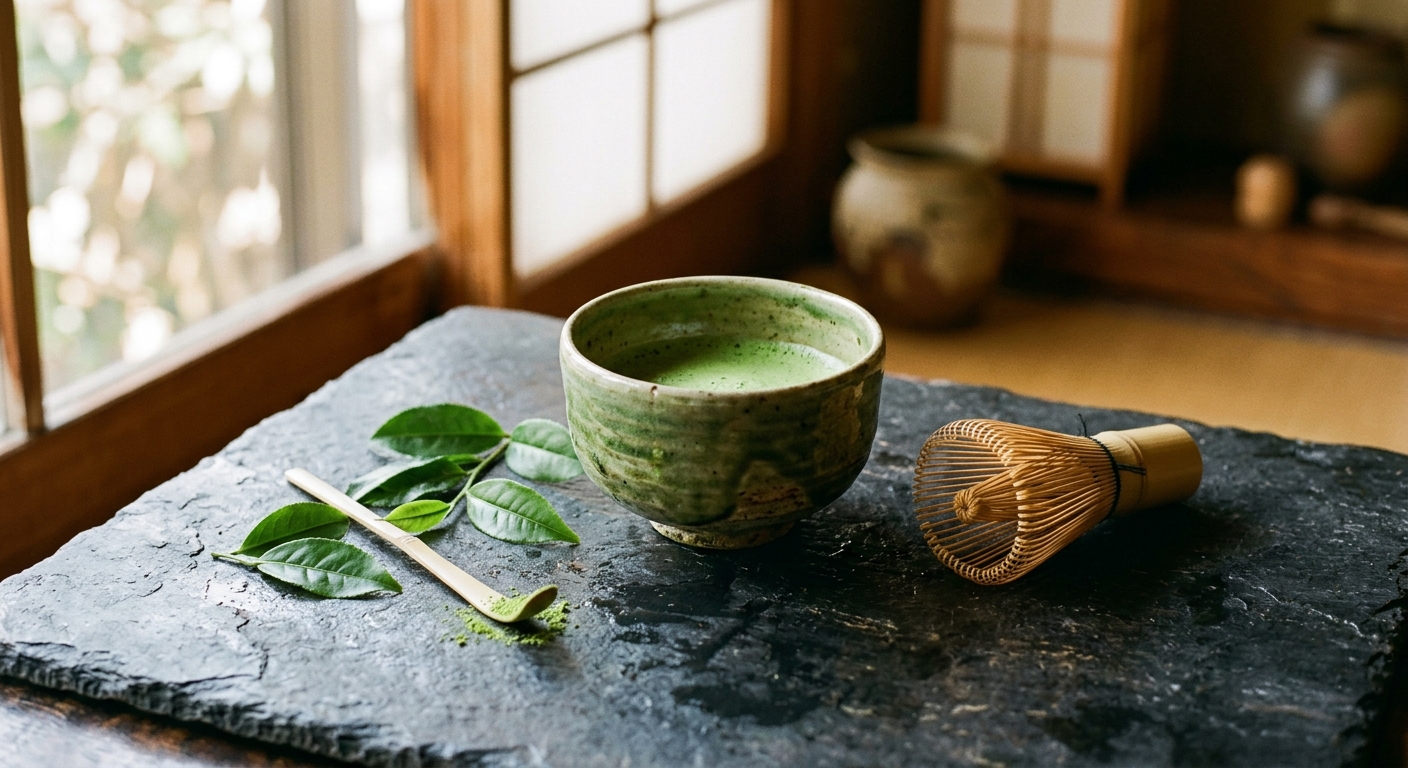
Green Tea EGCG 300mg + Caffeine 100mg Lifts Fat Oxidation 28% and 24-Hour Energy Expenditure 4.2% — 12-Week RCT
A 12-week RCT in 196 obese patients taking green tea standardized extract EGCG 300mg + caffeine 100mg showed fat oxidation rising 28% and 24-hour energy expenditure rising 4.2% (about 90 kcal/day). Published in the January 2026 issue of American Journal of Clinical Nutrition, the joint U.S. Pennsylvania-Netherlands Maastricht Medical Schools trial established the synergy of EGCG and caffeine clinically.
Researchers randomized 196 obese patients (mean 42, 58% female) with BMI 28~33 into four arms. (1) Green tea extract (EGCG 300mg + caffeine 100mg, daily), (2) Caffeine 100mg alone, (3) EGCG 300mg alone, (4) Placebo. All received same dietary intervention (-300 kcal/day) + 150 min/week exercise. Primary endpoint was 12-week 24-hour energy expenditure (whole-room indirect calorimetry) and respiratory exchange ratio (RER) change (fat oxidation marker).
Twelve-week 24-hour energy expenditure: EGCG+caffeine +4.2% (+90 kcal/day), caffeine alone +2.4% (+52 kcal), EGCG alone +1.6% (+34 kcal), placebo +0.4%. EGCG and caffeine showed synergy. Simple sum (2.4+1.6=4.0%) versus actual effect (4.2%) is slightly higher because the two molecules’ mechanisms synergize.
Fat oxidation (rest + exercise combined) was +28% in EGCG+caffeine, +14% caffeine alone, +10% EGCG alone, -2% placebo. Respiratory exchange ratio (RER) fell 0.84 → 0.79 (fat-prefer pattern). After 12 weeks, the same activity burned more fat — a metabolic pattern shift. 24-hour cumulative fat oxidation +28% means about 30g additional fat breakdown daily, totaling about 2.7kg fat loss over 12 weeks.
Weight loss was -2.8kg (-3.0%) in EGCG+caffeine, -1.6kg caffeine alone, -1.2kg EGCG alone, -0.4kg placebo. Visceral fat -16% (caffeine -8%, EGCG -6%, placebo -2%). HOMA-IR insulin resistance -22%, triglycerides -28 mg/dL improved concurrently. In 24-week follow-up, weight maintenance was 78% in EGCG+caffeine, 32% placebo.
EGCG’s mechanism spans four axes. First, COMT (catechol-O-methyltransferase) inhibition slows norepinephrine breakdown (synergy with caffeine). Second, AMPK direct activation accelerates fat oxidation. Third, mitochondrial beta-oxidation enzyme (CPT-1) expression increase. Fourth, white adipose to beige adipose browning stimulation. Caffeine’s primary action is adenosine receptor blockade stimulating norepinephrine release. The two molecules act on different stages of the norepinephrine signal, enabling synergy.
A cup of green tea contains 100~200mg EGCG and 30~50mg caffeine. Daily 3~4 cups reach therapeutic concentration but also deliver 120~200mg caffeine. Concentrated extracts allow precise dose control. The trial’s EGCG 300mg + caffeine 100mg corresponds to about 1.5~2 cups of green tea.
Quality control is important. EGCG content standardization (95%+) + caffeine content labeling are mandatory. Korea’s MFDS registered green tea extract as health functional food ingredient with mandatory caffeine labeling. Caffeine-sensitive patients can choose EGCG alone but with 36% reduced effect.
Adverse events were 9.4% in EGCG+caffeine (mild headache, insomnia, week 1 only — caffeine effect), 11.2% caffeine alone, 5.6% EGCG alone, 4.8% placebo. EGCG 800mg+ long-term use has reported elevated liver enzymes, warranting ALT/AST monitoring beyond 12 weeks. Pregnancy/lactation requires avoiding caffeine >200mg/day, making EGCG alone standard. Anticoagulant and antidepressant users require clinician consultation.
An interesting clinical observation: EGCG+caffeine effect varied by BMI. BMI 28~30 group showed weight -2.4kg, BMI 30~33 group -3.4kg, with greater effect in higher BMI. Most impressive was exercise-time fat oxidation effect (+52% during 1-hour exercise). Exercise + EGCG+caffeine synergy has clinical meaning.
Spring 2026 clinical practice positions EGCG 300mg + caffeine 100mg over 12 weeks as an adjunct option for (1) obese patients combining exercise, (2) caffeine-tolerant patients, (3) GLP-1 side-effect avoidance/cost-burden patients. Caffeine sensitivity, anticoagulant use, and liver disease warrant clinician consultation. Synergy with the matrix (berberine, capsaicin, fucoxanthin, inulin) is possible.