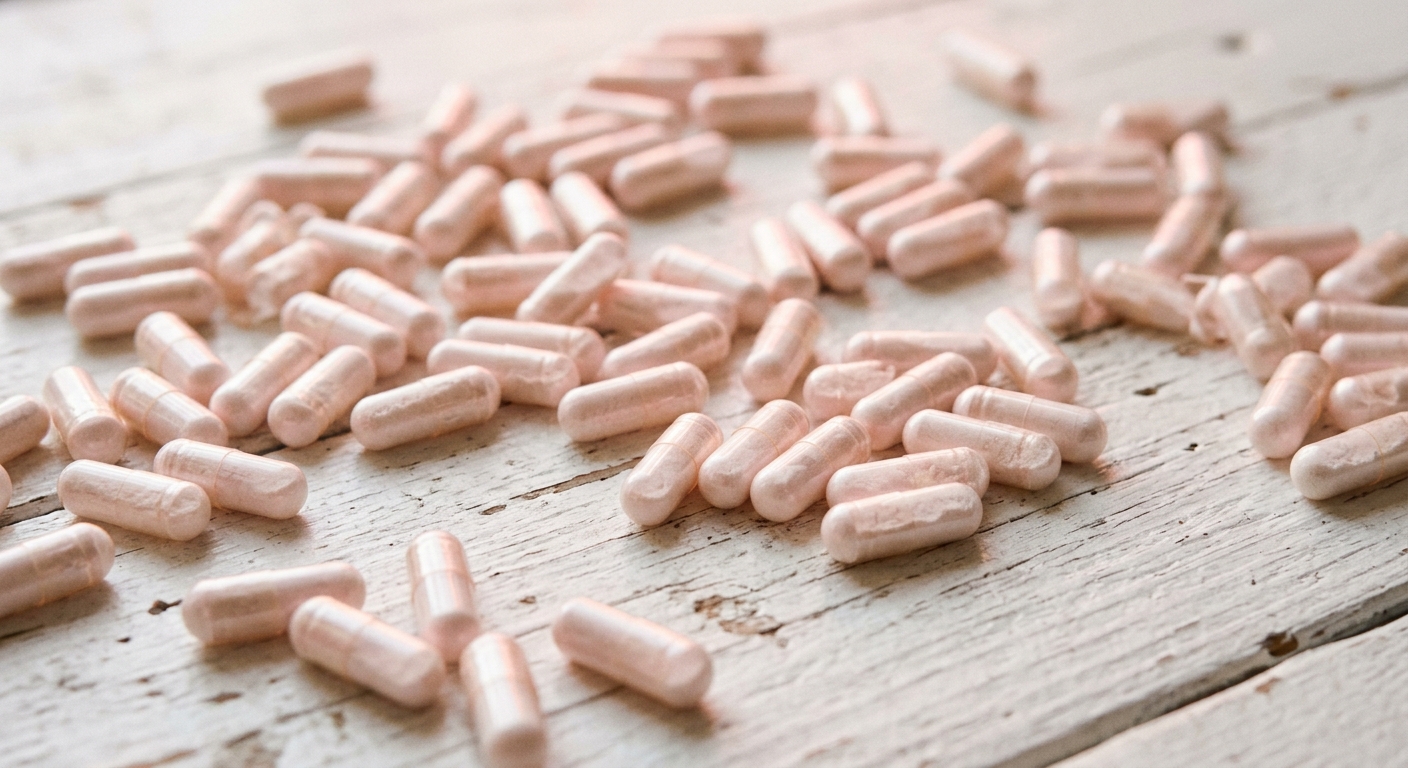
Glutathione Supplement Sales Surged 2715% in Natural Channels, Here Is What Works
Glutathione supplement sales grew 2,715.7% in natural retail channels in 2026, according to Nutritional Outlook data tracking ingredient trends. Few ingredients post numbers like that. The growth reflects a combination of legitimate biology, skin-brightening appeal in Asian beauty markets, and the growing consumer vocabulary around antioxidants and cellular health.
The biology of the master antioxidant
Glutathione is not an ingredient the body waits to receive from outside. It is endogenously synthesized, primarily in the liver, from three amino acids: glutamic acid, cysteine, and glycine. The “master antioxidant” designation refers to its central role in the body’s antioxidant defense network.
Its functions fall into three categories.
Oxidative stress defense: Glutathione neutralizes reactive oxygen species (ROS), the unstable molecules that damage cell membranes, proteins, and DNA. It is one of the most concentrated antioxidants in human cells.
Detoxification support: The liver uses glutathione to conjugate and eliminate toxins, heavy metals, and drug metabolites through a process called glutathione-S-transferase activity.
Immune regulation: T-cell proliferation and natural killer (NK) cell function both depend in part on adequate intracellular glutathione levels.
The skin brightening rationale centers on melanin synthesis inhibition. Glutathione has been shown in some studies to inhibit tyrosinase, the enzyme that catalyzes melanin production, and to shift melanin synthesis from the darker eumelanin pathway toward the lighter phaeomelanin pathway. This mechanism has made IV glutathione a popular whitening treatment in South Korea and Japan.
The oral bioavailability problem
The central challenge for oral supplementation is that glutathione is a tripeptide, three amino acids bonded together. Digestive enzymes in the stomach and small intestine can cleave these bonds, releasing the individual amino acids. When that happens, the body absorbs amino acids rather than glutathione. The supplement essentially becomes an amino acid delivery vehicle.
Research has documented this limitation. Studies using standard oral glutathione at typical doses show modest or inconsistent increases in blood glutathione levels. This has pushed formulation innovation in two directions.
Liposomal glutathione: The molecule is encapsulated within lipid bilayer vesicles that resist enzymatic degradation in the gut. Clinical studies comparing liposomal to standard oral glutathione have found meaningfully higher plasma concentration increases from liposomal forms. The production cost is higher, which explains the price premium in retail.
Sublingual delivery: Dissolving glutathione tablets under the tongue allows absorption directly into the bloodstream through the sublingual mucosa, bypassing first-pass digestive breakdown. Bioavailability via this route is better supported than standard swallowed tablets.
IV glutathione, the route used in clinical whitening protocols, eliminates the bioavailability problem entirely but requires medical administration and carries risks with overuse.
NAC as a cost-effective alternative
N-acetylcysteine (NAC) provides cysteine in a stable, bioavailable form. Cysteine is the rate-limiting precursor in glutathione synthesis, meaning it is the amino acid most often in short supply when the body needs to make more glutathione. Supplementing NAC raises cysteine availability and thereby supports glutathione production rather than supplying the molecule directly.
Oral NAC bioavailability is substantially better than glutathione itself. Multiple studies in the 250-600mg/day range have shown sustained effects on blood glutathione levels. It is also significantly less expensive than liposomal glutathione formulations.
The tradeoff is mechanism: NAC works upstream of glutathione production, so the eventual output depends on the body’s synthesis machinery and other cofactors. For people with impaired glutathione synthesis capacity, direct supplementation in a high-bioavailability form may be more appropriate.
Food sources and what they actually do
Foods with notable glutathione content include asparagus (one of the highest concentrations among vegetables), avocado, spinach, broccoli, and garlic. Garlic and other allium vegetables also contain sulfur compounds like allicin that support glutathione enzyme systems.
Dietary glutathione is subject to the same digestive breakdown as supplemental forms. The practical value of these foods is not direct glutathione delivery but rather providing cysteine, glycine, and other cofactors that help the body maintain its own synthesis. This is a meaningful distinction when evaluating whether to increase food intake versus supplement.
Dosing and price context
Standard oral glutathione supplements are typically dosed at 250-500mg per day. Liposomal forms in this range cost $30-80 per month globally. NAC supplements in the 500-600mg per day range are generally available for under $20 per month.
For anyone focused on skin brightening specifically, the IV glutathione evidence base is stronger than oral forms, but it requires clinical access and ongoing cost. For antioxidant and general wellness purposes, a liposomal glutathione or NAC supplementation approach provides a research-supported path with practical accessibility. Confirming what is already in any existing multivitamin or antioxidant formula before adding a standalone glutathione product is a sensible starting point.