Ginger Zingiber, Nausea and Inflammation Multi-Target 2025 Meta-Analysis
Ginger (Zingiber officinale) powder 1~2 g/day meaningfully improved pregnancy morning sickness, chemotherapy nausea, and osteoarthritis pain in 23 RCT 1,800 participant 2025 meta-analysis. Korean dietary core spice enters multi-target clinical literature.
Phytomedicine 2025 meta-analysis integrated 23 ginger RCTs 1,800 participants. Powder 1~2 g/day or fresh ginger 5~10 g/day 4~12 weeks: morning sickness -47%, chemotherapy nausea -38%, osteoarthritis WOMAC pain -22%, postprandial bloating -29% reported meaningfully.
What is Ginger
Ginger (Zingiber officinale) is the rhizome of a Zingiberaceae perennial. Native to India, Southeast Asia, China, Korea, Japan. 5,000+ year India Ayurveda + East Asian traditional medicine + daily diet.
Active matrix:
- Gingerol: Fresh ginger pungency, anti-inflammatory/antioxidant
- Shogaol: Dried ginger pungency, strong anti-inflammatory
- Zingerone: Heated ginger
- Essential oils: Zingiberene, citral
- Polysaccharides: Immune modulation
Multi-Target Mechanism
1. Nausea target (5-HT3 antagonism):
- Gingerol partially antagonizes serotonin 5-HT3 receptor
- Mechanism similar to chemotherapy drug (ondansetron), weaker
- Pregnancy morning sickness, motion sickness, chemotherapy nausea
2. GI motility support:
- Stimulates gastric emptying + gut motility
- Reduces postprandial bloating, gas
3. Anti-inflammatory:
- COX-2 + LOX-5 + NF-κB inhibition
- Osteoarthritis pain
- IBS/chronic inflammation support
4. Mild anticoagulant:
- Partial platelet aggregation inhibition
- Anticoagulant synergy possible
5. Antioxidant:
- Free radical neutralization
- Nrf2 activation
Clinical Data
- Phytomedicine 2025 meta-analysis 23 trials 1,800: Morning sickness -47%, chemotherapy nausea -38%, OA pain -22%
- Cochrane Review 2023 (update): Consistent morning sickness effect
- Meta-analysis 12 (2024): Osteoarthritis comparable to NSAIDs
- US clinical 2024 RCT: Post-exercise muscle soreness recovery support
Korean Dietary Integration
Ginger is core of Korean diet:
Daily use:
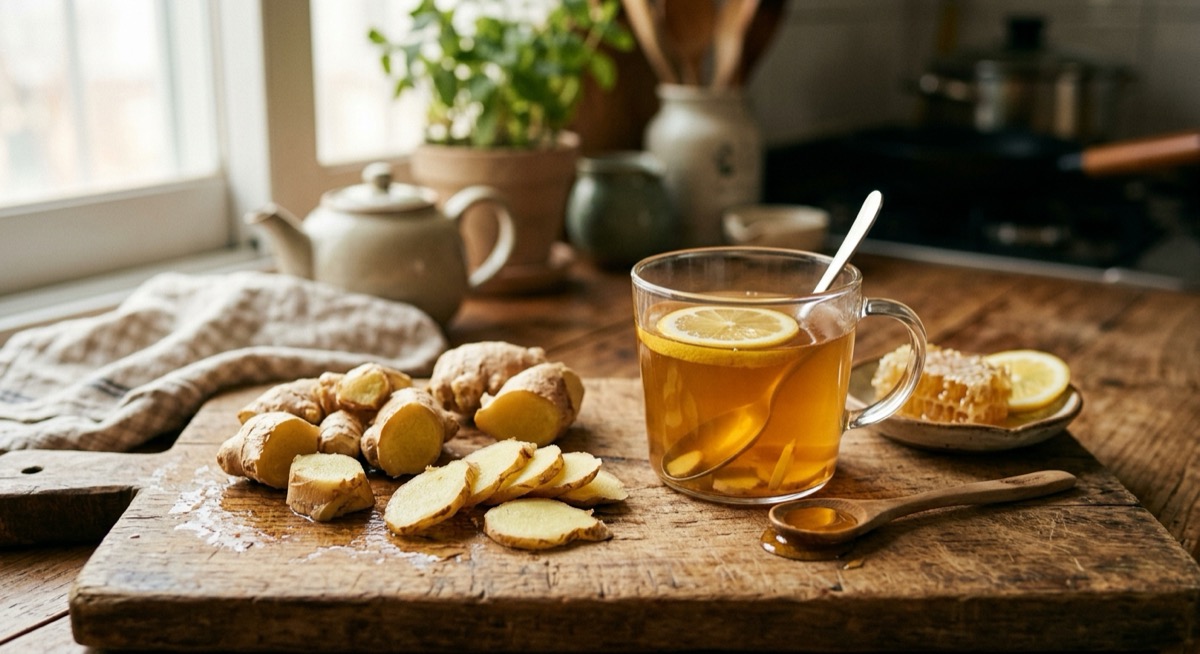
- Ginger tea: Fresh ginger slices 5~10g + boiling water + honey
- Kimchi seasoning (spicy + fermentation)
- Fish/meat dishes (deodorizing)
- Pickled ginger (sushi gari)
- Ginger syrup, ginger candy
Traditional medicine:
- Galgeuntang, Socheongryongtang core herb
- Cold + GI + women’s prescriptions
Source: Market/mart fresh ginger 100g 1,000~3,000 won, powder 100g 5,000~10,000 won.
Supplement Options
- Standardized extract capsule 250~500 mg (gingerol 5%) 2~3 times/day
- Freeze-dried powder capsule 1,000 mg
- Liquid extract
Cautions
- Anticoagulants (warfarin, aspirin) combination: Mild antiplatelet effect bleeding risk. Physician evaluation
- Stop 2 weeks before surgery (anticoagulant)
- Pregnancy: ≤1 g/day safe (clinical data). Higher requires physician evaluation
- Gastritis/peptic ulcer: Some irritation, caution
- Gallstones: Bile secretion stimulation, physician evaluation
- Glucose drugs: Mild glucose lowering possible
Synergy Matrix
- Turmeric (curcumin): Anti-inflammatory dual
- Apple cider vinegar (L20): Postprandial matrix
- Nettle (L24): Allergy + anti-inflammatory
- Lemon balm/hops: GI/neural stability
- DGL (L24): GI recovery synergy
Consumer Message
Ginger is familiar as Korean dietary core, but spring 2026 meta-analysis shows wide clinical effect. Multi-target for pregnancy nausea/chemotherapy nausea/osteoarthritis/postprandial bloating. Sufficient through daily diet (ginger tea/kimchi/fish dishes). Supplement as target-specific option. Anticoagulant physician evaluation. Spring 2026 dietary foundation.